Battle of Ridaniye
The war in which Yavuz Sultan Selim destroyed the Mamluk Sultanate and took the Caliphate.
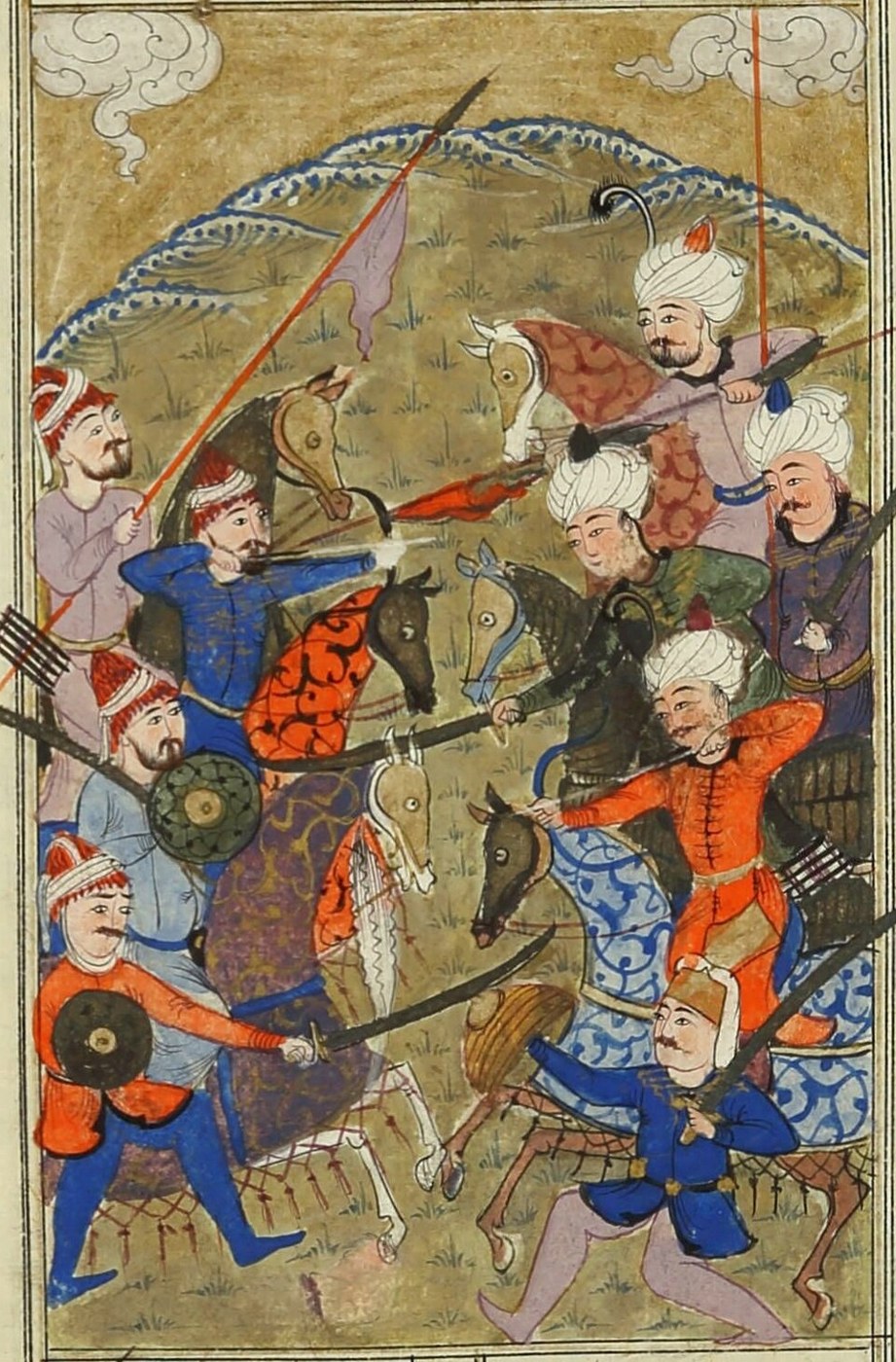
Key Historical Facts
| Fact | Detail |
|---|---|
| Epic Battles | Battle of Ridaniye |
| Date | 22 January 1517 |
| Location | Ridaniye, Egypt (30.05, 31.23) |
| Belligerents, Commanders & Forces | Ottoman Empire: Yavuz Sultan Selim (Strength: 20,000, Casualties: 7,000) · Mamluk Sultanate: Tomanbay (Strength: 20,000, Casualties: 14,000) |
| Weather | Midwinter |
| Outcome | Ottoman Victory |
Belligerents, Commanders & Forces
Ottoman Empire
- Commander
- Yavuz Sultan Selim
- Stance
- Attacker
- Strength
- 20,000
- Casualties
- 7,000
Mamluk Sultanate
- Commander
- Tomanbay
- Stance
- Defending
- Strength
- 20,000
- Casualties
- 14,000
Historical Significance
The Caliphate passed to the Ottoman Empire.
Outcome
Ottoman Victory
Chronological Phases of the Battle
-
1. 20 January 1517
Sinai Desert Crossing and Birkat al-Hajj Transfer
Sultan II. Tumanbay planned to meet the Ottoman army, which was tired with the desert march, at Salihiye, but upon the insistence of his emirs to position themselves in Ridaniye, he gave up this decision and established the defense just outside the capital. Meanwhile, the Ottoman troops, who crossed the Sinai Peninsula and reached Arish, advanced towards Hanka via Salihiye and Bilbeys without encountering any resistance. On January 20, Ottoman forces reached Birkat al-Hajj, just a few hours away from the Mamluk capital Cairo, and gathered for the final attack.
-
2. 22 January 1517
Battle of Ridaniye and the Muktam Surroundings
On 22 January 1517, while the Ottoman main body was heading towards the front of the Egyptian trenches in Ridaniye, a separate detachment crossed Mukattam Hill and attacked the defenders from the flank. During the battle, Sultan Tumanbay attacked towards the center of the Ottoman ranks with his loyal men, reached the tent of Grand Vizier Hadım Sinan Pasha and killed him, mistaking him for the sultan. However, despite this move, Egyptian lines completely collapsed; The defeated forces had to flee up the Nile River for two miles.
-
3. 22 January 1517
Capture of Cairo Citadel and Bulak Camp
After the Ridaniye victory, Ottoman troops entered the city of Cairo without encountering any resistance. Ottoman forces immediately captured the Cairo Castle and slaughtered the entire Circassian garrison there. While the streets surrounding the city were the scene of violent clashes and excesses, the Ottoman ruler Selim I did not enter the city directly, but occupied an island near the Bulak location and established his headquarters there.
-
4. 23 January 1517 and the following days
Preventing Looting and Public Sermon in Cairo
After the battle, the vizier entered Cairo and tried to stop the soldiers' uncontrolled looting and violence. Caliph III, who was in the entourage of Selim I. Mutevekkil led the public prayer and prayed for blessings on behalf of the Ottoman sultan. However, the violence in the streets and the prisoner hunt continued for a while, and the heads of the Circassians were cut off and displayed on the battlefield. A few days later, Selim I entered the city with the Caliph, who asked for forgiveness, and stopped the hostile actions, and relative peace was achieved in the city.
-
5. January 1517
Tumanbay and the Bedouins' Cairo Night Counter-Offensive
The following night, Sultan Tumanbay suddenly returned with his Bedouin allies and took control of the city of Cairo, which was held by a weak garrison. When day broke, the Mamluks and their allies managed to push the Ottoman forces back from the city, inflicting heavy losses. The approach roads leading to the city were quickly fortified and reinforced with trenches, and the Friday prayer sermon was read again in the name of the Mamluk Sultan Tumanbay, thus symbolically re-declaring Egyptian sovereignty.
-
6. January 1517
Midnight Ottoman Attack and Escape to Cize
At midnight, the Ottoman army attacked the city again with an overwhelming concentration of forces and completely destroyed the defenses by dispersing the Mamluk resistance from their hiding positions. Having completely lost his ability to hold on to the city, Sultan Tumanbay crossed the Nile River and fled to Cize, and then took refuge in Upper Egypt. As a result of this decisive attack, the last attempt of the Mamluks to resist in Cairo was eliminated and Ottoman control in the city was definitively established.
-
7. end of January 1517
Arbitration of the Citadel and Liquidation of the Mamluk Emirs
After the victory, Selim I had an amnesty banner hoisted in his tent, but the Mamluks were exempt from this amnesty and 800 people who were captured were executed. Later, the amnesty was extended to the hidden orders; The resulting emirs were scolded and locked in cells in the Cairo Citadel. Emir Canbirdi Gazali, who fought in Ridaniye, knelt at the feet of the sultan and declared obedience, was honored and assigned to the command against the Bedouins. Selim I fortified the castle with a strong garrison, moved his residence here and placed a security detachment at the gate.
Frequently Asked Questions
When and where did Battle of Ridaniye take place, and what was the outcome?
Battle of Ridaniye took place on 22 January 1517 at Ridaniye, Egypt and ended with Ottoman Victory.
Who were the commanders and troop numbers in Battle of Ridaniye?
Ottoman Empire: Yavuz Sultan Selim (Strength: 20,000, Casualties: 7,000) · Mamluk Sultanate: Tomanbay (Strength: 20,000, Casualties: 14,000)
Why is Battle of Ridaniye historically significant?
The Caliphate passed to the Ottoman Empire.