Battle of Abu Bakr
The French Army of the Orient, commanded by Napoleon Bonaparte, annihilated the Ottoman army commanded be Köse Mustafa Pasha, which had landed on the shores of Abukir with the support of the British navy. The French rapidly breached the Ottoman fortification lines on the peninsula, drove the enemy troops into the sea, and temporarily consolidated French control in Egypt.
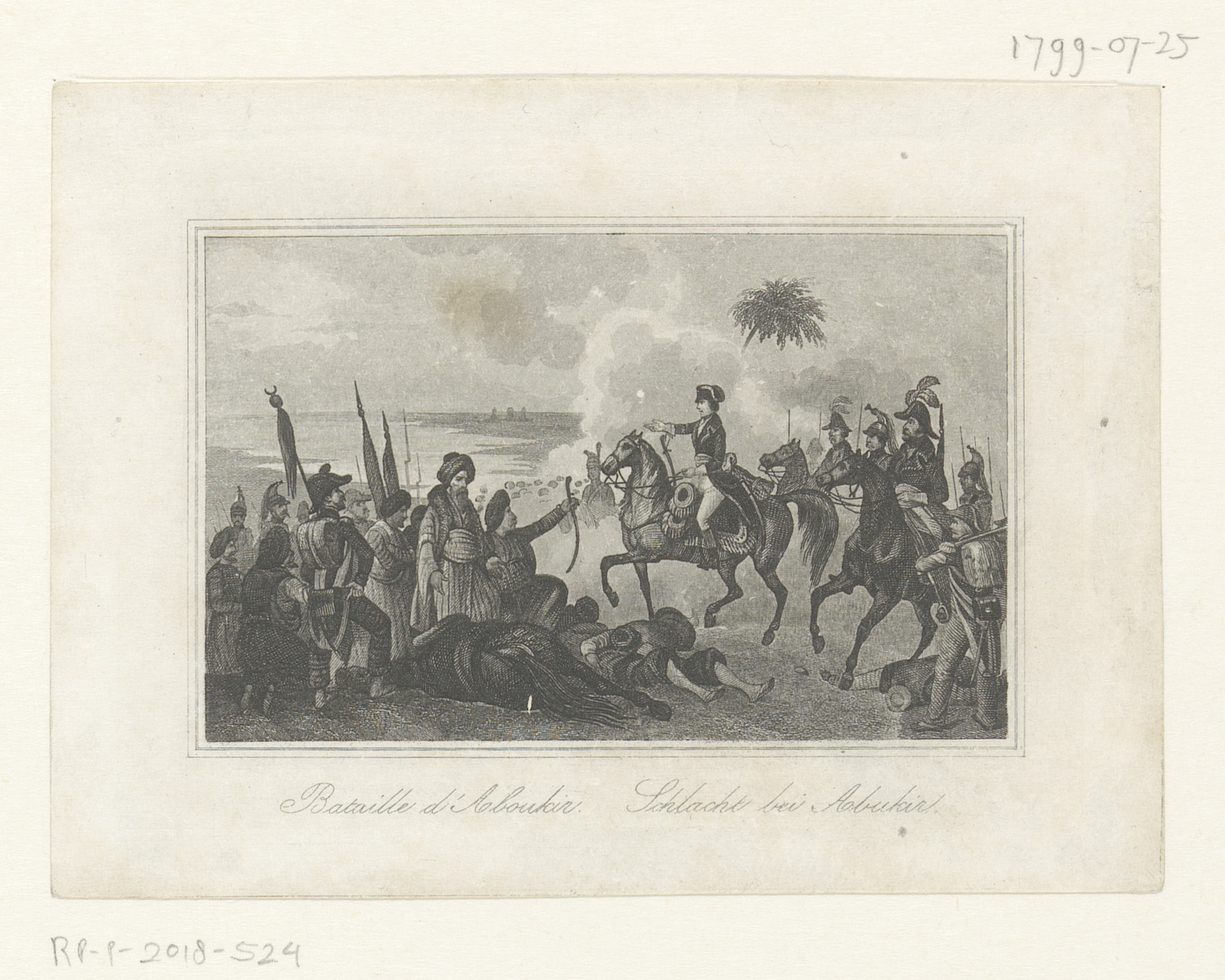
Key Historical Facts
| Fact | Detail |
|---|---|
| Epic Battles | Battle of Abu Bakr |
| Date | July 25, 1799 |
| Location | Aboukir Peninsula, Near Alexandria, Egypt (31.3214, 30.0683) |
| Belligerents, Commanders & Forces | The French Republic: Napoleon Bonaparte (Strength: 10,000, Casualties: 220 ölü, 600 yaralı) · Ottoman Empire: Köse Mustafa Pasha (Strength: 18,000, Casualties: 2.000 ölü, 5.000 denizde boğulan, 3.000 esir) |
| Weather | Intense coastal humidity under the scorching Mediterranean heat and open skies. |
| Outcome | Decisive French Victory |
Belligerents, Commanders & Forces
The French Republic
- Commander
- Napoleon Bonaparte
- Stance
- Attacker
- Strength
- 10,000
- Casualties
- 220 ölü, 600 yaralı
Ottoman Empire
- Commander
- Köse Mustafa Pasha
- Stance
- Defending
- Strength
- 18,000
- Casualties
- 2.000 ölü, 5.000 denizde boğulan, 3.000 esir
Historical Significance
This victory rescued Napoleon's reputation in the Egyptian campaign, erased the shadow of the defeat at Acre, and paved the way for his return to France to seize power (Coup of 18 Brumaire).
Outcome
Decisive French Victory
Chronological Phases of the Battle
-
1. 06:00
Approach of the French Army
Napoleon set his army in motion toward the Abukir Peninsula at dawn. Ottoman troops had established a two-tiered defense line at the narrow bottleneck of the peninsula, relying on the fortress and the fleet in the rear. French infantry advanced in orderly steps along the coast until they reached the range to engage the enemy's first line of trenches.
-
2. 08:30
Breaching of the First Defense Line
The French vanguard division commanded by General Destaing attacked the initial Ottoman positions. Despite intense gunfire opened by British gunboats from the shore, the French overran the hill in a bayonet charge. The Ottoman detachments abandoning the trenches were forced to retreat in a disorderly manner toward the second main defensive line.
-
3. 11:00
Assault on the Redoubt
The French assault on the fortified redoubt at the center of the Ottoman army met with fierce resistance. Mustafa Pasha's soldiers leaped from the redoubt and began decapitating the French dead. This savage spectacle triggered a deep explosion of anger and hatred in the French ranks, prompting a counterattack.
-
4. 13:00
Murat's Legendary Cavalry Breakthrough Operation
French cavalry commanded by General Joachim Murat spotted the weak gap in the Ottoman left flank and rapidly charged in. Galloping forward, they cut right through enemy lines. Murat personally entered Mustafa Pasha's tent; despite being shot in the jaw, he wounded and captured the pasha.
-
5. 14:30
Routing into the Sea and Panic
With their central lines collapsed and their commanders captured, thousands of Ottoman soldiers fled in panic toward the tip of the peninsula. Seeking salvation from the relentless pursuit of the cavalry, soldiers threw themselves into the sea, attempting to swim to British ships. Thousands perished horribly, drowning amidst the waves of the Mediterranean.
-
6. 16:00
Siege and Surrender of Aboukir Castle
While the army in the field was completely destroyed, the last surviving Ottoman units took refuge in Abu Qir Castle. Napoleon immediately had the castle subjected to heavy artillery fire. After days of thirst and intense bombardment, the castle garrison surrendered, and France established absolute control over the entire peninsula.
Frequently Asked Questions
When and where did Battle of Abu Bakr take place, and what was the outcome?
Battle of Abu Bakr took place on July 25, 1799 at Aboukir Peninsula, Near Alexandria, Egypt and ended with Decisive French Victory.
Who were the commanders and troop numbers in Battle of Abu Bakr?
The French Republic: Napoleon Bonaparte (Strength: 10,000, Casualties: 220 ölü, 600 yaralı) · Ottoman Empire: Köse Mustafa Pasha (Strength: 18,000, Casualties: 2.000 ölü, 5.000 denizde boğulan, 3.000 esir)
Why is Battle of Abu Bakr historically significant?
This victory rescued Napoleon's reputation in the Egyptian campaign, erased the shadow of the defeat at Acre, and paved the way for his return to France to seize power (Coup of 18 Brumaire).