Naval Battle of Djerba
Great naval victory in which the Ottoman navy defeated the combined Spanish-Italian navy.
Key Historical Facts
| Fact | Detail |
|---|---|
| Epic Battles | Naval Battle of Djerba |
| Date | 14 May 1560 |
| Location | Djerba Island, Tunisia (33.8, 10.9) |
| Belligerents, Commanders & Forces | Ottoman Empire: Piyale Pasha, Turgut Reis (Strength: 86, Casualties: 3,000) · Holy League: Giovanni Andrea Doria (Strength: 54, Casualties: 18,000) |
| Weather | Open sea |
| Outcome | Ottoman Victory |
Belligerents, Commanders & Forces
Ottoman Empire
- Commander
- Piyale Pasha, Turgut Reis
- Stance
- Attacker
- Strength
- 86
- Casualties
- 3,000
Holy League
- Commander
- Giovanni Andrea Doria
- Stance
- Defending
- Strength
- 54
- Casualties
- 18,000
Historical Significance
Ottoman naval supremacy in the Mediterranean reached its peak.
Outcome
Ottoman Victory
Chronological Phases of the Battle
-
1. March - April 1560
The Alliance's Djerba Expedition
The Christian Alliance navy, under the command of the Duke of Medinaceli and Giovanni Andrea Doria, captured the strategic island of Djerba. Abandoning the Tripoli expedition, the allies aimed to secure Mediterranean logistics by building a robust fortress on the island. However, water shortages, epidemics, and local resistance quickly began to sap the morale of the allied soldiers.
-
2. May 14, 1560 - Morning
Piyale Pasha's Raid
The Ottoman navy, commanded by Kaptan-ı Derya Piyale Pasha, appeared off Djerba much earlier than expected. Strengthened by the participation of Turgut Reis, the Turkish fleet caught the allied navy unprepared. The panic-driven maneuver of the alliance admiral, Doria, to flee to the open sea led to great confusion and dispersal within the Christian ranks.
-
3. May 14, 1560 - Afternoon
Chaos in the Shallows
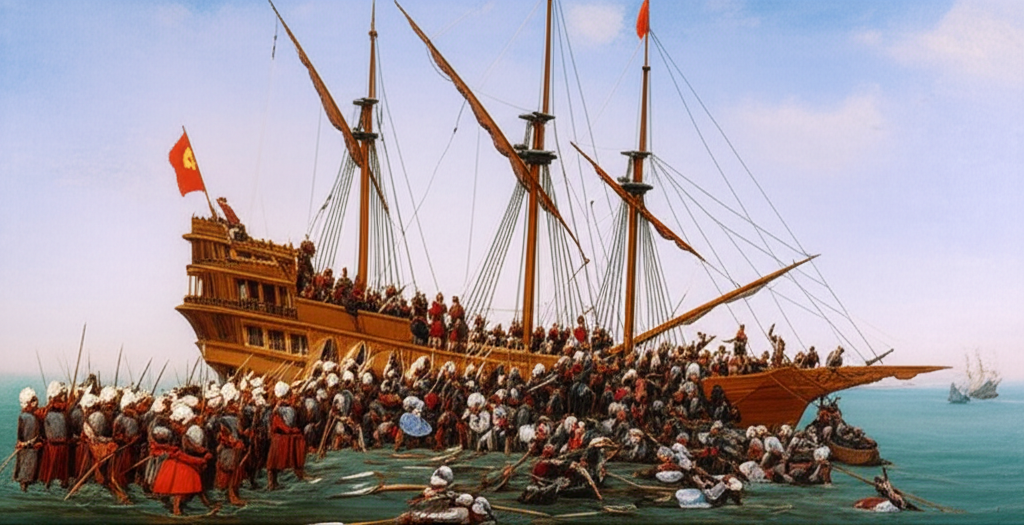
The Spanish and Italian galleys attempting to escape ran aground on the Djerba shoals. Ottoman galleys surrounded the enemy ships with agile maneuvers and subjected them to intense artillery fire. As the allied sailors trapped on the coast abandoned their ships in panic, Ottoman levents captured the enemy flagships one by one with boarding assaults.
-
4. May 15 - July 30, 1560
Siege of Djerba
The Spanish garrison under the command of Alvaro de Sande, its fleet entirely destroyed, took refuge in Djerba Castle. Turgut Reis and Piyale Paşa placed the fortress under a complete blockade by land and sea. Depleted provisions and thirst in the summer heat broke the Spanish resistance; the final assault forced the castle to surrender.
-
5. August 1560
Turkish Domination in North Africa
The Victory of Djerba became the greatest naval triumph following Preveza that cemented Ottoman supremacy in the Western Mediterranean. Thousands of captured Allied soldiers and dozens of galleys were taken to Istanbul. The backbone of Spanish naval power was broken, and Ottoman sovereignty along the North African coastlines was indisputably registered.
Frequently Asked Questions
When and where did Naval Battle of Djerba take place, and what was the outcome?
Naval Battle of Djerba took place on 14 May 1560 at Djerba Island, Tunisia and ended with Ottoman Victory.
Who were the commanders and troop numbers in Naval Battle of Djerba?
Ottoman Empire: Piyale Pasha, Turgut Reis (Strength: 86, Casualties: 3,000) · Holy League: Giovanni Andrea Doria (Strength: 54, Casualties: 18,000)
Why is Naval Battle of Djerba historically significant?
Ottoman naval supremacy in the Mediterranean reached its peak.