Battle of Varna
II. Critical battle in which Murad defeated the Crusader army.
Key Historical Facts
| Fact | Detail |
|---|---|
| Epic Battles | Battle of Varna |
| Date | 10 November 1444 |
| Location | Varna, Bulgaria (43.2, 27.92) |
| Belligerents, Commanders & Forces | Ottoman Empire: II. Murad (Strength: 40,000, Casualties: 10,000) · Crusader Army: Władysław III (Strength: 25,000, Casualties: 15,000) |
| Weather | Autumn |
| Outcome | Ottoman Victory |
Belligerents, Commanders & Forces
Ottoman Empire
- Commander
- II. Murad
- Stance
- Defending
- Strength
- 40,000
- Casualties
- 10,000
Crusader Army
- Commander
- Władysław III
- Stance
- Attacker
- Strength
- 25,000
- Casualties
- 15,000
Historical Significance
Ottoman dominance in the Balkans was consolidated.
Outcome
Ottoman Victory
Chronological Phases of the Battle
-
1. 10 October 1444
Participation of Wallachian Forces in Nicopolis and Crusader Progress
During the rapid march of the Hungarian army towards Varna, the Ottoman castles on the route were passed without being surrounded, and local Bulgarian elements from locations such as Vidin and Nicopolis joined the army. On October 10, 1444, around Nicopolis, a Wallachian cavalry unit of approximately 7,000 people under the command of Mircea II, son of Wallachian Voivode Vlad Dracul, joined the Christian coalition. This advance, accompanied by Ivan Şişman's son Frujin with his own guards, enabled the forces in the region to unite and provided significant cavalry support to the expedition.
-
2. 18 October 1444
Overcoming the Allied Bosphorus Blockade and Passage to Rumelia
The Christian navy blockaded the Dardanelles in order to secure the advance of the Hungarian forces, and simultaneously a second allied flotilla of six ships tried to hold the Bosphorus. However, both naval blockades were unsuccessful and Sultan II. Ottoman main combat elements of Anatolian origin under the command of Murad managed to cross the Bosphorus on 18 October 1444. This great army, transferred from Asia to the Rumelia side, advanced to intervene in the operation through the Balkans with a speed that the Crusaders did not expect.
-
3. On the night of 9 November 1444
War Council and Fortification Decision in Front of Varna
On the night of 9 November 1444, the Ottoman army of 40,000 to 60,000 people approached Varna from the west. At the convened war council, Cardinal Julian Cesarini stated that they were stuck between the Black Sea, Lake Varna and the steep forested slopes of the Franga Plateau, and suggested defending behind the Hussite-style chariot fortress (Wagenburg) or retreating quickly until the navy arrived. However, twenty-year-old King Władysław and commander Hunyadi rejected the defense offer, arguing that surrender or escape was impossible, and decided on an offensive battle.
-
4. On the morning of 10 November 1444
Order of Battle Between Lake Varna and the Franga Plateau
On the morning of November 10, Hunyadi deployed the Crusader army of approximately 20,000 people in a 3.5-kilometer arc stretching between Lake Varna and the Franga Plateau. While there were 3,500 people consisting of royal guards and mercenaries in the center, the right wing was leaning on the hill towards the village of Kamenar, and the left wing was supported by the chariot fortress near the lake and the sea. On the opposite front, Sultan II. Murad positioned himself with ditches and fences behind the janissaries stationed around the Thracian burial mounds, and placed Rumelian and Anatolian sipahis on the wings.
-
5. 10 November 1444
Disruption of the Crusader Right Wing and Destruction in the Swamps
In the first phase of the battle, the attack of the light Ottoman cavalry against the Croatian troops was repelled with firearms, and then, when the Crusaders began to pursue irregularly, the Anatolian cavalry launched an ambush from the flank and counterattacked. The dispersed right wing of the Crusader tried to escape towards Galata Castle on the opposite shore of the Gulf of Varna, but most of the soldiers were destroyed in the swamps around Lake Varna and the Devnya River. While Cardinal Cesarini perished in these swamps, only Talovac's troops were able to take shelter in the chariot castle.
-
6. 10 November 1444
King Władysław's Central Offensive and Collapse
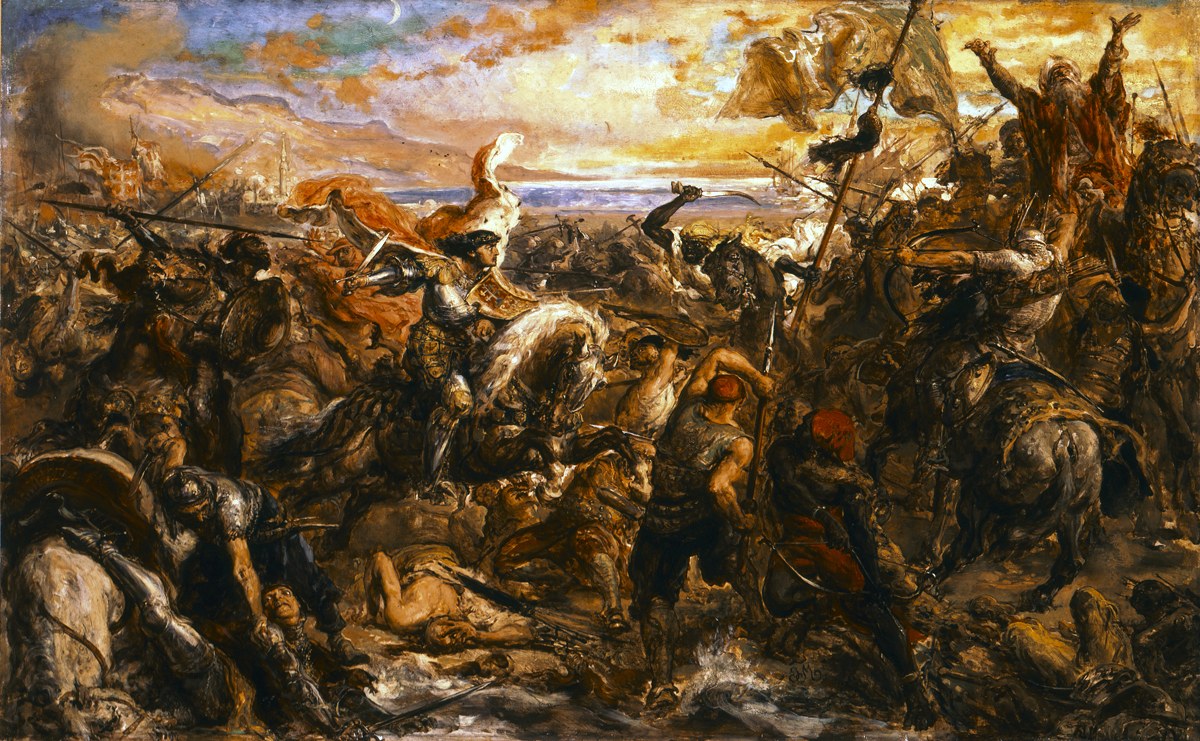
Ignoring the warnings of Hunyadi, who was helping Szilágyi on the left wing, King Władysław launched a direct attack on the Ottoman center with 500 Polish knights. Breaking through the Janissary ranks, Sultan II. The attack, which aimed to capture Murad, collapsed in front of the sultan's tent when the horse stumbled or was shot, and the king lost his life. Although Hunyadi tried to save the king's body when he returned, the order in the panicked army was completely disrupted, the Crusader troops were severely defeated, suffering thousands of casualties, and dispersed from the square.
-
7. After 10 November 1444
Hunyadi's Withdrawal to the Danube Line and His Imprisonment in Wallachia
After the disaster in Varna, Hunyadi managed to gather what was left of the army and retreat to the Danube River line. However, when he entered the territory of Wallachia, he was captured and imprisoned by Voivode Vlad Dracul, who feared Ottoman retaliation or demanded ransom. Hunyadi, who was released after the Hungarian nobles threatened military action against Wallachia and paid a large amount of ransom, became one of the most competent administrators in the Kingdom of Hungary, which was dragged into a political crisis with the death of King Władysław.
Frequently Asked Questions
When and where did Battle of Varna take place, and what was the outcome?
Battle of Varna took place on 10 November 1444 at Varna, Bulgaria and ended with Ottoman Victory.
Who were the commanders and troop numbers in Battle of Varna?
Ottoman Empire: II. Murad (Strength: 40,000, Casualties: 10,000) · Crusader Army: Władysław III (Strength: 25,000, Casualties: 15,000)
Why is Battle of Varna historically significant?
Ottoman dominance in the Balkans was consolidated.