Battle of Marathon
Critical battle in which the Athenians defeated the numerically superior Persian army and preserved Greek democracy.
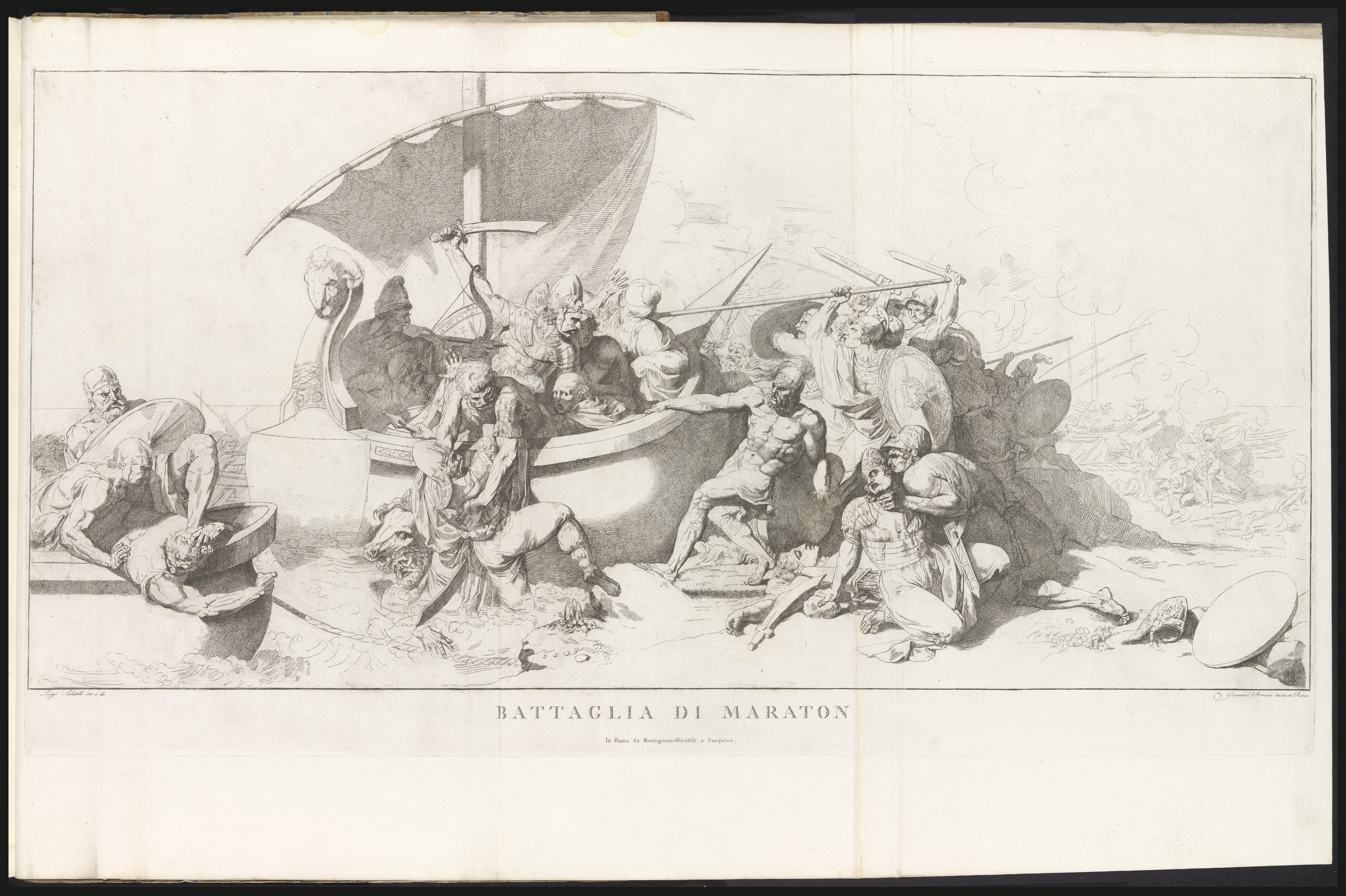
Key Historical Facts
| Fact | Detail |
|---|---|
| Epic Battles | Battle of Marathon |
| Date | 490 BC, September |
| Location | Marathon Plain, Greece (38.12, 23.97) |
| Belligerents, Commanders & Forces | Athens: Miltiades (Strength: 10,000, Casualties: 192) · Persian Empire: Datis (Strength: 25,000, Casualties: 6,400) |
| Weather | Autumn weather |
| Outcome | Athens Victory |
Belligerents, Commanders & Forces
Athens
- Commander
- Miltiades
- Stance
- Defending
- Strength
- 10,000
- Casualties
- 192
Persian Empire
- Commander
- Datis
- Stance
- Attacker
- Strength
- 25,000
- Casualties
- 6,400
Historical Significance
The birth of Western civilization. Marathon running comes from this war.
Outcome
Athens Victory
Chronological Phases of the Battle
-
1. Late August 490 BC
The Fall of Eretria and the Cyclades Campaign
The Persian fleet crossed the Aegean Sea and subjugated Naxos and the Cyclades. The city of Eretria, which had supported the Ionian Revolt, was besieged, betrayed from within, and completely sacked. A massive Persian force under Datis and Artaphernes, guided by the exiled tyrant Hippias, put into motion their plan to land at the Plain of Marathon, their next target being Athens.
-
2. Early September 490 BC
The Marathon Bay Landing and March
The Persian army landed at the Bay of Marathon, where they could easily deploy their cavalry. Upon receiving the news, the Athenians marched to the plain under the leadership of the strategist Miltiades, without waiting for aid from Sparta. Roughly ten thousand Athenian and one thousand Plataean hoplites blocked the mountain passes leading to the city of Athens, trapping the enemy along the coastline. The two armies faced each other for days.
-
3. Morning of September 12, 490 BC
Greek Assault and Rapid Approach
Noticing that the Persian cavalry was temporarily being embarked onto ships, Miltiades ceased waiting and gave the order to attack. The Greek phalanx deliberately thinned its center and reinforced its wings. Upon coming within the lethal range of Persian archers, the hoplites broke into a run. This unexpectedly rapid charge by the heavily armored Greek infantry caused great confusion and disorder in the Persian ranks.
-
4. Noon of September 12, 490 BC
Double Envelopment and Pincer
The elite Persian and Saka units positioned at the center of the battle succeeded in pushing back the weak Greek center. However, Miltiades's plan worked flawlessly; the strong Greek wings rapidly crushed the Persians' weak flanks and converged behind them. Trapped in a pincer, the Persian infantry completely lost its maneuverability and found itself squeezed between the deadly bronze spears of the Greek hoplites.
-
5. Afternoon of September 12, 490 BC
Flight into the Marshes and Coastal Slaughter
The Persian troops, who managed to break the siege, fled in panic to the coastline and the Great Marsh region in the north. Thousands of invaders, unfamiliar with the geography of the region, bogged down in the mud and perished. A fierce beach brawl ensued between the Greeks reaching the shore and the Persians trying to save their ships. While the Athenians captured seven Persian ships, the rest of the fleet put out to sea.
-
6. Evening of September 12, 490 BC
Lightning March on Athens
Seeing the Persian fleet turn toward Cape Sounion to strike defenseless Athens, Miltiades immediately marched his exhausted army back to the city. The hoplites covered the distance of approximately forty kilometers in record time with their armor, reaching the walls of Athens. Finding the victorious army guarding Athens waiting for them upon arriving at the port, the Persians dared not disembark and sailed back toward Asia.
Frequently Asked Questions
When and where did Battle of Marathon take place, and what was the outcome?
Battle of Marathon took place on 490 BC, September at Marathon Plain, Greece and ended with Athens Victory.
Who were the commanders and troop numbers in Battle of Marathon?
Athens: Miltiades (Strength: 10,000, Casualties: 192) · Persian Empire: Datis (Strength: 25,000, Casualties: 6,400)
Why is Battle of Marathon historically significant?
The birth of Western civilization. Marathon running comes from this war.