Thermopile Battle
The legendary last stand of 300 Spartans against the Persian army.
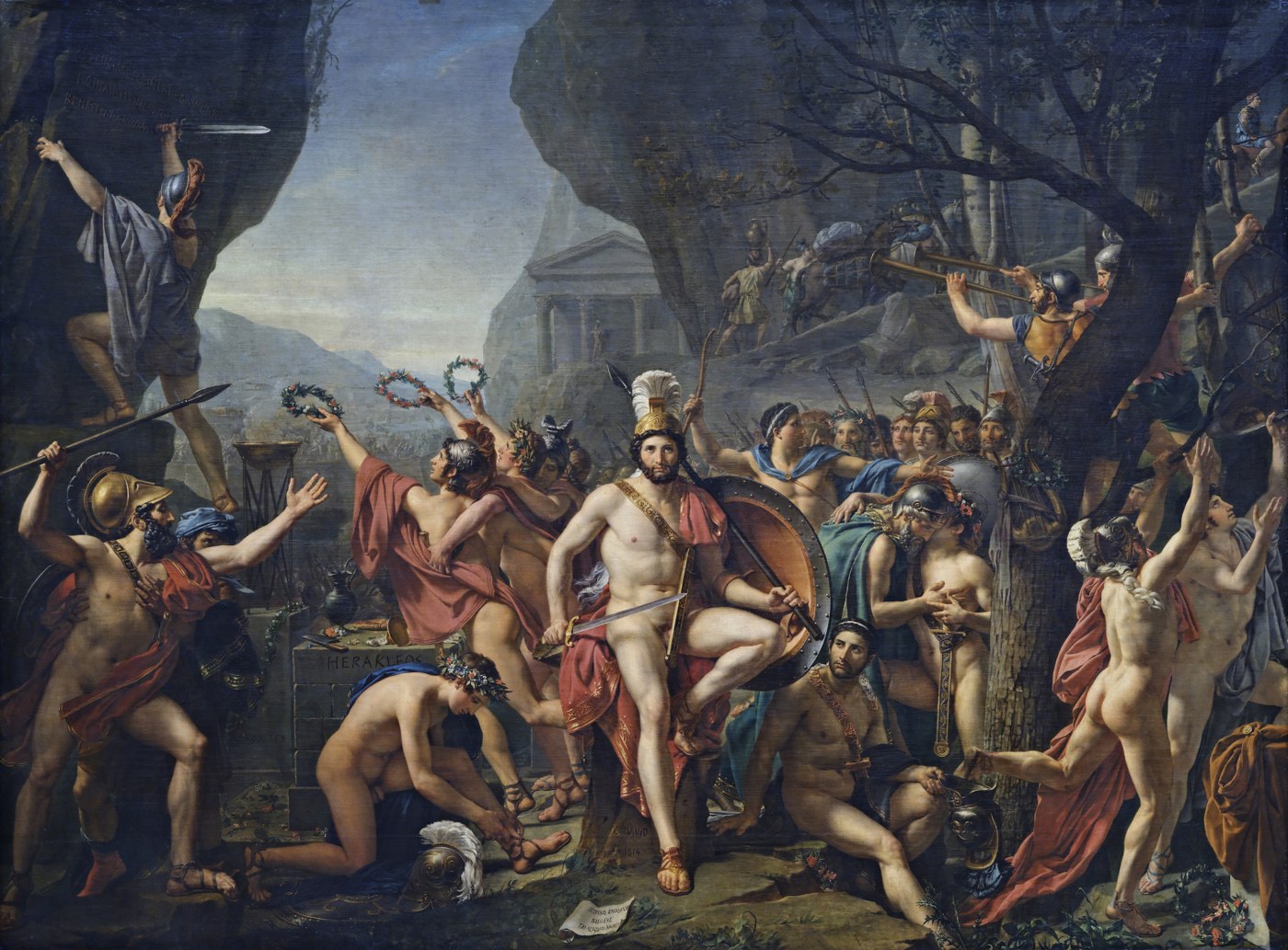
Key Historical Facts
| Fact | Detail |
|---|---|
| Epic Battles | Thermopile Battle |
| Date | 480 BC, August |
| Location | Thermopile Pass, Greece (38.8, 22.54) |
| Belligerents, Commanders & Forces | Greek City States: King Leonidas I (Strength: 7,000, Casualties: 4,000) · Persian Empire: Xerxes I (Strength: 150,000, Casualties: 20,000) |
| Weather | Hot summer day |
| Outcome | Persian Tactical Victory - Greek Moral Victory |
Belligerents, Commanders & Forces
Greek City States
- Commander
- King Leonidas I
- Stance
- Defending
- Strength
- 7,000
- Casualties
- 4,000
Persian Empire
- Commander
- Xerxes I
- Stance
- Attacker
- Strength
- 150,000
- Casualties
- 20,000
Historical Significance
Legend of Spartan courage. He ensured Greek unity.
Outcome
Persian Tactical Victory - Greek Moral Victory
Chronological Phases of the Battle
-
1. early 480 BC
Gathering and Marching of the Persian Army in Sardis
In early 480 BC, the Persian King Xerxes' strategic plan was to break all resistance by advancing through Thrace and Macedonia with a huge land and sea force. To facilitate logistics operations, pontoon bridges were established over the Dardanelles and forces were transferred from Asia to European territory. This massive deployment led to the submission of many Greek cities in the region to Persian demands for land and water and constituted the first strategic phase of the campaign.
-
2. August 480 BC
The Spartan Expedition and the Forward Campaign of King Leonidas
When the news of the approach of the Persian army reached Greece in August 480 BC, the Carneia festival was being celebrated in Sparta, the military leader of the alliance, and religious laws forbade the army from campaigning. However, the ephors, considering the emergency, decided to organize a pioneering expedition under the command of one of their kings, Leonidas I. Leonidas took 300 Spartans, the royal guard, with him and moved north. The purpose of this operation was to defend the narrow pass at Thermopylae until the main army arrived by gathering troops from other Greek cities along the way.
-
3. late August or early September 480 BC
Defense and First Day Battles at Thermopile Pass
Leonidas positioned himself at the middle gate, the narrowest part of Thermopylae, and positioned himself in front of the defensive wall previously built by the Phocians. He also stationed 1,000 Phocians along the mountain path to prevent a possible siege. On the first day of the battle, Xerxes first ordered 5,000 archers to shoot, but the bronze helmets and shields deflected the arrows. Then 10,000 Medes and Kissians attacked the Greek phalanx in the narrow pass in waves. Standing shoulder to shoulder in the narrow terrain and with superior shield size, the Greek hoplites repelled the enemy. The 10,000-man elite Immortals unit sent by Xerxes was also unable to overcome the Spartans, who employed false retreat tactics, and suffered heavy casualties.
-
4. 480 BC
Second Day Offensives and Siege of the Anopaia Mountain Trail
On the second day, Xerxes, assuming that the Greeks could not resist due to their wounds, raised his infantry to attack again; However, when the attacks failed like the first one, he stopped the attack and retreated to his headquarters in confusion. During this blockage, a local Trachisian named Ephialtes reported to the Persians the Anopaia mountain path that surrounded the Thermopile from behind. That same evening, Xerxes dispatched his commander, Hydarnes, with the force of the Immortals under his command, to infiltrate behind the Greek lines via the mountain path. This strategic encirclement move was the critical turning point that broke the deadlock in the passage and completely changed the balance of power on the front.
-
5. 480 BC
Third Day Siege and Kolonos Hill Last Stand
At the dawn of the third day, while the Persian column overran the Phocians on the mountain and completed the siege, Leonidas convened a war council and sent back the bulk of the allied troops. He chose to cover the retreat, remaining as a rearguard with himself, 300 Spartans, 700 Thespians led by Demophilus, and the Thebans. The Greeks charged into the wider part of the pass and fought until their spears were broken; Leonidas lost his life in this collision. The last defenders, who retreated to Kolonos Hill behind the wall as the immortals approached from behind, were completely destroyed as a result of the intense volley fire of the Persian archers, and the Thermopile Passage was opened to the Persians.
-
6. late 480 BC
Persian Operation in Boeotia and the Capture of Athens
After the fall of the Thermopylae Pass and the withdrawal of the fleet from Artemisium, the Persian army attacked the Boeotia region. After plundering and burning the cities of Plataea and Thespiae, which refused to surrender, the Persians marched on evacuated Athens and captured and destroyed the city. Meanwhile, the people of Athens were evacuated to the island of Troezen and Salamis, and the Peloponnesians blocked the land route by building a defensive wall on the Isthmus of Corinth. Fearing being trapped in Europe after the defeat at the Battle of Salamis, Xerxes left Mardonius in Greece while he retreated to Asia with the bulk of his army.
-
7. the following year
Battle of Plataea and the End of the Persian Invasion
The following year, Mardonius, the commander who remained behind after Xerxes retreated to Asia, was stationed in Boeotia to complete the conquest campaign. When the Peloponnesians took action and marched on Attica under the pressure of the Athenians, Mardonius withdrew to the vicinity of Plataea in order to meet the Greeks in open ground. The two sides met near the city of Plataea. In the battle, the Greek army won a decisive victory and destroyed most of the Persian forces, and Mardonius was defeated. This victory was the final turning point that definitively ended the Achaemenid Empire's second invasion of Greece.
Frequently Asked Questions
When and where did Thermopile Battle take place, and what was the outcome?
Thermopile Battle took place on 480 BC, August at Thermopile Pass, Greece and ended with Persian Tactical Victory - Greek Moral Victory.
Who were the commanders and troop numbers in Thermopile Battle?
Greek City States: King Leonidas I (Strength: 7,000, Casualties: 4,000) · Persian Empire: Xerxes I (Strength: 150,000, Casualties: 20,000)
Why is Thermopile Battle historically significant?
Legend of Spartan courage. He ensured Greek unity.