Battle of Artemisium
A naval engagement fought concurrently with the Battle of Thermopylae during the Second Persian Invasion in 480 BC. The allied Greek navy sought to halt the overwhelmingly superior Persian fleet in the Artemision Strait; though tactically a stalemate, it resulted in a strategic withdrawal.
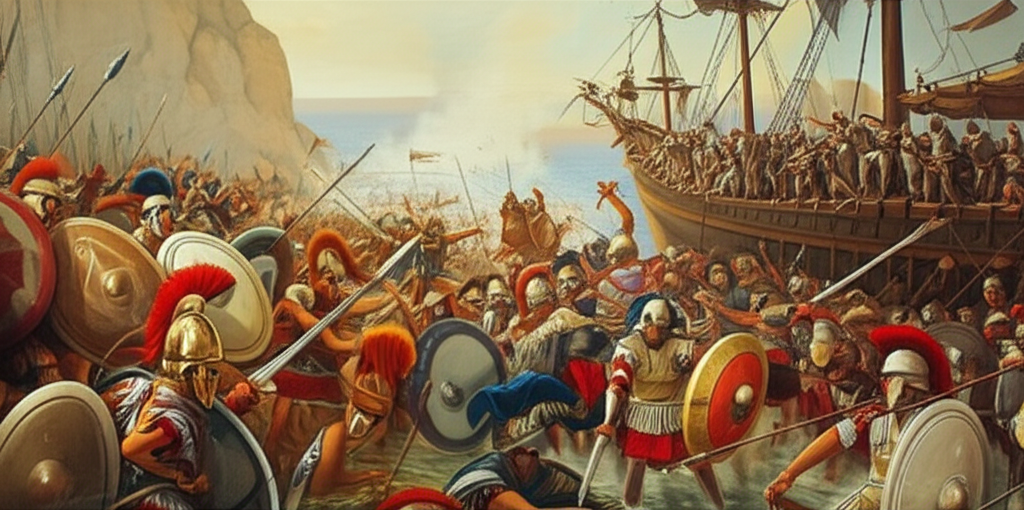
Key Historical Facts
| Fact | Detail |
|---|---|
| Epic Battles | Battle of Artemisium |
| Date | August 480 BC |
| Location | Cape Euboea, Greece (39.052, 23.238) |
| Belligerents, Commanders & Forces | Achaemenid Empire (Persians): Megabazus and Achaemenes (Strength: 80,000, Casualties: Fırtınalar ve çatışmalarda 400'den fazla gemi kaybı) · Alliance of Greek City-States: Eurybiades and Themistocles (Strength: 40,000, Casualties: Yaklaşık 100 kadırga hasarlı veya batmış) |
| Weather | Severe summer storms and the turbulent waters of the Aegean Sea |
| Outcome | Tactical draw; strategic withdrawal of the Greek fleet to Salamis following the fall of Thermopylae |
Belligerents, Commanders & Forces
Achaemenid Empire (Persians)
- Commander
- Megabazus and Achaemenes
- Stance
- Attacker
- Strength
- 80,000
- Casualties
- Fırtınalar ve çatışmalarda 400'den fazla gemi kaybı
Alliance of Greek City-States
- Commander
- Eurybiades and Themistocles
- Stance
- Defending
- Strength
- 40,000
- Casualties
- Yaklaşık 100 kadırga hasarlı veya batmış
Historical Significance
It proved that the Greek naval force could hold its own in the open sea against the numerically superior Persian fleet, forming the tactical foundation of the ultimate victory at the Battle of Salamis.
Outcome
Tactical draw; strategic withdrawal of the Greek fleet to Salamis following the fall of Thermopylae
Chronological Phases of the Battle
-
1. Day 1, Dawn
The Storm of Magnesia
A ferocious storm that broke out as the Persian fleet approached the shores of Magnesia drove hundreds of Persian ships onto the rocks, shattering them. This natural disaster provided the Greek alliance with a massive moral and numerical advantage before a single arrow was fired.
-
2. Day 1, Late Afternoon
Kyklos Defense
Against the direct Persian assault, Themistocles established an ingenious defensive circle. Arranging their ships in a circle with their prows facing outward, the Greeks repelled the Persian containment attempts and succeeded in capturing thirty enemy triremes on the first day.
-
3. Night of the 2nd Day
Second Night Storm
The Persian detachment sent south of the island of Euboea to outflank the Greek fleet was completely destroyed in a second severe storm that erupted at night. While this event thwarted the Persian siege plan, it further solidified the resistance in the Greek lines.
-
4. Day 3 Noon
The Crescent Assault
Enraged by the losses, the Persian commanders arranged their fleet in a crescent formation and attacked. Trapped in the narrow strait, the massive Persian galleys were unable to maneuver and collided with one another. Bloody hand-to-hand combat ensued, resulting in heavy casualties on both sides.
-
5. Day 3 Evening
Strategic Retreat
The news that the Thermopylae Pass had fallen and King Leonidas was killed reached Artemision. Realizing that holding the strait no longer had strategic significance, Themistocles secretly ordered his heavily damaged fleet to withdraw and set sail for the Salamis Strait off the coast of Athens.
Frequently Asked Questions
When and where did Battle of Artemisium take place, and what was the outcome?
Battle of Artemisium took place on August 480 BC at Cape Euboea, Greece and ended with Tactical draw; strategic withdrawal of the Greek fleet to Salamis following the fall of Thermopylae.
Who were the commanders and troop numbers in Battle of Artemisium?
Achaemenid Empire (Persians): Megabazus and Achaemenes (Strength: 80,000, Casualties: Fırtınalar ve çatışmalarda 400'den fazla gemi kaybı) · Alliance of Greek City-States: Eurybiades and Themistocles (Strength: 40,000, Casualties: Yaklaşık 100 kadırga hasarlı veya batmış)
Why is Battle of Artemisium historically significant?
It proved that the Greek naval force could hold its own in the open sea against the numerically superior Persian fleet, forming the tactical foundation of the ultimate victory at the Battle of Salamis.