Battle of the Teutoburg Forest
Battle in which the Germans destroyed 3 Roman legions, leading to Rome's withdrawal from Germania.
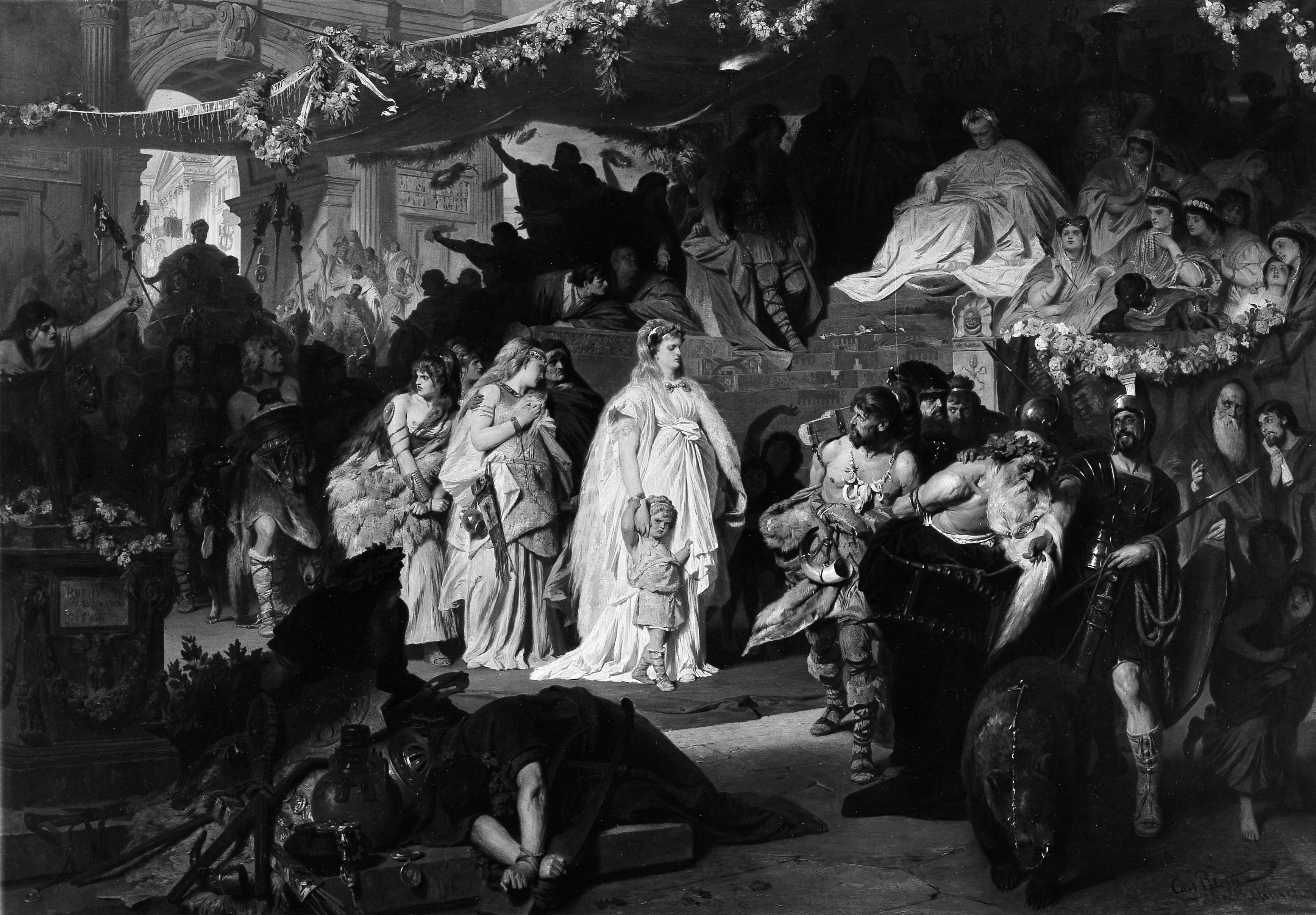
Key Historical Facts
| Fact | Detail |
|---|---|
| Epic Battles | Battle of the Teutoburg Forest |
| Date | 9 AD |
| Location | Teutoburg Forest, Germany (52.4, 8.13) |
| Belligerents, Commanders & Forces | Germanic Tribes: Arminius (Strength: 20,000, Casualties: 1,000) · Roman Empire: Publius Varus (Strength: 20,000, Casualties: 20,000) |
| Weather | Rainy forest |
| Outcome | Germanic Victory |
Belligerents, Commanders & Forces
Germanic Tribes
- Commander
- Arminius
- Stance
- Defending
- Strength
- 20,000
- Casualties
- 1,000
Roman Empire
- Commander
- Publius Varus
- Stance
- Attacker
- Strength
- 20,000
- Casualties
- 20,000
Historical Significance
Rome never crossed east of the Rhine again.
Outcome
Germanic Victory
Chronological Phases of the Battle
-
1. AD 9 - Morning of Day 1
Setting the Trap: Deviation of the Marching Column
Three Roman legions under the command of Publius Quinctilius Varus strayed from the main supply route upon the false rebellion report of Arminius, a Cheruscan chieftain whom they believed to be an ally. Tens of thousands of soldiers, civilians, and massive baggage trains entered the dense thickets of the Teutoburg Forest. This narrow mountain pass, which disrupted Rome's classical battle formation, turned into the perfect ambush site awaited by the Germanic tribes secretly organized by Arminius.
-
2. AD 9 - Afternoon of Day 1
First Blow: Raid in the Storm
As a fierce autumn storm set in, Germanic warriors bursting from among the trees attacked the miles-long marching column. The soaked bows and heavy shields crippled the Roman defense. The density of the trees prevented the legionaries from closing ranks. Varus was forced to construct a makeshift camp with great difficulty and spend the night under siege.
-
3. AD 9 - Day 2
Retreat through the Marshes and Night March
Burning most of their wagons, the Romans set out on a life-or-death march westward at dawn. They attempted to advance through marshy terrain in hopes of reaching an open area, but relentless guerrilla raids from the wooded hills exhausted the legions. Discipline began to break down, officer casualties mounted, and Roman units were divided into isolated defense pockets.
-
4. AD 9 - Day 3
Kalkriese Gap: The Sand Wall Trap
Seeking a path to escape, the Roman army was trapped between Kalkriese Hill and an impassable swamp. Arminius had constructed a hidden sand and turf rampart on the hillside. Trapped in the narrow corridor, the legions were mowed down by a hail of javelins coming from above the rampart. The Roman cavalry's attempt to flee ended in drowning in the swamp, and the lines completely collapsed.
-
5. AD 9 - Day 4
The Varian Disaster: The End of the Legions
Realizing that all hope of escape was gone, Varus and his senior officers committed suicide by falling upon their swords to avoid capture. The leaderless force of approximately twenty thousand Roman soldiers was almost completely annihilated, and three legionary eagles were lost. This defeat forever ended the Roman Empire's dream of conquering Germania, pushing the border back to the Rhine River.
Frequently Asked Questions
When and where did Battle of the Teutoburg Forest take place, and what was the outcome?
Battle of the Teutoburg Forest took place on 9 AD at Teutoburg Forest, Germany and ended with Germanic Victory.
Who were the commanders and troop numbers in Battle of the Teutoburg Forest?
Germanic Tribes: Arminius (Strength: 20,000, Casualties: 1,000) · Roman Empire: Publius Varus (Strength: 20,000, Casualties: 20,000)
Why is Battle of the Teutoburg Forest historically significant?
Rome never crossed east of the Rhine again.