Battle of Stalingrad
The turning point of the Second World War. The Soviets surrounded and destroyed the 6th German Army.
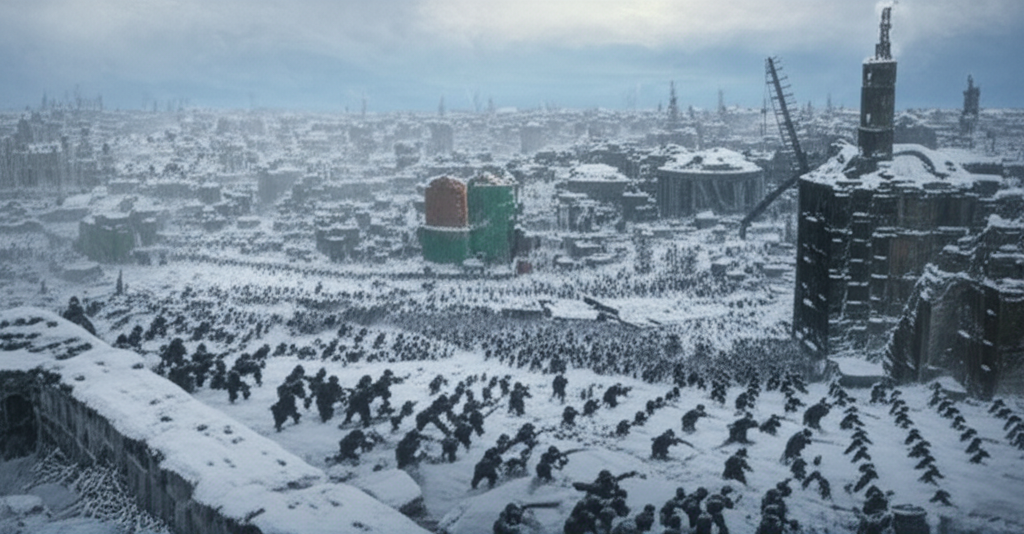
Key Historical Facts
| Fact | Detail |
|---|---|
| Epic Battles | Battle of Stalingrad |
| Date | 23 August 1942 - 2 February 1943 |
| Location | Stalingrad (Volgograd), Russia (48.708, 44.514) |
| Belligerents, Commanders & Forces | Soviet Union: Georgy Zhukov, Vasily Chuikov (Strength: 1,100,000, Casualties: 1,130,000) · Nazi Germany: Friedrich Paulus (Strength: 1,040,000, Casualties: 850,000) |
| Weather | Extreme cold, -30°C, snowstorms |
| Outcome | Soviet Victory |
Belligerents, Commanders & Forces
Soviet Union
- Commander
- Georgy Zhukov, Vasily Chuikov
- Stance
- Defending
- Strength
- 1,100,000
- Casualties
- 1,130,000
Nazi Germany
- Commander
- Friedrich Paulus
- Stance
- Attacker
- Strength
- 1,040,000
- Casualties
- 850,000
Historical Significance
II. The turning point of World War II. The German advance stopped and the retreat began.
Outcome
Soviet Victory
Chronological Phases of the Battle
-
1. June 28 – August 22, 1942
Opening of Case Blue and Advance to the Don Bend
Hitler launched Operation Blue to reach the Caucasus oil fields. The 6th Army, under the command of General von Paulus, broke through the Soviet defenses at the bend of the Don River and rapidly headed towards the banks of the Volga. Suffering heavy casualties, the Red Army units were forced to retreat gradually to the outer defense lines of Stalingrad. The German armored vanguard seized control of the steppe.
-
2. August 23 - 31, 1942
Luftwaffe Raid and Assault on the Northern Suburbs
Air Fleet 4, under the command of General Richthofen, rained over a thousand tons of bombs on the city. Stalingrad was reduced to a smoking heap of rubble, and over forty thousand civilians lost their lives. The German 16th Panzer Division reached the banks of the Volga from the north, isolating the city from that direction. The Soviet 62nd Army took up positions to defend the city under the command of General Chuikov.
-
3. September 1 – 26, 1942
Mamaev Kurgan and Railway Station No. 1 Clashes
German infantry launched an assault toward the heart of the city. The strategic Mamayev Kurgan hill and the Central Railway Station changed hands multiple times a day. General Chuikov deployed close-quarters urban combat doctrine. The 13th Guards Division, under Rodimtsev's command, crossed the Volga under heavy bombardment to hold the western bank and prevented the Germans from capturing the river entirely.
-
4. September 27 – October 13, 1942
The Factory District and the War of the Ruins
The combat moved into the massive hangars of the Dzerzhinsky Tractor, Barrikady, and Red October factories. The Germans called the street fighting Rattenkrieg, meaning war of the rats. Piles of rubble, sewers, and basements turned into deadly positions for Soviet snipers. The distance between the two armies dropped to grenade range, and the frontline trenches interlocked.
-
5. 14 October - 18 November 1942
Final German Offensive and the Volga Docks
Paulus launched his final major general offensive to clear the city center. As the tractor factory fell, Soviet forces were compressed into a narrow strip a few hundred meters wide on the banks of次 the Volga. Freezing conditions on the river made supply and casualty evacuation impossible. Despite heavy losses, Chuikov's soldiers stubbornly held the river line, buying crucial time.
-
6. November 19 - 23, 1942
Operation Uranus and the Pincer Closes
Marshal Zhukov and Vasilevsky launched Operation Uranus, which had been prepared in secret. Soviet tank armies advancing from the Don and Stalingrad fronts breached the weak Romanian flanks defended by the Axis armies. The northern and southern pincer arms united at the town of Kalach on November 23. The German 6th Army, numbering approximately two hundred and fifty thousand men, was completely encircled within a massive cauldron.
-
7. November 24 – December 11, 1942
Waiting Inside the Cauldron and the Failure of the Airlift
Forbidden from retreating by Hitler, Paulus was ordered to declare Stalingrad a fortress. Hermann Göring claimed the army could be supplied by air, but the Luftwaffe could only average ninety tons per day instead of the required five hundred tons. Due to freezing winter conditions, fuel shortages, and Soviet anti-aircraft fire, German soldiers rapidly faced the threat of starvation and freezing.
-
8. 12 - 23 December 1942
Operation Winter Storm and the Relief Attempt
Field Marshal von Manstein launched Operation Winter Storm from the south in an attempt to rescue the besieged 6th Army. General Hoth's armored units came within some fifty kilometers of the pocket. However, obeying Hitler's orders, Paulus did not initiate a breakout maneuver outward. The Soviet Counter-Offensive halted Manstein's forces, and the Germans' last hope of salvation was entirely extinguished.
-
9. January 10 – 25, 1943
Operation Koltso and the Fragmentation of the Cauldron
The Don Front, commanded by General Rokossovsky, launched Operation Koltso following the rejection of the surrender ultimatum. The offensive, initiated by the fire of seven thousand Soviet artillery pieces, swept the pocket eastward. With the fall of Pitomnik and Gumrak airfields—the final supply bases—the Germans were completely cut off from the outside world. The pocket was split into southern and northern sectors.
-
10. January 26 – February 2, 1943
Final Surrender in the Basement of the Universal Store
Hitler promoted Paulus to the rank of field marshal, hoping he would commit suicide. However, Paulus surrendered on January 31 at his headquarters in the basement of the Department Store. General Strecker's units on the northern front also laid down their arms on February 2. More than ninety thousand German soldiers were taken prisoner. This victory marked the final decline of the Axis powers on the Eastern Front.
Frequently Asked Questions
When and where did Battle of Stalingrad take place, and what was the outcome?
Battle of Stalingrad took place on 23 August 1942 - 2 February 1943 at Stalingrad (Volgograd), Russia and ended with Soviet Victory.
Who were the commanders and troop numbers in Battle of Stalingrad?
Soviet Union: Georgy Zhukov, Vasily Chuikov (Strength: 1,100,000, Casualties: 1,130,000) · Nazi Germany: Friedrich Paulus (Strength: 1,040,000, Casualties: 850,000)
Why is Battle of Stalingrad historically significant?
II. The turning point of World War II. The German advance stopped and the retreat began.