Battle of Pharsalus
Civil war conflict in which Julius Caesar defeated his rival Pompey and became the sole ruler of Rome.
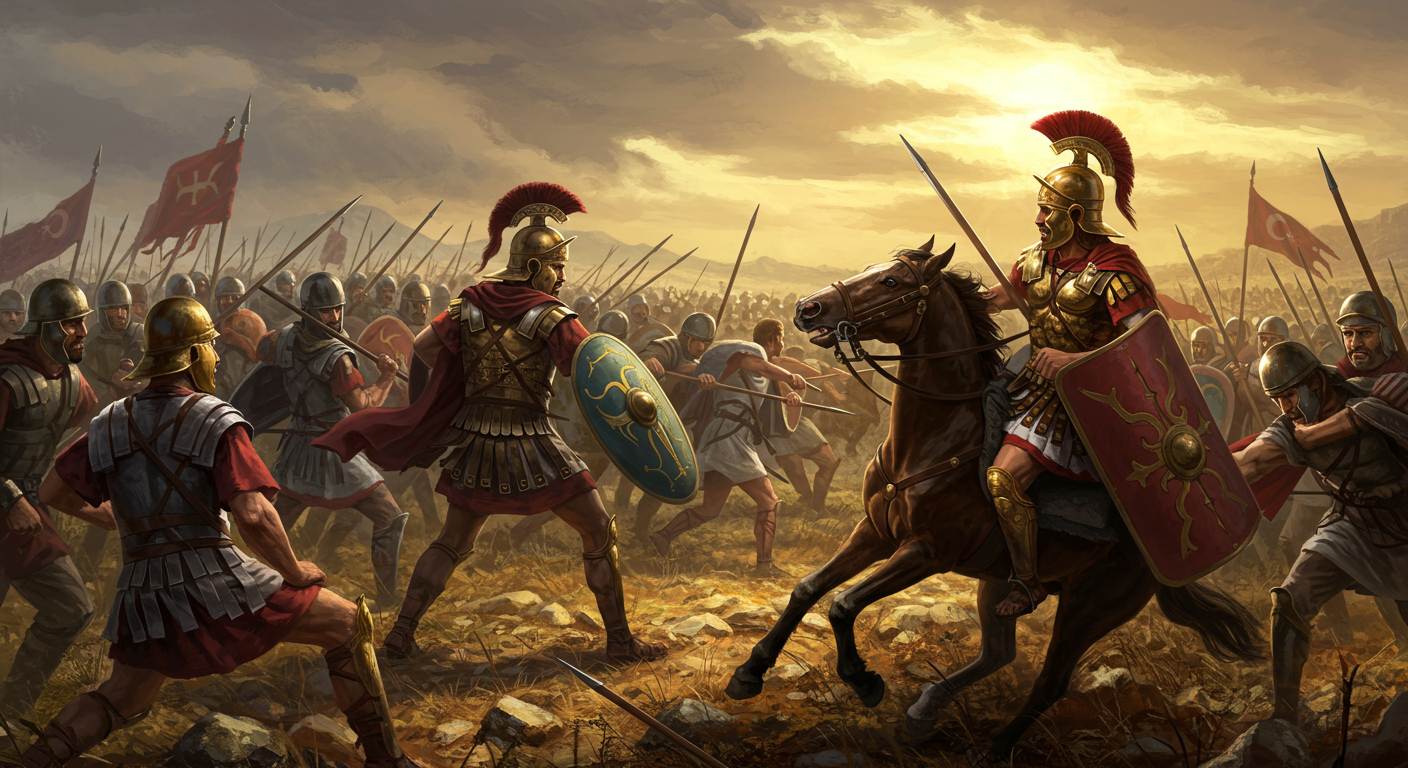
Key Historical Facts
| Fact | Detail |
|---|---|
| Epic Battles | Battle of Pharsalus |
| Date | 9 August 48 BC |
| Location | Pharsalus, Greece (39.3, 22.4) |
| Belligerents, Commanders & Forces | Caesar's Forces: Julius Caesar (Strength: 22,000, Casualties: 1,000) · Senate Forces: Pompey the Great (Strength: 45,000, Casualties: 15,000) |
| Weather | Hot summer day |
| Outcome | Caesar's Victory |
Belligerents, Commanders & Forces
Caesar's Forces
- Commander
- Julius Caesar
- Stance
- Attacker
- Strength
- 22,000
- Casualties
- 1,000
Senate Forces
- Commander
- Pompey the Great
- Stance
- Defending
- Strength
- 45,000
- Casualties
- 15,000
Historical Significance
End of the Roman Republic, beginning of the Empire.
Outcome
Caesar's Victory
Chronological Phases of the Battle
-
1. 07:00 in the morning
Positions Are Being Taken, Tension Is Rising
The armies of Caesar and Pompey take up their strategic positions on the plain of Pharsalus. Tension is at its peak.
-
2. 08:00 in the morning
Knight Attack Begins
Pompey's strong cavalry receives orders to attack Caesar's flanks. The dust cloud is rising.
-
3. 09:00 in the morning
Caesar's Secret Reserves Activated
Caesar's hidden reserves oppose Pompey's plans by opposing the cavalry.
-
4. Noon 10:00
Infantry Lines Collide
Roman legions engage in deadly hand-to-hand combat, swords clanking.
-
5. 12:00 noon
Pompey's Hope is Fading
Pompey's army begins to collapse, the lines are splitting. Despair is spreading.
-
6. Afternoon 14:00
The Escape of Pompey
Pompey accepts defeat and flees the battlefield, leaving his army to its fate.
-
7. Evening 17:00
Victory is Caesar's, Rome is His
Caesar's soldiers celebrate victory, the fate of Rome changes. The smell of blood and dust is in the air.
Frequently Asked Questions
When and where did Battle of Pharsalus take place, and what was the outcome?
Battle of Pharsalus took place on 9 August 48 BC at Pharsalus, Greece and ended with Caesar's Victory.
Who were the commanders and troop numbers in Battle of Pharsalus?
Caesar's Forces: Julius Caesar (Strength: 22,000, Casualties: 1,000) · Senate Forces: Pompey the Great (Strength: 45,000, Casualties: 15,000)
Why is Battle of Pharsalus historically significant?
End of the Roman Republic, beginning of the Empire.