Normandy Landing (D-Day)
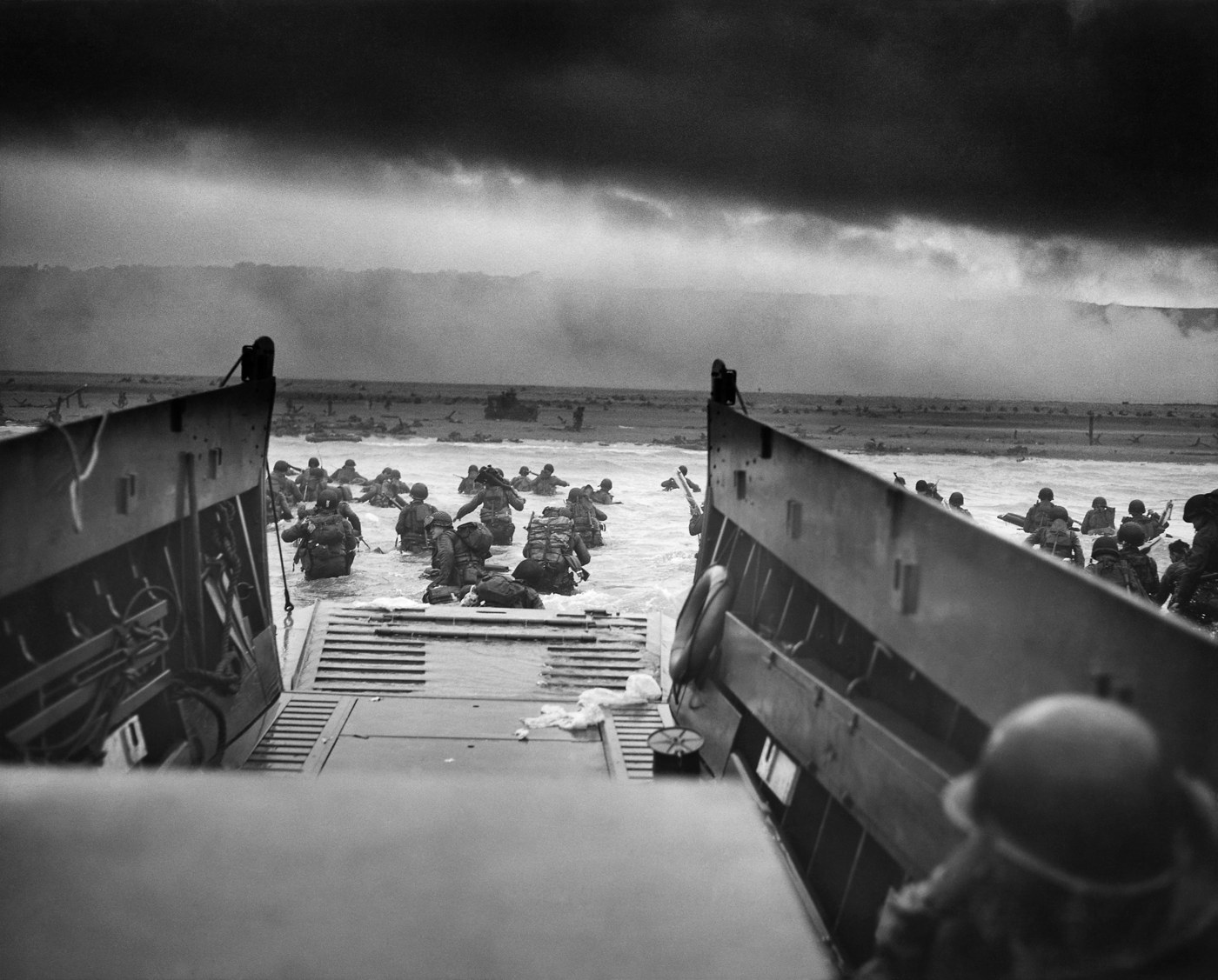
The largest amphibious operation of the Second World War. The Allies began to liberate Europe from Nazi occupation.
Key Historical Facts
| Fact | Detail |
|---|---|
| Epic Battles | Normandy Landing (D-Day) |
| Date | 6 June 1944 |
| Location | Normandy, France (49.36, -0.88) |
| Belligerents, Commanders & Forces | Allied Forces: Dwight D. Eisenhower (Strength: 156,000, Casualties: 10,000) · Nazi Germany: Erwin Rommel (Strength: 50,000, Casualties: 9,000) |
| Weather | Cloudy, windy, wavy sea |
| Outcome | Allied Victory |
Belligerents, Commanders & Forces
Allied Forces
- Commander
- Dwight D. Eisenhower
- Stance
- Attacker
- Strength
- 156,000
- Casualties
- 10,000
Nazi Germany
- Commander
- Erwin Rommel
- Stance
- Defending
- Strength
- 50,000
- Casualties
- 9,000
Historical Significance
The beginning of the liberation of Europe. The end of Nazi Germany has begun.
Outcome
Allied Victory
Chronological Phases of the Battle
-
1. 5–6 June 1944
Deception Operations on the Le Havre and Pas de Calais Line
The Allied command implemented large-scale deception plans as part of Operation Bodyguard in order to mislead the German defenses before the Normandy landings. The night before the invasion, No. In Operation Taxable, 617 Squadron RAF created an artificial convoy image on German radars by casting metal strips near Le Havre. This illusion was reinforced by small boats towing barrage balloons. At the same time, dummy paratroopers were dropped in the Le Havre and Isigny regions, giving the impression that additional airdrops were being made. Similar operations were carried out on the Pas de Calais and Boulogne-sur-Mer lines, aiming to keep German reserves away from the main landing area.
-
2. 6 June 1944, 00:16 – 03:30
Orne Bridges Raid and Ranville Takedown
The first action of the D-Day operation began at 00:16 on 6 June with a raid on the bridges over the Caen canal and the Orne river with gliders. The Oxfordshire and Buckinghamshire Light Infantry Regiment captured these bridges intact and were then reinforced with the 5th Parachute Brigade. The 3rd Parachute Brigade destroyed the bridges over Dives. Most of the pioneers and paratroopers tasked with marking the landing zone north of Ranville were swept east by high winds. Despite this, the bridgeheads were secured and Major General Richard Gale landed in the area with the third wave of gliders at 03:30 and formed the defensive line on the eastern flank.
-
3. 6 June 1944, 00:15 – 02:00
American Airborne on the Cotentin Peninsula and the Carentan Line
More than 13,000 paratroopers from the American 82nd and 101st Airborne Divisions were dropped on the Cotentin Peninsula by C-47 planes after midnight. The troops' mission was to hold the causeways behind Utah Beach and secure the western flank by destroying the Douve River bridges north of Carentan. Due to heavy cloud cover and anti-aircraft fire, only one landing zone could be precisely marked and the troops were dispersed over a wide area. Although only a third of the force was able to gather in the first hours, this disorganization paralyzed the German 7th Army's counter-moves and led to the disintegration of the defense.
-
4. 6 June 1944, 06:30 – 12:00
Utah Beach Offensive and Beachhead Expansion
The amphibious assault on Utah Beach began at 06:30 with the 8th Infantry Regiment of the 4th Infantry Division. Strong currents dragged the landing craft 1,800 meters south of the planned site. Brigadier General Theodore Roosevelt Jr., the first senior officer to land on the shore, decided to start the war from the exact point where they were and directed the incoming waves to this new line. There were clashes throughout the day with elements of the 919th Grenadian Regiment defending the region. The main fortified position and the other resistance point to the south were neutralized by noon. American forces managed to land 21,000 soldiers at the cost of 197 casualties.
-
5. 6–8 June 1944
Climbing the Pointe du Hoc Cliffs and Destroying the Gun Battery
200 soldiers from the 2nd Ranger Battalion, commanded by Lieutenant Colonel James Rudder, were assigned to destroy the shore battery stationed at Pointe du Hoc, a critical cape between the beaches of Utah and Omaha. Despite fire from atop the pillboxes, the Rangers scaled the 100-foot sheer cliffs with hooks, ropes and ladders. When they reached the top, they saw that the cannons in the position had retreated to an orchard 550 meters to the south and destroyed them with explosives. Out of ammunition and isolated in the face of counter-attacks by the German 914th Grenadian Regiment, the Rangers defended their positions until reinforcements arrived on 8 June.
-
6. 6 June 1944, 06:30 – 12:00
Crisis and Breakthrough Operation at Omaha Beach
The 1st and 29th Infantry Divisions, which landed on Omaha Beach, unexpectedly encountered intense fire from the German 352nd Infantry Division. The failure of the morning bombardment to hit the targets and the sinking of 27 of the 32 amphibious tanks of the 741st Tank Battalion at sea left the infantry unprotected. The soldiers were able to reach the shore by walking through neck-deep water with heavy losses. Egress from the beach was only possible through five well-defended gullies, and by the end of the morning only 600 soldiers had reached the high ground. Towards noon, with the naval fire and the Germans running out of ammunition, American troops made progress by clearing some corridors.
-
7. 6 June 1944, 07:25 – 16:00
Gold Beach Landing and Longues-sur-Mer Battery
The first landings at Gold Beach began at 07:25; High winds forced the landing of amphibious DD tanks very close to shore. Three of the four guns on the offshore Longues-sur-Mer battery were disabled by direct hits from the cruisers HMS Ajax and Argonaut at 06:20. The 75 mm gun of the Le Hamel fortified position on the beach continued to resist until an engineering tank (AVRE) fired explosives at the rear entrance at 16:00. On the western flank the 1st Battalion of the Hampshire Regiment captured Arromanches. However, due to the stiff resistance of the 352nd Infantry Division, the Bayeux objective was not achieved on the first day.
-
8. 6 June 1944, 07:45 – evening
Juno Beach Skirmishes and Defense of Courseulles-sur-Mer
Canadian forces' landing at Juno Beach was delayed by rough seas, and the infantry landed before the supporting armor and suffered heavy casualties. Concrete pillboxes and machine gun nests in the settlements of Courseulles-sur-Mer, St Aubin-sur-Mer and Bernières-sur-Mer were cleared by house-to-house street fighting. Beach exits could only be opened through abandoned vehicles and bridge systems. The troops advancing in the direction of Bény-sur-Mer overran the machine gun positions with flanking maneuvers. The 9th Canadian Infantry Brigade advanced close to Carpiquet airfield in the afternoon, and at night the Juno and Gold shore lines joined.
-
9. 6 June 1944, 07:30 – 20:15
Attack on Sword Beach and Ouistreham Battery
During the landing at Sword Beach, which started at 07:30, 21 of the 25 amphibious tanks successfully reached land and provided cover for the infantry. However, the rapidly rising tide and heavily mined obstacles caused serious congestion on the beach. No. 1 of the 1st Special Service Brigade under the command of Lord Lovat, who landed with the second wave. 4 Commando troops passed through the town of Ouistreham and attacked the German artillery battery on the shore from behind. French naval commandos under the command of Commander Philippe Kieffer also cleared the fortified casino area. British troops advanced throughout the day and expanded the beachhead on the eastern front.
-
10. 6 June 1944, 16:00 – 7 June 1944
German Counter-Offensive and the End of D-Day in Front of Bayeux
At 16:00, the German 21st Panzer Division counter-attacked between Sword and Juno beaches and came very close to reaching the English Channel; but was stopped by stiff resistance from the British 3rd Division and was then recalled to defend the area between Caen and Bayeux. The city of Bayeux could not be captured on the first day due to the stubborn defense of the German 352nd Infantry Division. Although the Allies failed to reach D-Day objectives such as Carentan, Saint-Lô, and Caen on the first day, they were able to land 160,000 soldiers, establishing a solid bridgehead and decisively defeating Hitler's goal of driving the invaders into the sea.
Frequently Asked Questions
When and where did Normandy Landing (D-Day) take place, and what was the outcome?
Normandy Landing (D-Day) took place on 6 June 1944 at Normandy, France and ended with Allied Victory.
Who were the commanders and troop numbers in Normandy Landing (D-Day)?
Allied Forces: Dwight D. Eisenhower (Strength: 156,000, Casualties: 10,000) · Nazi Germany: Erwin Rommel (Strength: 50,000, Casualties: 9,000)
Why is Normandy Landing (D-Day) historically significant?
The beginning of the liberation of Europe. The end of Nazi Germany has begun.