Battle of Moscow
Nazi Germany's first major defeat against the Soviet Union.
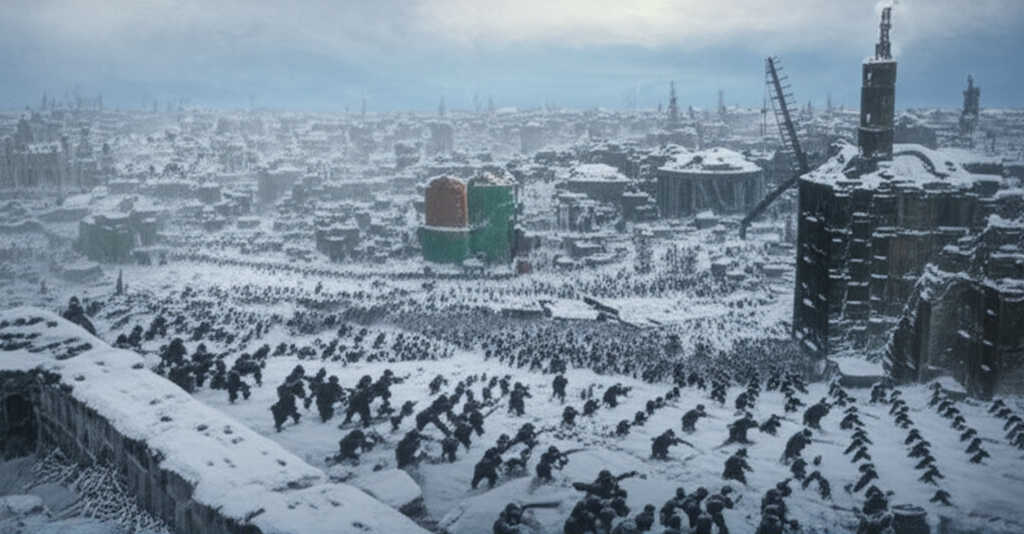
Key Historical Facts
| Fact | Detail |
|---|---|
| Epic Battles | Battle of Moscow |
| Date | 2 October 1941 - 7 January 1942 |
| Location | Moscow, Russia (55.75, 37.62) |
| Belligerents, Commanders & Forces | Soviet Union: Georgy Zhukov (Strength: 1,250,000, Casualties: 650,000) · Nazi Germany: Fedor von Bock (Strength: 1,000,000, Casualties: 250,000) |
| Weather | Very harsh winter, -40 degrees |
| Outcome | Soviet Victory |
Belligerents, Commanders & Forces
Soviet Union
- Commander
- Georgy Zhukov
- Stance
- Defending
- Strength
- 1,250,000
- Casualties
- 650,000
Nazi Germany
- Commander
- Fedor von Bock
- Stance
- Attacker
- Strength
- 1,000,000
- Casualties
- 250,000
Historical Significance
The end of the blitzkrieg. Germany was stopped for the first time.
Outcome
Soviet Victory
Chronological Phases of the Battle
-
1. October 2, 1941
Typhoon Operation Begins: Wind of Death
German armored units are advancing towards Moscow with relentless destruction; A bloody storm is breaking out on the eastern front.
-
2. 7-20 October 1941
Vyazma and Bryansk: The Circle Is Narrowing
The Soviet front is collapsing, hundreds of thousands of soldiers are surrounded; Desperate resistance pushes the limits of the impossible.
-
3. 13-30 October 1941
Mozhaysk Defense Line: Last Trench
Moscow's last line of defense is being established; Heroic soldiers swear to protect the city at the expense of their lives.
-
4. November 1941
Streets of Moscow: Bloody Conflict
German troops are based on the outskirts of the city; There are violent conflicts, street by street, house by house, and death is on the prowl.
-
5. December 1941
Last Stand: Siberian Reinforcement
Fresh forces from Siberia are sent to the front; The fate of Moscow is changing with an icy hope.
-
6. 5-6 December 1941
Soviet Counter-Offensive: The Ice is Breaking
The Soviet Union launches a major counter-offensive against German lines; The enemy is repelled, hope is restored.
-
7. January 7, 1942
German Retreat: Dawn of Victory
The German army is retreating from Moscow; The first great victory of the Soviet Union is won, the sun of hope is rising.
Frequently Asked Questions
When and where did Battle of Moscow take place, and what was the outcome?
Battle of Moscow took place on 2 October 1941 - 7 January 1942 at Moscow, Russia and ended with Soviet Victory.
Who were the commanders and troop numbers in Battle of Moscow?
Soviet Union: Georgy Zhukov (Strength: 1,250,000, Casualties: 650,000) · Nazi Germany: Fedor von Bock (Strength: 1,000,000, Casualties: 250,000)
Why is Battle of Moscow historically significant?
The end of the blitzkrieg. Germany was stopped for the first time.