Battle of Liegnitz
The war in which the Mongols defeated the Polish-German army in the middle of Europe.
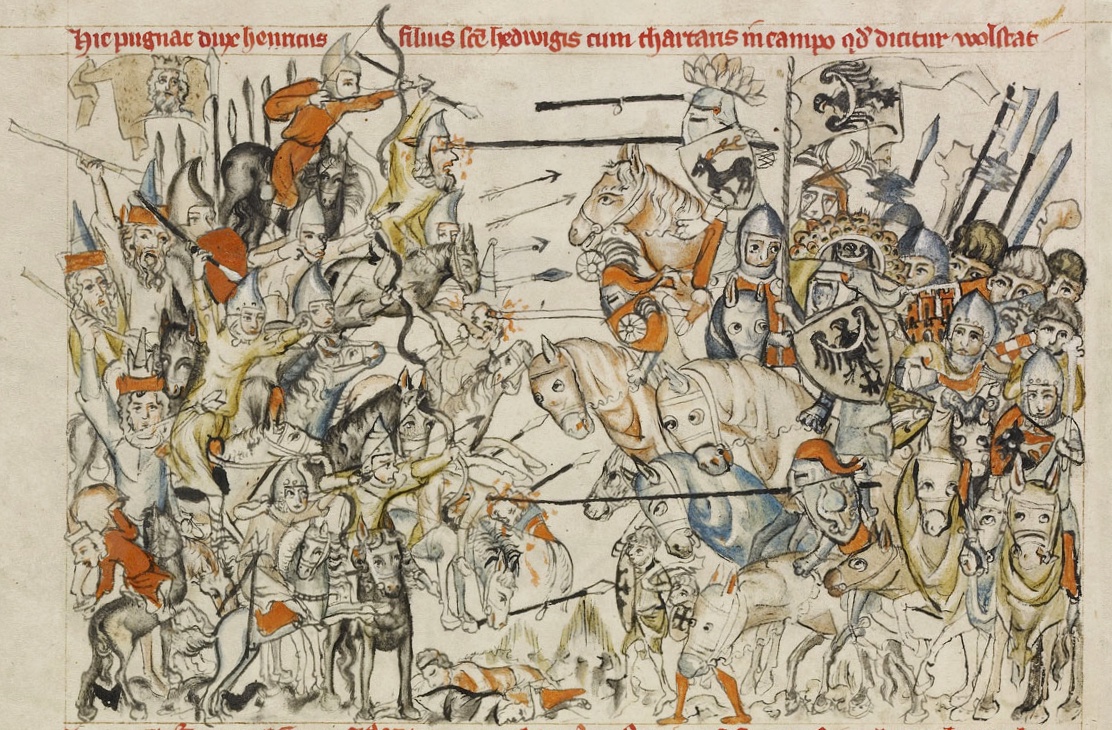
Key Historical Facts
| Fact | Detail |
|---|---|
| Epic Battles | Battle of Liegnitz |
| Date | 9 April 1241 |
| Location | Legnica, Poland (51.2, 16.1) |
| Belligerents, Commanders & Forces | Mongol Empire: Baydar (Strength: 20,000, Casualties: 1,500) · Poland-Silesia: Henri II (Strength: 25,000, Casualties: 10,000) |
| Weather | Spring |
| Outcome | Mongol Victory |
Belligerents, Commanders & Forces
Mongol Empire
- Commander
- Baydar
- Stance
- Attacker
- Strength
- 20,000
- Casualties
- 1,500
Poland-Silesia
- Commander
- Henri II
- Stance
- Defending
- Strength
- 25,000
- Casualties
- 10,000
Historical Significance
Europe was shaken by the fear of the Mongols.
Outcome
Mongol Victory
Chronological Phases of the Battle
-
1. 07:00 in the morning
Establishment of the Polish Line
Henri II's troops take up a defensive position near Legnica. A hopeless wait begins.
-
2. 08:00 in the morning
Attack of the Mongolian Pioneers
Mongolian horsemen make the first attack on Polish lines. Dust and panic fill the air.
-
3. 09:00 in the morning
Move of the Silesian Knights
Heavily armored Silesian knights confront the Mongol lines in an attempt to break through.
-
4. Noon 11:00
Mongol Tactics and Traps
The Mongols lure the Poles into a trap by pretending to retreat. A deadly game begins.
-
5. 12:00 noon
Smoke Bomb and Panic
Mongols create panic in the Polish army by using smoke bombs. Vision disappears, chaos reigns.
-
6. Afternoon 14:00
Death of Henri II
King Henri II is murdered in the middle of the war. Polish resistance is breaking down, hopes are ending.
-
7. Evening 17:00
Mongol Victory and Massacre
Mongols defeat the Polish army. A bloody victory is won in Legnica.
Frequently Asked Questions
When and where did Battle of Liegnitz take place, and what was the outcome?
Battle of Liegnitz took place on 9 April 1241 at Legnica, Poland and ended with Mongol Victory.
Who were the commanders and troop numbers in Battle of Liegnitz?
Mongol Empire: Baydar (Strength: 20,000, Casualties: 1,500) · Poland-Silesia: Henri II (Strength: 25,000, Casualties: 10,000)
Why is Battle of Liegnitz historically significant?
Europe was shaken by the fear of the Mongols.