Siege of Leningrad
The longest and deadliest siege in history. It took 872 days.
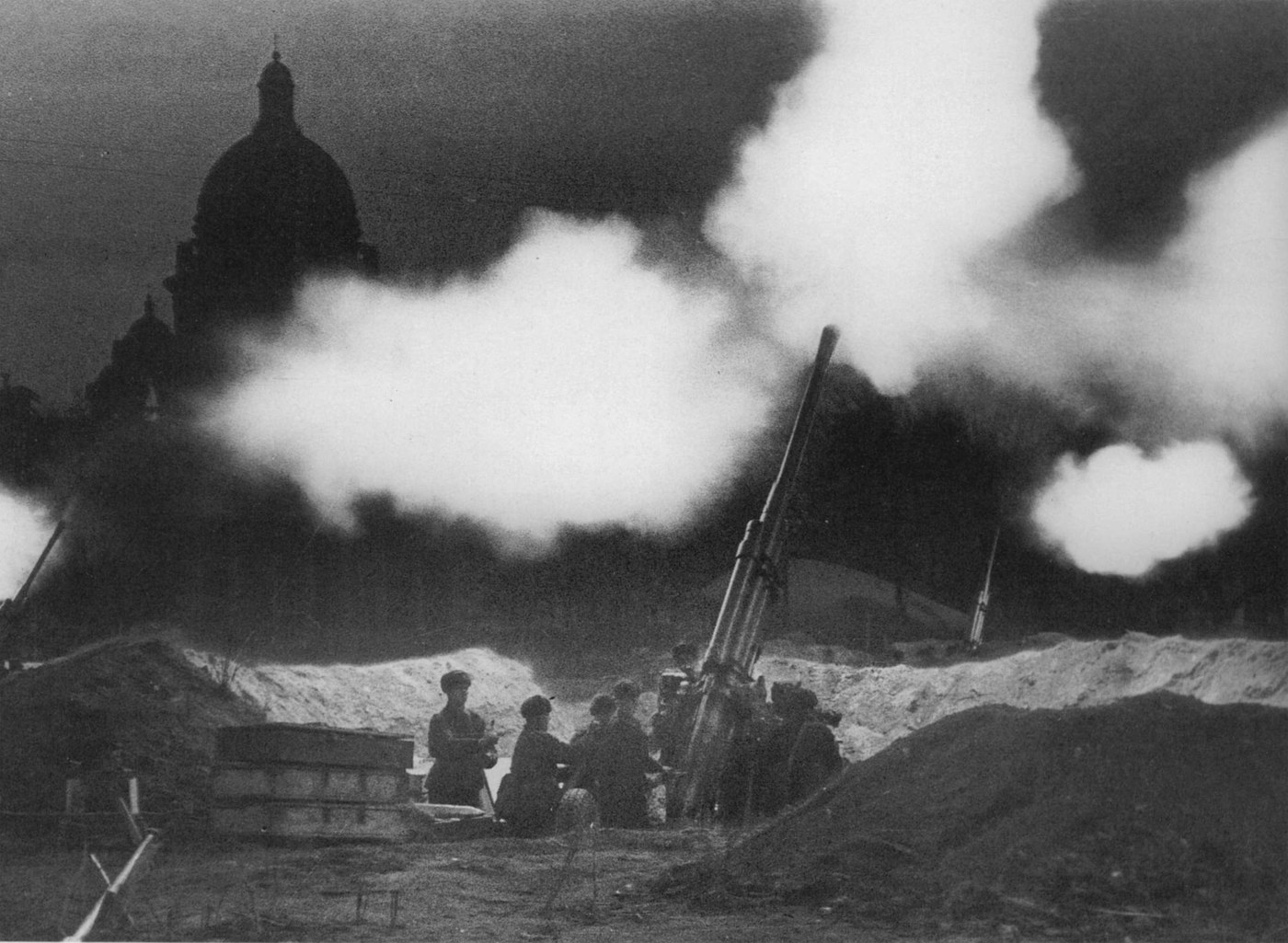
Key Historical Facts
| Fact | Detail |
|---|---|
| Epic Battles | Siege of Leningrad |
| Date | 8 September 1941 - 27 January 1944 |
| Location | Leningrad (St. Petersburg), Russia (59.93, 30.31) |
| Belligerents, Commanders & Forces | Soviet Union: Leonid Govorov (Strength: 930,000, Casualties: 1,500,000) · Nazi Germany: Wilhelm Ritter von Leeb (Strength: 725,000, Casualties: 400,000) |
| Weather | Extremely cold winters |
| Outcome | Soviet Resistance Victory |
Belligerents, Commanders & Forces
Soviet Union
- Commander
- Leonid Govorov
- Stance
- Defending
- Strength
- 930,000
- Casualties
- 1,500,000
Nazi Germany
- Commander
- Wilhelm Ritter von Leeb
- Stance
- Attacker
- Strength
- 725,000
- Casualties
- 400,000
Historical Significance
The deadliest siege in human history. More than 1 million civilians died.
Outcome
Soviet Resistance Victory
Chronological Phases of the Battle
-
1. August - 8 September 1941
The Noose Tightens and the Fall of Shlisselburg
Army Group North advanced rapidly, severing Leningrad's land communications. With the fall of the town of Shlisselburg, the city was completely cut off by land. With the Finnish army also exerting pressure from the north, millions of civilians and soldiers were trapped in a massive snare. Defensive lines were hastily dug.
-
2. September – October 1941
Badayev Warehouses Fire and Air Raids
The Luftwaffe heavily bombed the city, obliterating the Badayev warehouses, which held essential grain and sugar stocks. This strategic destruction opened the door to an irreparable famine during the very first weeks of the siege. Bread rations in the city were rapidly slashed to tragic levels.
-
3. November 1941 - February 1942
Deadly Winter and Great Famine
Freezing temperatures reaching minus forty degrees and dwindling supplies claimed hundreds of thousands of lives. City residents were given a daily ration of only one hundred and twenty-five grams of bread mixed with cellulose. The streets of Leningrad, devoid of heating and electricity, became the stage for one of the most ruthless humanitarian tragedies in history.
-
4. November 1941 - April 1942
Road of Life and Frozen Ladoga
With the freezing of Lake Ladoga, a legendary supply line was opened across the ice. Despite enemy artillery and cracking ice, trucks carried flour into the city while evacuating hundreds of children on their return trips. This perilous corridor kept Leningrad's pulse beating, however faintly.
-
5. May - August 1942
Cultural Resistance and the Shostakovich Symphony
Exhausted by famine and disease, the city proclaimed through its cultural will that it would not surrender. Composer Shostakovich's Seventh Symphony was performed by weakened musicians and broadcast via street loudspeakers across the entire front. This moment raised the defenders' morale to its peak.
-
6. August - October 1942
Sinyavino Offensive and Heavy Attrition
The Red Army launched a bloody offensive in the Sinyavino marshes to break the siege. Although the siege could not be broken, German Field Marshal Manstein's Operation Nordlicht, which aimed to completely capture the city, was thwarted. Despite heavy losses, the German offensive initiative was permanently broken.
-
7. 12 - 30 January 1943
Breaking the Corridor with Operation Iskra
The Leningrad and Volkhov fronts broke through the Shlisselburg pocket with a simultaneous offensive. The narrow strip of coast opened south of Lake Ladoga made it possible to construct a direct railway to the city. This corridor, named the Road of Victory, broke the total isolation and gave the city a vital breath of life.
-
8. 14 - 20 January 1944
Operation January Storm: Breaking the Siege
With the Krasnoye Selo-Ropsha Offensive, the Red Army dealt a fatal blow to the German encirclement. Advancing from two fronts, Soviet divisions surrounded the German besieging troops and captured heavy artillery batteries. The Wehrmacht was forced into a panicked retreat westward.
-
9. January 27, 1944
The End of Eight Hundred and Seventy-Two Days
The siege officially ended as the German army was completely driven out of Leningrad's range. The skies over the Neva River were illuminated by hundreds of artillery salvoes and fireworks. The eight hundred and seventy-two days of unprecedented resistance carved itself into history as an indelible epic of heroism and mourning.
Frequently Asked Questions
When and where did Siege of Leningrad take place, and what was the outcome?
Siege of Leningrad took place on 8 September 1941 - 27 January 1944 at Leningrad (St. Petersburg), Russia and ended with Soviet Resistance Victory.
Who were the commanders and troop numbers in Siege of Leningrad?
Soviet Union: Leonid Govorov (Strength: 930,000, Casualties: 1,500,000) · Nazi Germany: Wilhelm Ritter von Leeb (Strength: 725,000, Casualties: 400,000)
Why is Siege of Leningrad historically significant?
The deadliest siege in human history. More than 1 million civilians died.