Battle of Hastings
Battle in which the Norman Duke William conquered England.
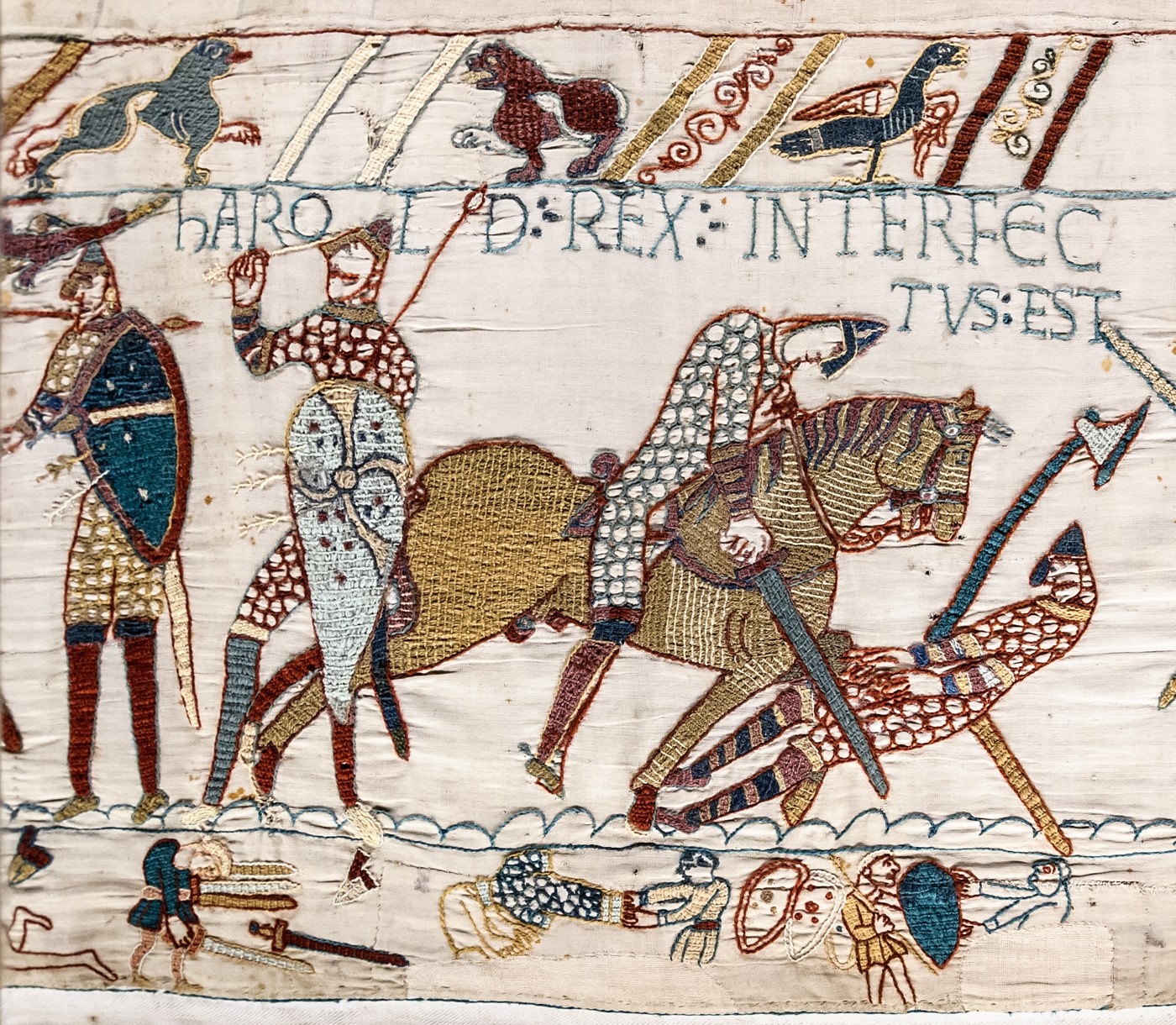
Key Historical Facts
| Fact | Detail |
|---|---|
| Epic Battles | Battle of Hastings |
| Date | 14 October 1066 |
| Location | Hastings, England (50.91, 0.49) |
| Belligerents, Commanders & Forces | Norman Army: William the Conqueror (Strength: 10,000, Casualties: 2,000) · England: King Harold II (Strength: 7,000, Casualties: 4,000) |
| Weather | Autumn |
| Outcome | Norman Victory |
Belligerents, Commanders & Forces
Norman Army
- Commander
- William the Conqueror
- Stance
- Attacker
- Strength
- 10,000
- Casualties
- 2,000
England
- Commander
- King Harold II
- Stance
- Defending
- Strength
- 7,000
- Casualties
- 4,000
Historical Significance
Beginning of the Norman conquest of England.
Outcome
Norman Victory
Chronological Phases of the Battle
-
1. September 28 – October 13, 1066
The Pevensey Landing and the Hastings Fortifications
The Norman fleet under the command of Duke William reached the shores of Pevensey and landed its forces. Constructing temporary fortifications around Hastings, the Normans pillaged local resources to force King Harold to march south rapidly. Harold, having just defeated the Norwegians in the north, was forced to redeploy to the region through a grueling and exhausting march without resting his army.
-
2. 14 October 1066, 09:00 - 11:00
Senlac Hill and the Shield Wall
King Harold formed the traditional Anglo-Saxon shield wall along the ridges of Senlac Hill. This dense, defensive line of English infantry repelled the Norman cavalry and foot soldiers attempting to scale the hill. The collapse and retreat of the Breton troops on the Norman left flank triggered a massive wave of panic and confusion in William's army.
-
3. 14 October 1066, 12:00 - 14:30
William's Intervention and Feigned Retreat Tactics
Rumors of his death having spread, William removed his helmet to show his face, instilling morale in his troops and rallying those who were fleeing. The Norman army employed planned feigned retreat maneuvers to draw the undisciplined Anglo-Saxon militias down the hill. Descending into the plain, the Saxon troops were surrounded by the returning heavy Norman cavalry and completely destroyed in the open field.
-
4. 14 October 1066, 15:00 - 17:30
Harold's Fall and the Collapse of the Defense
The high-angle volley fire of Norman archers and the relentless charges of the cavalry tore fatal gaps in the shield wall. With the death of King Harold after being struck, the Saxon command structure completely collapsed. Although the Huscarls, the royal guards, resisted around their monarch's corpse to their last breath, the main defense line disintegrated and the army routed.
-
5. 14 October 1066, 18:00 - 21:00
The Malfosse Skirmish and Pursuit
Pursuing the fleeing Saxon troops under the cover of night, Norman cavalry fell into an ambush in a deep trench and marshy area at the Malfosse locality. Although the Saxon rearguard inflicted serious casualties here, they could not prevent the ultimate Norman victory. Once this final resistance was broken, William became the absolute master of the southern coasts.
-
6. November - 25 December 1066
Siege of London and the Crown of Westminster
William encircled London with a wide sweep, isolating the southwestern flank and cutting off supply lines. Gathering at Berkhamsted, English nobles and clergy realized they could no longer resist and swore allegiance to William. Duke William was crowned King of England at Westminster Abbey on Christmas Day.
Frequently Asked Questions
When and where did Battle of Hastings take place, and what was the outcome?
Battle of Hastings took place on 14 October 1066 at Hastings, England and ended with Norman Victory.
Who were the commanders and troop numbers in Battle of Hastings?
Norman Army: William the Conqueror (Strength: 10,000, Casualties: 2,000) · England: King Harold II (Strength: 7,000, Casualties: 4,000)
Why is Battle of Hastings historically significant?
Beginning of the Norman conquest of England.