Battle of Copenhagen
The British Royal Navy attacked the port of Copenhagen to break the Second League of Armed Neutrality and prevent the Danish fleet from falling into Napoleon's hands. Commanded by Admiral Horatio Nelson, the British fleet engaged in an extremely fierce and bloody battle against formidable Danish coastal defenses and moored ships.
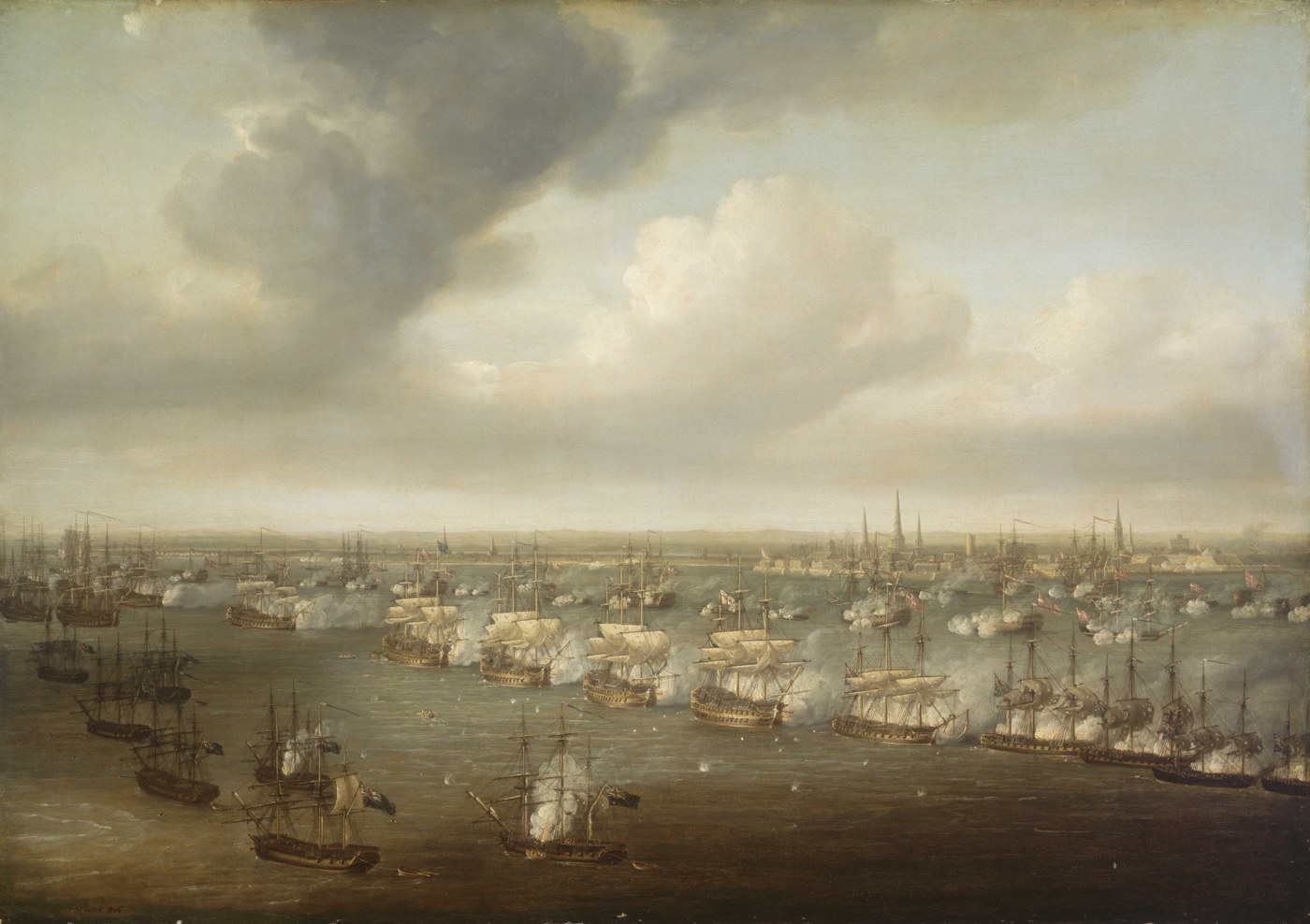
Key Historical Facts
| Fact | Detail |
|---|---|
| Epic Battles | Battle of Copenhagen |
| Date | April 2, 1801 |
| Location | Copenhagen Roads, Denmark (55.6983, 12.6186) |
| Belligerents, Commanders & Forces | Great Britain: Horatio Nelson, Sir Hyde Parker (Strength: 8,000, Casualties: 264 ölü, 689 yaralı) · Denmark-Norway: Olfert Fischer, Steffen William de Steen Bille (Strength: 5,200, Casualties: Yaklaşık 1.600 ila 1.800 ölü veya yaralı, 2.000 esir) |
| Weather | Shifting winds and a hazy, cool spring atmosphere. |
| Outcome | British Tactical and Strategic Victory (Armistice Achieved) |
Belligerents, Commanders & Forces
Great Britain
- Commander
- Horatio Nelson, Sir Hyde Parker
- Stance
- Attacker
- Strength
- 8,000
- Casualties
- 264 ölü, 689 yaralı
Denmark-Norway
- Commander
- Olfert Fischer, Steffen William de Steen Bille
- Stance
- Defending
- Strength
- 5,200
- Casualties
- Yaklaşık 1.600 ila 1.800 ölü veya yaralı, 2.000 esir
Historical Significance
The battle, which passed into history when Nelson ignored the retreat order by 'putting the telescope to his blind eye,' led to Denmark's withdrawal from the neutrality pact and, combined with the assassination of Tsar Paul I of Russia, resulted in the maintenance of the anti-French naval blockade.
Outcome
British Tactical and Strategic Victory (Armistice Achieved)
Chronological Phases of the Battle
-
1. 09:30 in the morning
Advance to the King's Highway Canal
The British fleet under the command of Nelson silently approached the Danish defense line through the dangerous, shoal-filled King's Channel. The Danes had chained together floating batteries and old warships to protect the harbor. Several British ships ran aground in the shallow waters, but Nelson did not abandon his plan.
-
2. 10:00 - 12:00
Intense Artillery Duel Commences
British ships-of-the-line anchored opposite the Danish floating redoubts and opened a lethal broadside fire. The distance between the two sides was incredibly close. Danish sailors and volunteer civilians responded with unprecedented courage to protect their homeland and inflicted heavy damage.
-
3. 13:15
Blind Eye and Insubordination
Watching the battle from afar, Admiral Parker saw casualties mounting and hoisted the signal to withdraw. However, placing his telescope to his blind eye, Nelson said, 'I really do not see the signal,' and ordered the attack to continue. This critical decision completely changed the course of the battle.
-
4. 14:00
Collapse of the Danish Line
Nelson's relentless artillery fire tore deep gaps in the Danish defenses. Commander Fischer's flagship, the Dannebrog, caught fire and exploded. Most of the Danish ships surrendered or were disabled, but the Trekroner fortress continued to pound the British vessels.
-
5. 15:00
Armistice and Declaration of Victory
Nelson, whose own ships had also sustained heavy damage, cleverly sent a ceasefire letter to the Crown Prince of Denmark. Opening the negotiation table by stating that he wished to spare the wounded Danish prisoners, Denmark—apprehensive of the bombardment of the city—ceased fire, and the parties reached a peace agreement recognizing British supremacy.
Frequently Asked Questions
When and where did Battle of Copenhagen take place, and what was the outcome?
Battle of Copenhagen took place on April 2, 1801 at Copenhagen Roads, Denmark and ended with British Tactical and Strategic Victory (Armistice Achieved).
Who were the commanders and troop numbers in Battle of Copenhagen?
Great Britain: Horatio Nelson, Sir Hyde Parker (Strength: 8,000, Casualties: 264 ölü, 689 yaralı) · Denmark-Norway: Olfert Fischer, Steffen William de Steen Bille (Strength: 5,200, Casualties: Yaklaşık 1.600 ila 1.800 ölü veya yaralı, 2.000 esir)
Why is Battle of Copenhagen historically significant?
The battle, which passed into history when Nelson ignored the retreat order by 'putting the telescope to his blind eye,' led to Denmark's withdrawal from the neutrality pact and, combined with the assassination of Tsar Paul I of Russia, resulted in the maintenance of the anti-French naval blockade.