Battle of Berlin
II. The last major battle of World War II in Europe. Hitler committed suicide.
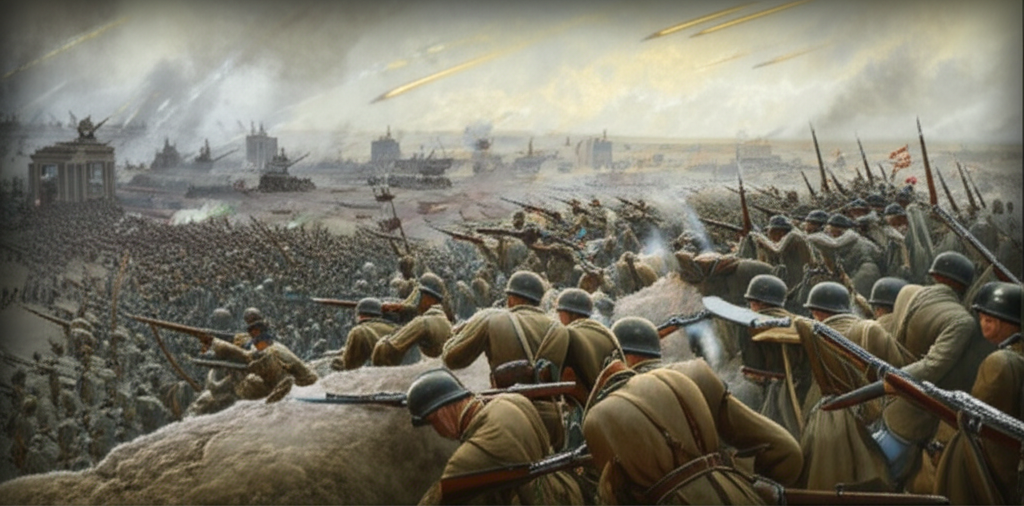
Key Historical Facts
| Fact | Detail |
|---|---|
| Epic Battles | Battle of Berlin |
| Date | 16 April - 2 May 1945 |
| Location | Berlin, Germany (52.52, 13.4) |
| Belligerents, Commanders & Forces | Soviet Union: Georgy Zhukov (Strength: 2,500,000, Casualties: 361,000) · Nazi Germany: Helmuth Weidling (Strength: 1,000,000, Casualties: 458,000) |
| Weather | Spring |
| Outcome | Soviet Victory |
Belligerents, Commanders & Forces
Soviet Union
- Commander
- Georgy Zhukov
- Stance
- Attacker
- Strength
- 2,500,000
- Casualties
- 361,000
Nazi Germany
- Commander
- Helmuth Weidling
- Stance
- Defending
- Strength
- 1,000,000
- Casualties
- 458,000
Historical Significance
The end of Nazi Germany. II. World War II ended in Europe.
Outcome
Soviet Victory
Chronological Phases of the Battle
-
1. Morning of April 16
Seelow Hills: The Bloody Beginning
Zhukov's army attacks the Seelow Heights, the German defense resists, a bloody start occurs.
-
2. April 18 Afternoon
Soviet Tanks Advancing
Soviet tanks are advancing towards Berlin through the gaps in the German lines, resistance is increasing.
-
3. Evening of April 21
Siege of Berlin Ends
Berlin is completely surrounded, the connection with the outside world is cut off, hopes are lost.
-
4. Night of April 25
Dance of Death in the Streets
Street clashes are intensifying, every building becomes a castle, every corner becomes a grave.
-
5. Morning of April 30
Last Attack on the Reichstag
Soviet soldiers launch the final assault on the Reichstag, the symbol of the Nazis is about to fall.
-
6. April 30 Afternoon
Last Hours in the Führerbunker
Hitler commits suicide in his bunker, and Nazi Germany comes to an end.
-
7. Morning of May 2
Berlin Surrenders
Berlin surrenders, the war ends, a new world rises from the rubble.
Frequently Asked Questions
When and where did Battle of Berlin take place, and what was the outcome?
Battle of Berlin took place on 16 April - 2 May 1945 at Berlin, Germany and ended with Soviet Victory.
Who were the commanders and troop numbers in Battle of Berlin?
Soviet Union: Georgy Zhukov (Strength: 2,500,000, Casualties: 361,000) · Nazi Germany: Helmuth Weidling (Strength: 1,000,000, Casualties: 458,000)
Why is Battle of Berlin historically significant?
The end of Nazi Germany. II. World War II ended in Europe.