Battle of the Atlantic
It is the longest-running and most strategically critical naval campaign of World War II. Nazi Germany's Kriegsmarine submarines (U-boats) targeted supply convoys in order to isolate the United Kingdom and the Allied nations from the sea and force them to surrender. Convoy escort systems, radar technology, and the cracking of the Enigma cipher determined the Allied victory.
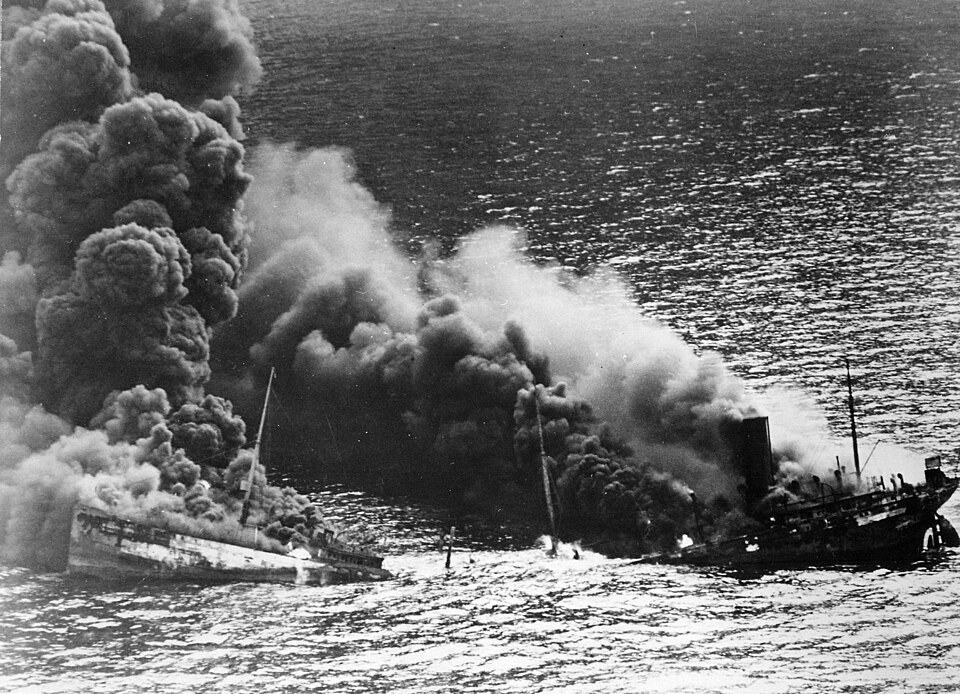
Key Historical Facts
| Fact | Detail |
|---|---|
| Epic Battles | Battle of the Atlantic |
| Date | September 3, 1939 - May 8, 1945 |
| Location | The North Atlantic Ocean (55.0, -30.0) |
| Belligerents, Commanders & Forces | Nazi Germany (Kriegsmarine): Karl Dönitz (Strength: 40,000, Casualties: 783 U-Boot batırıldı, yaklaşık 28.000 denizci hayatını kaybetti.) · Allied Powers (UK, Canada, USA): Sir Max Horton (Strength: 120,000, Casualties: 3.500 ticaret gemisi, 175 savaş gemisi batırıldı; 72.000'den fazla denizci ve sivil öldü.) |
| Weather | Freezing cold, massive waves, and relentless storms offering near-zero visibility. |
| Outcome | Decisive Allied Victory; the German submarine blockade was broken, and Atlantic supply lines were secured. |
Belligerents, Commanders & Forces
Nazi Germany (Kriegsmarine)
- Commander
- Karl Dönitz
- Stance
- Attacker
- Strength
- 40,000
- Casualties
- 783 U-Boot batırıldı, yaklaşık 28.000 denizci hayatını kaybetti.
Allied Powers (UK, Canada, USA)
- Commander
- Sir Max Horton
- Stance
- Defending
- Strength
- 120,000
- Casualties
- 3.500 ticaret gemisi, 175 savaş gemisi batırıldı; 72.000'den fazla denizci ve sivil öldü.
Historical Significance
It ensured that the Allies retained Great Britain as a supply base, securing the logistical foundation of the Western Front and the Normandy Landings.
Outcome
Decisive Allied Victory; the German submarine blockade was broken, and Atlantic supply lines were secured.
Chronological Phases of the Battle
-
1. September 1939
First Blow: The Athenia Disaster
Hours after the declaration of war, the U-30 submarine torpedoed the passenger liner Athenia, effectively starting the Battle of the Atlantic. Despite his limited submarine force, Admiral Karl Donetsk immediately ordered attacks on Britain's lifeline trade routes. Thus, the deadly chess moves that would last for six years in the waters of the Atlantic claimed their first victims.
-
2. June 1940 – February 1941
Era of Happy Days
With the fall of France, German submarines established bases in the Bay of Biscay. Providing direct access to the open seas, the U-boats ruthlessly hunted down Allied convoys lacking adequate escort protection. During this phase, which German crews remembered as the 'First Happy Time,' hundreds of thousands of tons of vital supplies and ammunition sent to the bottom of the ocean.
-
3. March 1941 - December 1941
Wolfpack Tactics
Dönitz's Rudeltaktik, or Wolfpack strategy, came into play. Submarines shadowing convoys by day surfaced under the cover of darkness to attack en masse. British defense lines remained stretched thin, and escort vessels proved helpless against multi-directional attacks. Lacking air cover, the 'Greenland Air Gap' in the middle of the ocean turned into a complete graveyard.
-
4. January 1942 - August 1942
Second Happy Time: Operation Paukenschlag
With the entry of the United States into the war, U-boats shifted their focus to the unprepared East Coast. Hundreds of freighters whose silhouettes stood out against unblacked-out American coastlines were easily hunted down. Due to the Allies' lack of defense coordination, German submarines reached their highest tonnage-sinking rates in history during this period.
-
5. September 1942 – February 1943
Closing the Air Gap
The Allies began closing the mid-ocean air gap by deploying ultra-long-range B-24 Liberator aircraft and escort carriers. New airborne depth charges and radar systems made it impossible for U-boats to cruise safely on the surface. Hunters were gradually becoming the hunted in the open sea.
-
6. March 1943
Critical Threshold: SC-122 and HX-229
The largest convoy battle in North Atlantic history erupted. Forty U-boats attacked two massive converging convoys and sank twenty-two merchant ships. Bread and oil reserves in Britain were brought to the verge of exhaustion. This bloody clash went down in records as the ultimate crisis moment that would determine the fate of submarine warfare.
-
7. May 1943
Dark May Breach
Centimetric radar, Hedgehog anti-tank mortars, and the Enigma ciphers cracked at Bletchley Park completely turned the tide in favor of the Allies. In just one month, forty-one U-boats were sunk. Unable to bear the heavy losses, Admiral Dönitz was forced to immediately order his remaining submarines to withdraw from the North Atlantic.
-
8. June 1943 – December 1944
Technological Chokepoint
Allied hunter groups blockaded the Bay of Biscay, making even the exit of submarines from ports lethal. Snorkel technology and acoustic torpedoes could not stop the German collapse. Liberty ships, mass-produced by American shipyards, created new transport capacity far exceeding the tonnage sunk.
-
9. May 1945
Final Surrender
Karl Dönitz, who became President of the Reich following Hitler's suicide, called on all remaining U-boats at sea to surrender. The six-year war of attrition in the cold waters of the Atlantic officially came to an end. Allied supply lines remained intact, and the industrial and military backbone of Nazi Germany completely collapsed.
Frequently Asked Questions
When and where did Battle of the Atlantic take place, and what was the outcome?
Battle of the Atlantic took place on September 3, 1939 - May 8, 1945 at The North Atlantic Ocean and ended with Decisive Allied Victory; the German submarine blockade was broken, and Atlantic supply lines were secured..
Who were the commanders and troop numbers in Battle of the Atlantic?
Nazi Germany (Kriegsmarine): Karl Dönitz (Strength: 40,000, Casualties: 783 U-Boot batırıldı, yaklaşık 28.000 denizci hayatını kaybetti.) · Allied Powers (UK, Canada, USA): Sir Max Horton (Strength: 120,000, Casualties: 3.500 ticaret gemisi, 175 savaş gemisi batırıldı; 72.000'den fazla denizci ve sivil öldü.)
Why is Battle of the Atlantic historically significant?
It ensured that the Allies retained Great Britain as a supply base, securing the logistical foundation of the Western Front and the Normandy Landings.