Battle of Ashdown
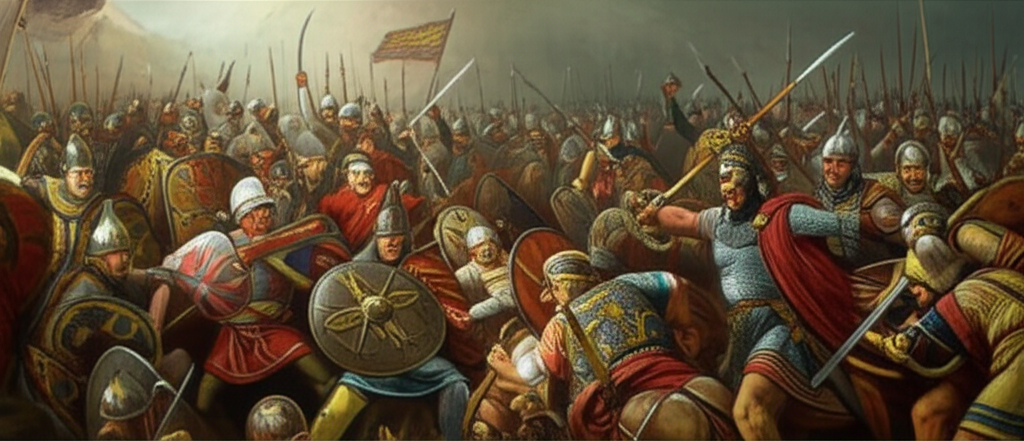
The Battle of Ashdown is a critical clash fought between the Great Heathen Army and the Kingdom of Wessex. Young Prince Alfred taking the initiative and boldly charging the Viking lines before the arrival of his older brother, King Ethelred, boosted Saxon morale and inflicted a heavy defeat on the Danes.
Key Historical Facts
| Fact | Detail |
|---|---|
| Epic Battles | Battle of Ashdown |
| Date | January 8, 871 |
| Location | Berkshire Downs, England (51.5361, -1.2536) |
| Belligerents, Commanders & Forces | Kingdom of Wessex: King Ethelred and Prince Alfred (Strength: 5,000, Casualties: Bilinmiyor, orta düzeyde kayıp) · Great Heathen Army: King Bagsecg and Healfdene (Strength: 6,000, Casualties: Bir kral, beş kont ve binlerce savaşçı) |
| Weather | Freezing winter cold and partly cloudy skies |
| Outcome | Decisive Saxon Victory |
Belligerents, Commanders & Forces
Kingdom of Wessex
- Commander
- King Ethelred and Prince Alfred
- Stance
- Attacker
- Strength
- 5,000
- Casualties
- Bilinmiyor, orta düzeyde kayıp
Great Heathen Army
- Commander
- King Bagsecg and Healfdene
- Stance
- Defending
- Strength
- 6,000
- Casualties
- Bir kral, beş kont ve binlerce savaşçı
Historical Significance
This was the first major victory demonstrating that the Kingdom of Wessex could withstand the Viking invasion, proving the military genius of the prince who would later be remembered as Alfred the Great.
Outcome
Decisive Saxon Victory
Chronological Phases of the Battle
-
1. Morning
Division of the Hills
The Vikings quickly seized the high ground on the Berkshire ridges and split into two separate battle groups. The Saxon army split similarly, but King Ethelred continued praying in his tent. Realizing that inaction would bring disaster, young Prince Alfred ordered his men to prepare for battle.
-
2. Morning
Alfred's Solitary Advance
Not waiting any longer for his older brother, Alfred charged bravely up the hill like a wild boar. The Saxon warriors locked their shields together, climbing the steep slope against harsh winter winds. Viking archers unleashed a deadly volley upon the approaching Saxon line.
-
3. Noon
Clash Under the Thorny Tree
The shield walls of both sides locked together around a single stunted thorn tree with a tremendous roar. As axes shattered shields, blood seeped into the frozen ground. The numerically superior Vikings began to push Alfred's men back, and the Saxon lines stretched dangerously.
-
4. Afternoon
Ethelred's Delayed Strike
Completing his prayers, King Ethelred entered the battlefield with his fresh troops and charged directly into the exposed flank of the Vikings. This fresh force suddenly altered the balance of power. With King Bagsecg and five prominent earls under his command falling one after another, a massive wave of panic erupted within the Viking ranks.
-
5. Evening
Flight to Reading and Pursuit
Having lost their leaders, the Danes disintegrated and began to rout in disarray toward their fortified camp at Reading. Saxon warriors pursued and put the fleeing enemy to the sword until nightfall. The ridge of Ashdown bore witness to a do-or-die victory for Wessex.
Frequently Asked Questions
When and where did Battle of Ashdown take place, and what was the outcome?
Battle of Ashdown took place on January 8, 871 at Berkshire Downs, England and ended with Decisive Saxon Victory.
Who were the commanders and troop numbers in Battle of Ashdown?
Kingdom of Wessex: King Ethelred and Prince Alfred (Strength: 5,000, Casualties: Bilinmiyor, orta düzeyde kayıp) · Great Heathen Army: King Bagsecg and Healfdene (Strength: 6,000, Casualties: Bir kral, beş kont ve binlerce savaşçı)
Why is Battle of Ashdown historically significant?
This was the first major victory demonstrating that the Kingdom of Wessex could withstand the Viking invasion, proving the military genius of the prince who would later be remembered as Alfred the Great.