Battle of Aachen
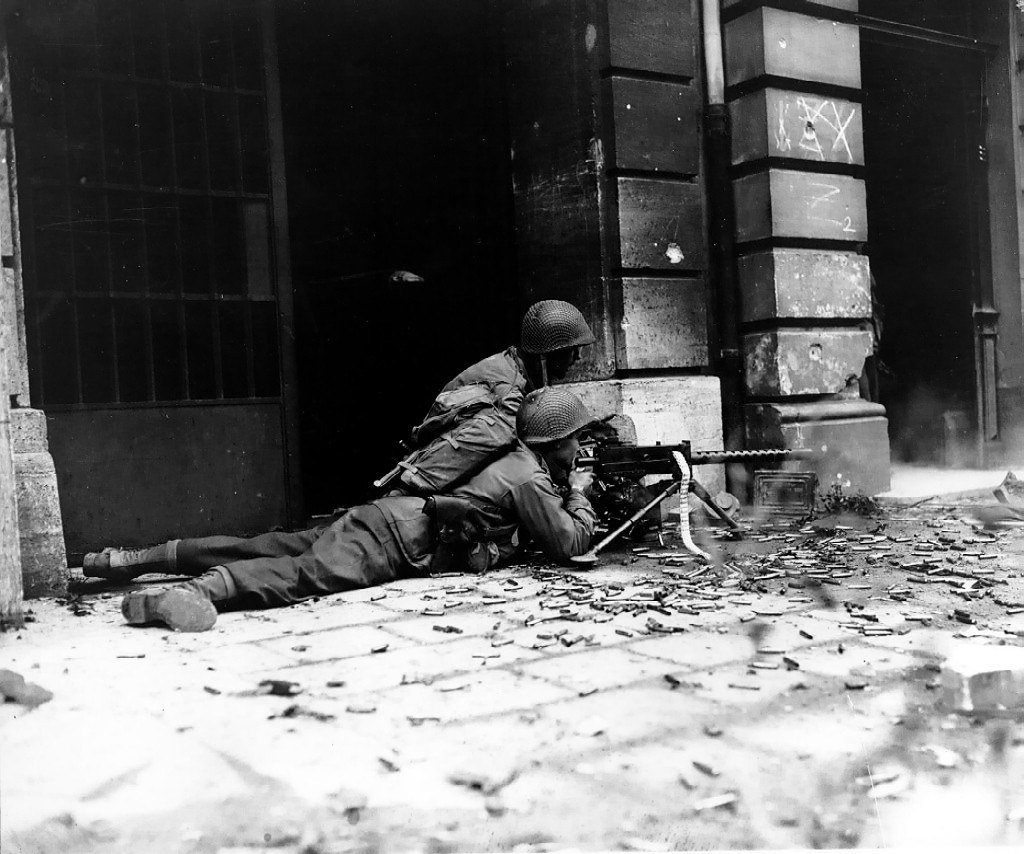
The Battle of Aachen was a bloody urban conflict during World War II for the first major German city captured by Allied forces after breaching the Siegfried Line. The U.S. 1st Army was forced to besiege the historic city and clear it street by street.
Key Historical Facts
| Fact | Detail |
|---|---|
| Epic Battles | Battle of Aachen |
| Date | October 2–21, 1944 |
| Location | Aachen, Germany (50.7753, 6.0839) |
| Belligerents, Commanders & Forces | Allies (USA): Courtney Hodges (Strength: 100,000, Casualties: 5.000 ölü ve yaralı) · Germany (Wehrmacht): Gerhard Wilck (Strength: 13,000, Casualties: 5.100 ölü ve yaralı, 5.600 esir) |
| Weather | Autumn rains, dense fog, and muddy terrain |
| Outcome | Allied victory; Aachen was captured by American forces. |
Belligerents, Commanders & Forces
Allies (USA)
- Commander
- Courtney Hodges
- Stance
- Attacker
- Strength
- 100,000
- Casualties
- 5.000 ölü ve yaralı
Germany (Wehrmacht)
- Commander
- Gerhard Wilck
- Stance
- Defending
- Strength
- 13,000
- Casualties
- 5.100 ölü ve yaralı, 5.600 esir
Historical Significance
It is both a psychological and strategic turning point as the first major city captured by the Allies on German soil. It proved that the Siegfried Line was penetrable and exposed the fragility of German resistance on the Western Front.
Outcome
Allied victory; Aachen was captured by American forces.
Chronological Phases of the Battle
-
1. October 2, 1944
Siege Operation from the North
The American 30th Infantry Division launched an assault against the Siegfried Line fortifications north of Aachen. Concrete bunkers protected by heavy artillery support were systematically destroyed. Advancing under intense machine gun fire, American troops secured river crossings and guarded their flanks in order to isolate the city from the outside world.
-
2. October 8, 1944
Southern Pincer and Haaren Breach
The American 1st Infantry Division advanced from the southern sector and captured the Haaren hills. Defending German units responded with intense mortar and anti-tank fire. Although armored vehicle support was limited in the muddy terrain, the infantry managed to gradually secure the eastern exits of the city following fierce clashes.
-
3. October 11, 1944
The Completion of the Siege
Advancing from the north and south, American columns united on the hills east of the city, closing the pocket around Aachen. An official ultimatum to surrender was delivered to the German garrison. However, in accordance with Hitler's order to resist to the last man, Colonel Wilck flatly rejected the surrender offer, and urban combat officially commenced.
-
4. 13 October 1944
Entry into the City Center
American troops entered the ruins of the city. German snipers positioned in the basements and rooftops slowed the advance. In street-to-street, house-to-house combat, field guns and armored vehicles used direct fire to pierce walls, opening sheltered passages for the infantry. The city became blanketed in thick smoke and debris.
-
5. October 15, 1944
German Counterattacks
The German 116th Panzer Division launched fierce assaults on the outer perimeter of the city to break the siege. Tank-supported charges aimed at uniting with the defenders inside the city were repulsed thanks to American anti-tank positions and heavy artillery barrages. Thus, the besieged garrison's last hopes with the outside world were extinguished.
-
6. October 19, 1944
Skirmish of the Lousberg Hill
A bloody assault was launched for the critical Lousberg Hill overlooking the city. German forces stubbornly resisted from bunkers and stone buildings. American infantry systematically neutralized defensive positions using smoke mortars and flamethrowers. With the capture of the summit, the German command headquarters came directly into the line of fire.
-
7. October 21, 1944
Surrender of the Garrison
Colonel Gerhard Wilck, whose ammunition, medical supplies, and water had run out, raised a white flag in his bunker and surrendered to the U.S. 26th Infantry Regiment. The ruined city of Aachen was completely cleared. With this surrender, the Allies gained total control over a historic and symbolic city on the German mainland for the first time.
Frequently Asked Questions
When and where did Battle of Aachen take place, and what was the outcome?
Battle of Aachen took place on October 2–21, 1944 at Aachen, Germany and ended with Allied victory; Aachen was captured by American forces..
Who were the commanders and troop numbers in Battle of Aachen?
Allies (USA): Courtney Hodges (Strength: 100,000, Casualties: 5.000 ölü ve yaralı) · Germany (Wehrmacht): Gerhard Wilck (Strength: 13,000, Casualties: 5.100 ölü ve yaralı, 5.600 esir)
Why is Battle of Aachen historically significant?
It is both a psychological and strategic turning point as the first major city captured by the Allies on German soil. It proved that the Siegfried Line was penetrable and exposed the fragility of German resistance on the Western Front.