Battle of Mercidabik
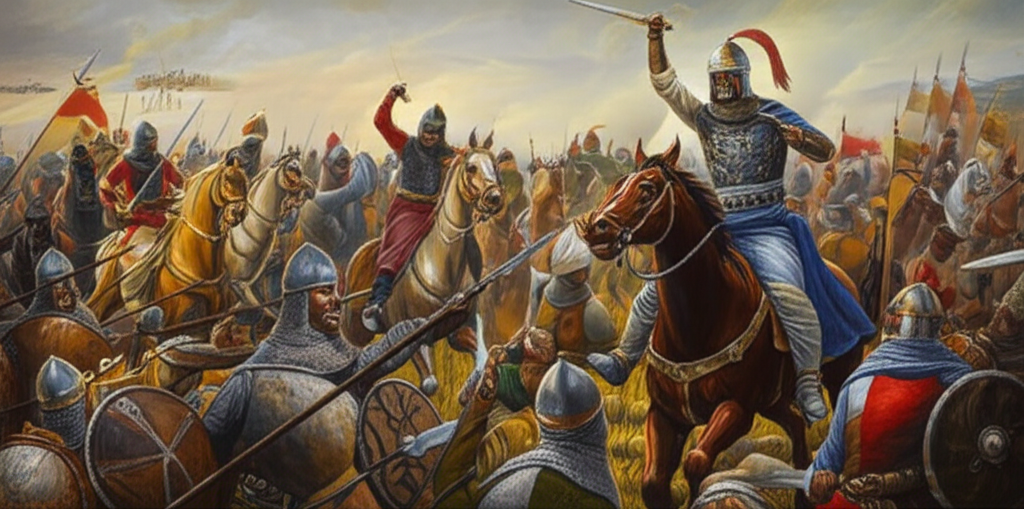
The Ottoman army under the command of Yavuz Sultan Selim decisively defeated the Mamluk army.
Key Historical Facts
| Fact | Detail |
|---|---|
| Epic Battles | Battle of Mercidabik |
| Date | 24 August 1516 |
| Location | Mercidabik Plain (36.51, 37.22) |
| Belligerents, Commanders & Forces | Ottoman Empire: Yavuz Sultan Selim (Strength: 60,000, Casualties: 3,000) · Mamluk Sultanate: Qansuh al-Ghawri (Strength: 40,000, Casualties: 10,000) |
| Weather | Open air |
| Outcome | Ottoman Victory |
Belligerents, Commanders & Forces
Ottoman Empire
- Commander
- Yavuz Sultan Selim
- Stance
- Attacker
- Strength
- 60,000
- Casualties
- 3,000
Mamluk Sultanate
- Commander
- Qansuh al-Ghawri
- Stance
- Defending
- Strength
- 40,000
- Casualties
- 10,000
Historical Significance
Syria came under Ottoman rule.
Outcome
Ottoman Victory
Chronological Phases of the Battle
-
1. Morning, August 24, 1516
Deployment on the Field and Heavy Cavalry Charge
Confronted on the plain of Marj Dabiq, the Mamluks relied on their traditional cavalry strength and launched a direct assault. Sultan Qansuh al-Ghuri's elite cavalry violently slammed into the Ottoman vanguard lines. Meanwhile, the Ottoman army deployed in battle formation at the center with janissaries and interconnected field guns, calmly awaiting the oncoming Mamluk charge.
-
2. August 24, 1516, Towards Noon
Ring of Fire and Artillery Resistance
As Mamluk cavalry broke into the Ottoman center, the firepower prepared by Yavuz Sultan Selim came into play. Chain-linked cannons and janissary musketeers opened fire at close range with volleys. The shockwave and dense smoke generated by the firearms completely shattered the charge momentum of the Mamluks—considered the finest cavalry of the era—creating utter chaos in their ranks.
-
3. Noon, August 24, 1516
Counterattack of the Ottoman Flanks
Against the enemy halted by firepower, the timariot sipahis of Rumelia and Anatolia charged forward in two columns. Ottoman flanking cavalry began to envelop the flanks of the Mamluk army. The retreat of the forces of Khair Bey, Governor of Aleppo, stationed on the Mamluk flanks, created a fatal gap in the army's formation and left Qansuh al-Ghawri's forces exposed as a sitting duck.
-
4. August 24, 1516, Afternoon
Fall of Sultan Qansuh al-Ghawri and Dissolution
As the Ottoman siege tightened, Sultan Qansuh al-Ghuri tried to resist with his remaining troops, but suffered a stroke on the battlefield, fell from his horse, and died. Panic spread rapidly through the Mamluk army upon seeing their ruler killed. The chain of command among the emirs completely shattered, army discipline broke down, and a general wave of desertion began.
-
5. Late afternoon, August 24, 1516
Decisive Victory and Opening of the Road to Syria
Sultan Selim I's cavalry pursued the fleeing Mamluk remnants, completely eliminating the threat. The Ottoman army captured the field encampment and a vast treasure. With this crushing victory, centuries of Mamluk rule dealt a fatal blow; the gates of Aleppo, Damascus, and all of Syria were opened entirely to Ottoman administration.
Frequently Asked Questions
When and where did Battle of Mercidabik take place, and what was the outcome?
Battle of Mercidabik took place on 24 August 1516 at Mercidabik Plain and ended with Ottoman Victory.
Who were the commanders and troop numbers in Battle of Mercidabik?
Ottoman Empire: Yavuz Sultan Selim (Strength: 60,000, Casualties: 3,000) · Mamluk Sultanate: Qansuh al-Ghawri (Strength: 40,000, Casualties: 10,000)
Why is Battle of Mercidabik historically significant?
Syria came under Ottoman rule.