Battle of Gaugamela
Alexander the Great's Persian Emperor III. The war in which he decisively defeated Darius and brought down the Persian Empire.
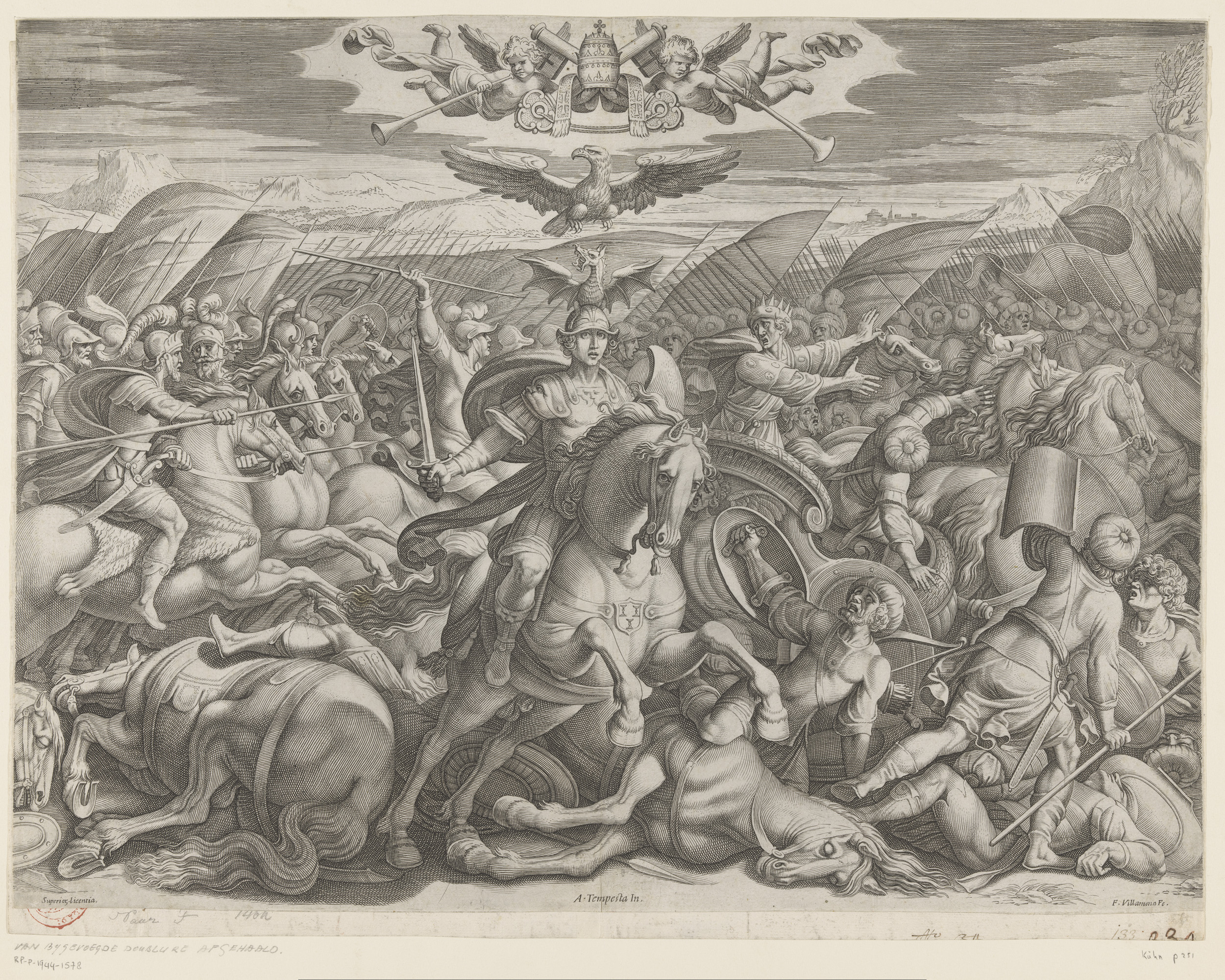
Key Historical Facts
| Fact | Detail |
|---|---|
| Epic Battles | Battle of Gaugamela |
| Date | 331 BC, 1 October |
| Location | Gaugamela, Northern Iraq (36.56, 43.44) |
| Belligerents, Commanders & Forces | Macedonian Empire: Alexander the Great (Strength: 47,000, Casualties: 1,200) · Persian Empire: Darius III (Strength: 100,000, Casualties: 40,000) |
| Weather | Hot, dusty desert environment |
| Outcome | Macedonian Victory |
Belligerents, Commanders & Forces
Macedonian Empire
- Commander
- Alexander the Great
- Stance
- Attacker
- Strength
- 47,000
- Casualties
- 1,200
Persian Empire
- Commander
- Darius III
- Stance
- Defending
- Strength
- 100,000
- Casualties
- 40,000
Historical Significance
The end of the Persian Empire. Alexander becoming the world conqueror.
Outcome
Macedonian Victory
Chronological Phases of the Battle
-
1. Summer 331 BC (July or August)
Thapsakos Passage and Northern Mesopotamia March
Alexander reached Thapsakos on the Euphrates river in the summer of 331 BC. Persian King III. Darius had ordered Mazaeus to guard this river crossing with 3,000 cavalry; but when the Macedonian army approached, Mazaeus fled along the river bank. After crossing the river, Alexander chose the northern route rather than the direct southeastern route to Babylon. In this transfer, he took the Euphrates and Armenia mountains to his left, preventing his army from being worn out by extreme heat and facilitating the supply of supplies.
-
2. September 331 BC
Tigris Crossing and Forward Reconnaissance Operation
The Macedonian army reached the Tigris river in late September 331 BC. Assuming that the river could not be crossed due to its depth and strong current, Mazaeus left the shore defenseless and implemented a tactic of burning and destroying the land on the crossing line. Alexander crossed the Tigris with great difficulty, finding himself defenseless. Four days after the lunar eclipse of September 20–21, Macedonian troops captured prisoners from Mazaeus' cavalry and learned that Darius' army was assembling at Gaugamela, eight miles away.
-
3. Late September – 1 October 331 BC
Deployment and Land Organization in the Gaugamela Plain
In order to increase the effectiveness of their chariots, the Persian army leveled the land in the plain near Karamlesh by clearing bushes and vegetation. Observing these activities, Alexander realized that Darius would not change his position and gave his troops four days of rest. While Darius was in the center with his infantry and royal guard, he gave the left wing to Bessus and the right wing to Mazaeus. While Alexander personally commanded the right wing, he handed over the task of defending the left wing to Parmenion and put his army in a gradual order.
-
4. 1 October 331 BC
Cavalry Battle on the Macedonian Right Wing
Alexander advanced towards the far edge of the right flank with his Companion cavalry, aiming to draw the Persian cavalry out of the center and even create a breach. Darius, who was afraid of going beyond the leveled area, sent Scythian and Bactrian cavalry to surround Alexander's flank. After the Greek mercenary cavalry under the command of Menidas was repelled, Alexander led the Paionians under the command of Aristotle to attack. After a fierce cavalry clash, the attack of the Prodromoi unit under the command of Aretes broke the Persian flank attack and gained the upper hand.
-
5. 1 October 331 BC
Repelling the Scythe Chariot Assault
Darius launched his scythed chariots to destroy the troops under Alexander's personal command. However, the Agrianians and other javelin throwers stationed in front of the Companion cavalry eliminated many of the chariots with a heavy barrage of spears. The infantrymen separated their ranks and opened car corridors against the vehicles that overcame this obstacle and reached the Macedonian lines. The remaining cars that passed harmlessly through the gaps were destroyed by hypaspists and armed grooms behind the lines.
-
6. 1 October 331 BC
The Macedonian Wedge Offensive and the Flight of Darius
Seeing that the center line was weakened by the Persian forces opening towards the flanks, Alexander separated his Companion cavalry from the conflict and formed a huge wedge with his guard brigade and phalanx battalions. This wedge attack, which he himself led, came down hard on the royal guards and Greek mercenaries who were still fighting in the Persian center. King Henry III, who was in danger of being surrounded when the Macedonian cavalry charged directly at the center with their spears and the long sarissas of the phalanx. Darius was the first to flee the battlefield and the center was dispersed.
-
7. 1 October 331 BC
Macedonian Left Wing Crisis and Mazaeus' Request
As Alexander was about to pursue the fleeing Darius, he received an urgent call for help from Parmenion, who was surrounded on the left flank by Mazaeus' cavalry. Persian and Indian cavalry, who had infiltrated through the gap opened by the Simmias brigade's failure to advance, turned to plunder the Macedonian camp and were repelled by the reserve phalanx. Alexander abandoned the pursuit and turned to the left flank to protect his army; Trying to escape here, Parth entered into an extremely violent conflict with Indian and Persian cavalry. With Alexander's intervention and the attack of the Thessalian cavalry, Mazaeus' wing was defeated and retreated.
Frequently Asked Questions
When and where did Battle of Gaugamela take place, and what was the outcome?
Battle of Gaugamela took place on 331 BC, 1 October at Gaugamela, Northern Iraq and ended with Macedonian Victory.
Who were the commanders and troop numbers in Battle of Gaugamela?
Macedonian Empire: Alexander the Great (Strength: 47,000, Casualties: 1,200) · Persian Empire: Darius III (Strength: 100,000, Casualties: 40,000)
Why is Battle of Gaugamela historically significant?
The end of the Persian Empire. Alexander becoming the world conqueror.