Battle of Aegospotami
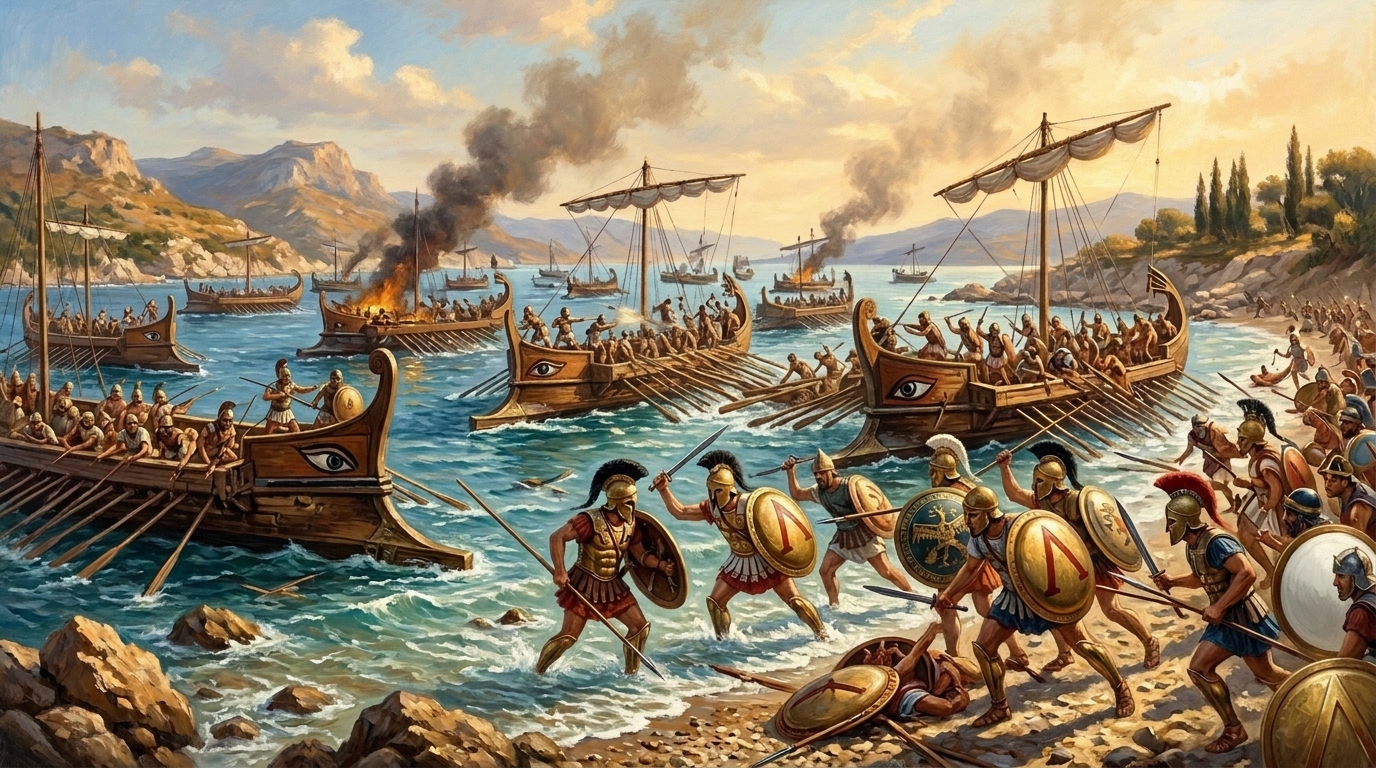
The Battle of Aigospotamoi, fought at the entrance to the Dardanelles in 405 BC, was the final and decisive engagement of the Peloponnesian War. The Spartan general Lysander lulled the Athenian fleet into complacency by refusing to engage for days, then launched a sudden raid when the Athenian oarsmen had dispersed ashore to forage. Destroying the entire Athenian navy with the loss of almost not a single ship, Sparta severed Athens' Black Sea grain supply route and forced the city to surrender.
Key Historical Facts
| Fact | Detail |
|---|---|
| Epic Battles | Battle of Aegospotami |
| Date | Summer 405 BC |
| Location | Dardanelles (Gallipoli), Turkey (40.3541, 26.5478) |
| Belligerents, Commanders & Forces | Sparta and the Peloponnesian League: Lysander (Strength: 36,000, Casualties: Asgari kayıp, neredeyse hiçbir gemi batırılmadı) · Athens and the Delian League: Conon and Philocles (Strength: 36,000, Casualties: 160-170 trireme ele geçirildi veya batırıldı, 3.000'den fazla esir infaz edildi) |
| Weather | A clear and calm summer weather, light breeze in the strait |
| Outcome | Decisive Spartan victory; the Athenian fleet was almost entirely destroyed or captured. |
Belligerents, Commanders & Forces
Sparta and the Peloponnesian League
- Commander
- Lysander
- Stance
- Attacker
- Strength
- 36,000
- Casualties
- Asgari kayıp, neredeyse hiçbir gemi batırılmadı
Athens and the Delian League
- Commander
- Conon and Philocles
- Stance
- Defending
- Strength
- 36,000
- Casualties
- 160-170 trireme ele geçirildi veya batırıldı, 3.000'den fazla esir infaz edildi
Historical Significance
This crushing victory officially brought the nearly thirty-year-long Peloponnesian War to an end. The Athenian Empire was dismantled, the Long Walls were razed to the ground, and the pro-Spartan oligarchy of the Thirty Tyrants was established in Athens. Thus, Spartan hegemony began in the classical Greek world.
Outcome
Decisive Spartan victory; the Athenian fleet was almost entirely destroyed or captured.
Chronological Phases of the Battle
-
1. 405 BC, Day 1
Mutual Deployment in the Straits
Spartan admiral Lysander captures the strategic city of Lampsacus to cut off the grain supply. The Athenian fleet drops anchor at Aigospotamoi, an open beach directly across the strait. While the Athenians wait on a harborless and vulnerable line, Lysander keeps his fleet ready in strict formation, yet refuses to respond to provocations throughout the day, remaining on the defensive.
-
2. 405 BC, Day 3
Alcibiades's Ignored Warning
The exiled veteran general Alcibiades arrives at the Athenian camp and warns the admirals. He states that the beach is insecure and that the army should withdraw to the harbor of Sestos to secure provisions. The arrogant Athenian commanders rebuff this vital warning and drive him from the camp. Days of repeated false dueling challenges completely relax the Athenians.
-
3. 405 BC, Afternoon of Day 5
Lysander's Flawless Ambush
As usual, after issuing their defiance, the Athenians would pull up onto the beach, and the oarsmen would scatter across the vast Gallipoli landscape to forage for food. Spotting the flashing shield signal raised from the scouting vessel, Lysander orders his entire fleet full speed ahead. The Spartan galleys rapidly cross the strait and launch a surprise attack on the unprepared fleet on the beach.
-
4. 405 BC, Late Afternoon of Day 5
Disaster on the Beach and Conon's Escape
Most of the Athenian ships hauled ashore lacked even oarsmen. General Conon desperately attempts to establish a defense line, but manages to escape the strait with only nine ships, including the Paralos. The remaining one hundred and seventy triremes fall into the hands of Spartan sailors motionless on the shore without offering a single serious resistance.
-
5. 405 BC, Evening of Day 5
The Execution of the Prisoners and the Fall of Athens
Thousands of Athenian soldiers scattered along the coast are cornered and taken prisoner. Lysander immediately has the Athenian general Philocles—who had previously decreed that captured allies' hands be cut off—and about three thousand Athenian citizens executed. For Athens, having lost its fleet and grain route, collapse is now inevitable.
Frequently Asked Questions
When and where did Battle of Aegospotami take place, and what was the outcome?
Battle of Aegospotami took place on Summer 405 BC at Dardanelles (Gallipoli), Turkey and ended with Decisive Spartan victory; the Athenian fleet was almost entirely destroyed or captured..
Who were the commanders and troop numbers in Battle of Aegospotami?
Sparta and the Peloponnesian League: Lysander (Strength: 36,000, Casualties: Asgari kayıp, neredeyse hiçbir gemi batırılmadı) · Athens and the Delian League: Conon and Philocles (Strength: 36,000, Casualties: 160-170 trireme ele geçirildi veya batırıldı, 3.000'den fazla esir infaz edildi)
Why is Battle of Aegospotami historically significant?
This crushing victory officially brought the nearly thirty-year-long Peloponnesian War to an end. The Athenian Empire was dismantled, the Long Walls were razed to the ground, and the pro-Spartan oligarchy of the Thirty Tyrants was established in Athens. Thus, Spartan hegemony began in the classical Greek world.