Battle of Badr
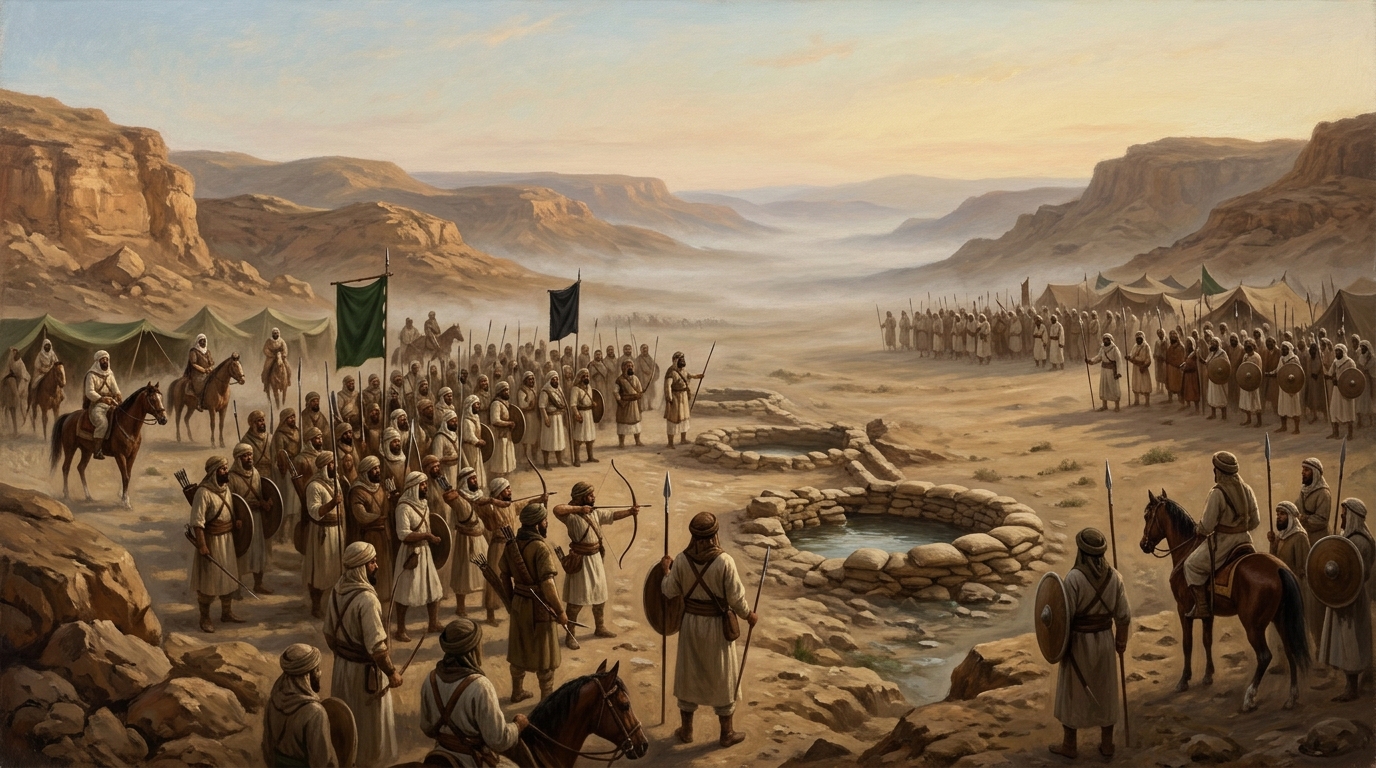
The Battle of Badr is the first large-scale armed conflict between the initial Muslim community in Medina and the pagan Quraysh of Mecca. Controlling the strategic water wells against a Mecca army three times superior in numbers and equipment, the Muslims achieved a decisive victory thanks to tactical discipline and high morale.
Key Historical Facts
| Fact | Detail |
|---|---|
| Epic Battles | Battle of Badr |
| Date | 13 March 624 |
| Location | Badr Valley, Saudi Arabia (23.7842, 38.7915) |
| Belligerents, Commanders & Forces | Muslims: Prophet Muhammad (Strength: 313, Casualties: 14 şehit (6 Muhacir, 8 Ensar)) · The Qurayshite Meccans: Amr ibn Hisham (Abu Jahl) (Strength: 950, Casualties: Yaklaşık 70 ölü, 70 esir (Aralarında Ebu Cehil dahil birçok kabile lideri)) |
| Weather | Clear, windy, and scorching desert heat following a light night rain. |
| Outcome | Decisive tactical and strategic victory for the Muslims. |
Belligerents, Commanders & Forces
Muslims
- Commander
- Prophet Muhammad
- Stance
- Defending
- Strength
- 313
- Casualties
- 14 şehit (6 Muhacir, 8 Ensar)
The Qurayshite Meccans
- Commander
- Amr ibn Hisham (Abu Jahl)
- Stance
- Attacker
- Strength
- 950
- Casualties
- Yaklaşık 70 ölü, 70 esir (Aralarında Ebu Cehil dahil birçok kabile lideri)
Historical Significance
It is the first major military victory in Islamic history. The political and military existence of the Medina Islamic State in the Arabian Peninsula was confirmed, and the military leadership cadre of the Meccan aristocracy suffered heavy losses, dealing a major blow to their prestige.
Outcome
Decisive tactical and strategic victory for the Muslims.
Chronological Phases of the Battle
-
1. Early Morning
Capture of the Wells
The Muslim army reached the valley before the Meccans and, acting on Hubab ibn al-Mundhir's strategic advice, secured control of the wells of Badr. Other water sources that the enemy might have used were filled with sand. When the Quraysh forces entered the valley, they faced both thirst and the disadvantage of difficult terrain.
-
2. Late Morning
Single Combat and Challenge
During the traditional phase of single combat, the elite Quraysh warriors Utbah, Shaybah, and Walid stepped into the field. From the Muslim side, Ali, Hamza, and Ubaydah bin al-Harith advanced. The swift slaying of all three Quraysh warriors caused a major blow to the morale of the Meccan ranks.
-
3. Towards Noon
General Assault and Counterattack
The Meccans fiercely launched a mass assault. However, the Muslims maintained their defense line without breaking ranks and wore down the enemy with a hail of arrows. Then, the general counter-offensive launched upon the Prophet Muhammad's order, aided by the wind at their backs, pierced the center of the Quraysh army and triggered a panic.
-
4. Afternoon
The Collapse of the Quraysh Lines
When Abu Jahl, the commander-in-chief of the Mecca army, was killed, the enemy ranks completely scattered. Abandoning their armor and weapons, the Meccans began fleeing south in panic. Pursuing those who fled, the Muslims captured dozens of key commanders and ended the battle in a decisive victory.
Frequently Asked Questions
When and where did Battle of Badr take place, and what was the outcome?
Battle of Badr took place on 13 March 624 at Badr Valley, Saudi Arabia and ended with Decisive tactical and strategic victory for the Muslims..
Who were the commanders and troop numbers in Battle of Badr?
Muslims: Prophet Muhammad (Strength: 313, Casualties: 14 şehit (6 Muhacir, 8 Ensar)) · The Qurayshite Meccans: Amr ibn Hisham (Abu Jahl) (Strength: 950, Casualties: Yaklaşık 70 ölü, 70 esir (Aralarında Ebu Cehil dahil birçok kabile lideri))
Why is Battle of Badr historically significant?
It is the first major military victory in Islamic history. The political and military existence of the Medina Islamic State in the Arabian Peninsula was confirmed, and the military leadership cadre of the Meccan aristocracy suffered heavy losses, dealing a major blow to their prestige.