Battle of the Camel
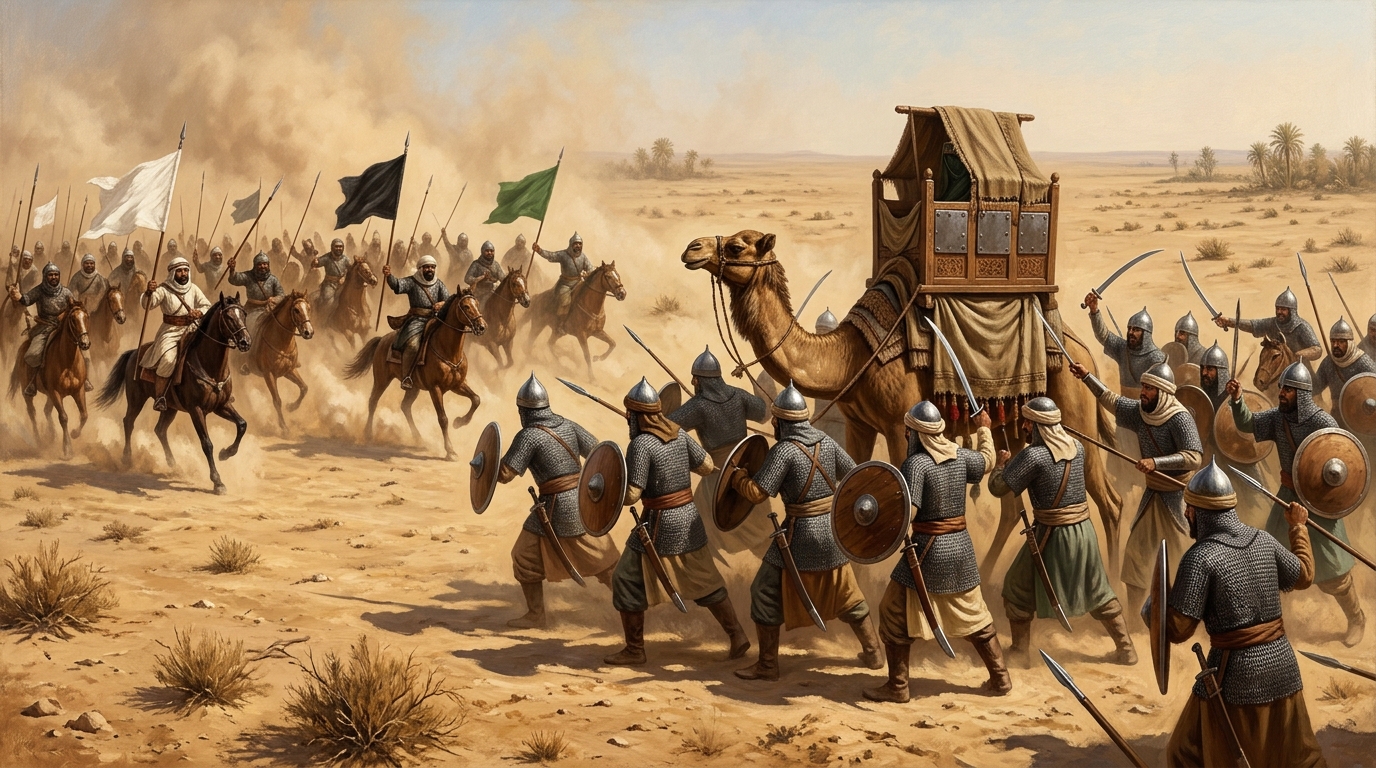
The Battle of the Camel is the starting point of the First Fitna, the first major civil war in Islamic history. The armies of the Fourth Caliph Ali ibn Abi Talib and Aisha, Talha, and Zubayr—who demanded the immediate punishment of Caliph Uthman's murderers—faced each other near Basra. The bloody clashes centered around Aisha's camel ended with Ali's victory and the bringing down of the camel.
Key Historical Facts
| Fact | Detail |
|---|---|
| Epic Battles | Battle of the Camel |
| Date | November 7, 656 |
| Location | Vicinity of Basra, Iraq (30.5081, 47.7835) |
| Belligerents, Commanders & Forces | The Army of Caliph Ali: Ali ibn Abi Talib (Strength: 20,000, Casualties: Yaklaşık 1.000 - 3.000 ölü) · Coalition of Basra and Mecca: Aisha bint Abu Bakr, Talha ibn Ubaydullah, Zubayr ibn al-Awwam (Strength: 30,000, Casualties: Yaklaşık 4.000 - 5.000 ölü (Talha ve Zübeyr dahil)) |
| Weather | Mild desert weather and clear skies |
| Outcome | Ali ibn Abi Talib won a decisive victory; Talhah and Zubayr lost their lives, and Aisha was sent back to Medina. |
Belligerents, Commanders & Forces
The Army of Caliph Ali
- Commander
- Ali ibn Abi Talib
- Stance
- Attacker
- Strength
- 20,000
- Casualties
- Yaklaşık 1.000 - 3.000 ölü
Coalition of Basra and Mecca
- Commander
- Aisha bint Abu Bakr, Talha ibn Ubaydullah, Zubayr ibn al-Awwam
- Stance
- Defending
- Strength
- 30,000
- Casualties
- Yaklaşık 4.000 - 5.000 ölü (Talha ve Zübeyr dahil)
Historical Significance
It is the first major battle in which Muslims fought one another; it triggered political and theological fractures within the Islamic community, setting the course that led to the Battle of Siffin and the Tragedy of Karbala.
Outcome
Ali ibn Abi Talib won a decisive victory; Talhah and Zubayr lost their lives, and Aisha was sent back to Medina.
Chronological Phases of the Battle
-
1. Early Morning
Negotiations and Night Provocation
Ali and the opposition leaders had almost reached a consensus during peace negotiations. However, radical partisans of Ibn Saba, who had infiltrated both armies and realized that peace would work against their interests, suddenly began shooting arrows at the opposing army in the dead of night. With the first light of dawn, both sides accused each other of treachery, and conflict became inevitable.
-
2. AM
Initial Clash and Fragmentation of the Lines
When the war horns blew, the two Muslim armies clashed with sorrow and anger. While Talha and Zubayr tried to encourage their troops in the front lines, the scale of the conflict rapidly expanded. Zubayr decided to leave the battlefield after Ali reminded him of a past warning from Prophet Muhammad, but he was killed while withdrawing by someone who pursued him.
-
3. Noon Time
The Fall of Talha
As the fighting intensified in the center of the field, Talha ibn Ubaydullah was gravely wounded in the leg by a stealthy arrow shot by Marwan ibn al-Hakam. When Talha passed away shortly after from blood loss, the Basra army suffered a severe collapse in morale. The leaderless soldiers began to retreat in panic and gathered at the position where Aisha was located.
-
4. Afternoon
The Final Stand Around the Camel
Aisha's armored camel, Askar, became the final stronghold of the opposition. Dozens of warriors gave their lives just to hold the camel's reins and protect Aisha; everyone who grasped the reins fell as a martyr one by one. While the camel transformed into a living banner in the middle of the field, the clashing of swords and desperate cries completely enveloped the plain of Basra.
-
5. Afternoon Time
The Severing of the Camel's Hamstrings and the End
Wishing to prevent further escalation of the carnage, Ali directly ordered his soldiers to cut the camel's legs. With the collapse of the camel, the resistance on Aisyah's side instantly crumbled, and the battle officially ended. Ali approached Aisyah to check on her well-being, showed her respect, and safely escorted her back to Medina accompanied by her brother Muhammad ibn Abi Bakr.
Frequently Asked Questions
When and where did Battle of the Camel take place, and what was the outcome?
Battle of the Camel took place on November 7, 656 at Vicinity of Basra, Iraq and ended with Ali ibn Abi Talib won a decisive victory; Talhah and Zubayr lost their lives, and Aisha was sent back to Medina..
Who were the commanders and troop numbers in Battle of the Camel?
The Army of Caliph Ali: Ali ibn Abi Talib (Strength: 20,000, Casualties: Yaklaşık 1.000 - 3.000 ölü) · Coalition of Basra and Mecca: Aisha bint Abu Bakr, Talha ibn Ubaydullah, Zubayr ibn al-Awwam (Strength: 30,000, Casualties: Yaklaşık 4.000 - 5.000 ölü (Talha ve Zübeyr dahil))
Why is Battle of the Camel historically significant?
It is the first major battle in which Muslims fought one another; it triggered political and theological fractures within the Islamic community, setting the course that led to the Battle of Siffin and the Tragedy of Karbala.