Battle of Anzen
The Battle of Anzen, or the Battle of Dazimon, took place on July 22, 838, between the Byzantine army commanded by Byzantine Emperor Theophilus and the Abbasid army commanded by Afshin Haydar ibn Kawus. Part of Abbasid Caliph Al-Mu'tasim's major Anatolian campaign, the Byzantine army initially gained the upper hand in this engagement but suffered a heavy defeat due to a disciplined counter-offensive by Turkish horse archers and the chaos caused by a sudden downpour.
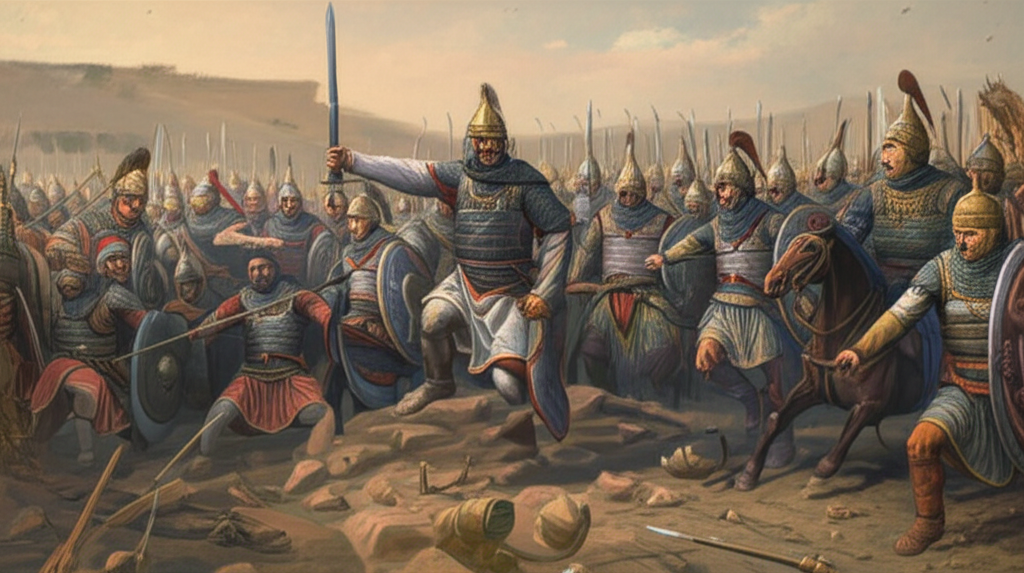
Key Historical Facts
| Fact | Detail |
|---|---|
| Epic Battles | Battle of Anzen |
| Date | July 22, 838 |
| Location | Plain of Dazimon (Between Tokat and Sivas), Turkey (39.5167, 36.8333) |
| Belligerents, Commanders & Forces | Byzantine Empire: Emperor Theophilus, Manuel the Armenian (Strength: 30,000, Casualties: 4.000 - 6.000 ölü, binlerce esir ve ordunun dağılması) · Abbasid Caliphate: Afshin (Haydar ibn Kawus) (Strength: 25,000, Casualties: 1.500 - 3.000 ölü ve yaralı) |
| Weather | Scorching summer heat and heavy afternoon rain showers |
| Outcome | Decisive Abbasid Victory |
Belligerents, Commanders & Forces
Byzantine Empire
- Commander
- Emperor Theophilus, Manuel the Armenian
- Stance
- Attacker
- Strength
- 30,000
- Casualties
- 4.000 - 6.000 ölü, binlerce esir ve ordunun dağılması
Abbasid Caliphate
- Commander
- Afshin (Haydar ibn Kawus)
- Stance
- Defending
- Strength
- 25,000
- Casualties
- 1.500 - 3.000 ölü ve yaralı
Historical Significance
With the destruction of the Byzantine field army, the interior of Anatolia was left vulnerable, which directly led to the conquest and destruction of Amorium, one of Byzantium's most important fortresses and the ancestral home of the dynasty.
Outcome
Decisive Abbasid Victory
Chronological Phases of the Battle
-
1. 07:00 in the morning
Engagement and Deployment
Emperor Theophilus learns that the Abbasid army is advancing in two columns. He takes positions in the Dazimon Plain to destroy the eastern column commanded by Afshin before it unites with Caliph al-Mu'tasim's main army. Believing they are numerically superior, the Byzantine troops deploy in battle formation at the foothills overlooking the plain.
-
2. 09:30 in the morning
Byzantine Offensive
Theophilus ordered an attack with the elite Tagmata units and Kurdish allies under his direct command. The fierce charge of the Byzantine cavalry pierced the Abbasid front lines. Afshin's center line was forced to fall back under heavy pressure, and the Byzantine flanks lunged forward, believing they had won the victory.
-
3. 12:30 PM
Afshin's Counter-Move
The experienced general Afshin transforms the retreat into an orderly feigned withdrawal. Turkish horse archers concealed on the flanks encircle the Byzantine cavalry with a crescent tactic. A fierce and continuous hail of arrows leaves the Byzantine forces, having lost their assault discipline, immobilized and vulnerable within range.
-
4. 2:30 PM
Downpour and Turmoil
A sudden and violent summer downpour in the heat of the day turned the plain into mud. During the storm, which severed communications within the Byzantine command structure, a false rumor spread that Emperor Theophilos had been killed. The Byzantine flanks began to disintegrate, and a general panic broke out.
-
5. Afternoon 16:30
The Encirclement of the Emperor
While the majority of the Byzantine army fled the battlefield, Emperor Theophilus was completely surrounded at Anzen Hill with roughly two thousand remaining bodyguards and Manuel Armenios. Afshin's troops encircled the hill and began raining stones and fire from catapults upon the imperial guards.
-
6. 6:30 PM
Breakout Operation and Escape
Thanks to the daring breakthrough assault managed by General Manuel, the imperial encirclement was broken with difficulty. Suffering heavy casualties, the remnants of the Byzantine forces retreated to the mountains under the cover of night darkness. Achieving a decisive victory in the field, the Abbasid army found the road to Amorium completely open.
Frequently Asked Questions
When and where did Battle of Anzen take place, and what was the outcome?
Battle of Anzen took place on July 22, 838 at Plain of Dazimon (Between Tokat and Sivas), Turkey and ended with Decisive Abbasid Victory.
Who were the commanders and troop numbers in Battle of Anzen?
Byzantine Empire: Emperor Theophilus, Manuel the Armenian (Strength: 30,000, Casualties: 4.000 - 6.000 ölü, binlerce esir ve ordunun dağılması) · Abbasid Caliphate: Afshin (Haydar ibn Kawus) (Strength: 25,000, Casualties: 1.500 - 3.000 ölü ve yaralı)
Why is Battle of Anzen historically significant?
With the destruction of the Byzantine field army, the interior of Anatolia was left vulnerable, which directly led to the conquest and destruction of Amorium, one of Byzantium's most important fortresses and the ancestral home of the dynasty.