Siege of Acre (1799)
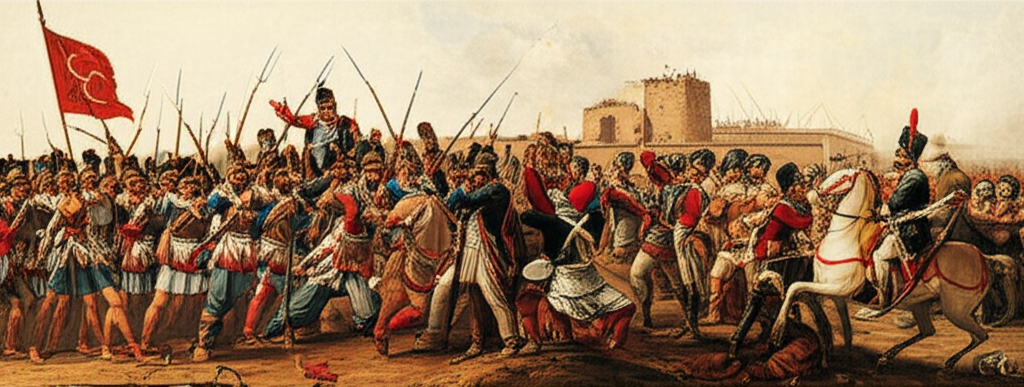
During the Egyptian Campaign, Napoleon Bonaparte besieged the strategic fortress of Acre in line with his plan to advance through Syria toward Istanbul and the East. Defending the fortress, elderly vizier Cezzar Ahmed Pasha crushed all fierce assaults of the French army with the support of the British Royal Navy and Nizam-ı Cedid (New Order) troops, inflicting Napoleon's first major land defeat.
Key Historical Facts
| Fact | Detail |
|---|---|
| Epic Battles | Siege of Acre (1799) |
| Date | March 20 – May 21, 1799 |
| Location | Citadel of Acre, Ottoman Empire (Modern-day Israel) (32.9236, 35.0706) |
| Belligerents, Commanders & Forces | The French Army of the East: General Napoleon Bonaparte (Strength: 13,000, Casualties: 4.000'den fazla ölü, yaralı veya vebadan kayıp) · Ottoman Empire & Great Britain: Cezzar Ahmed Pasha, Sir Sidney Smith, Antoine de Phélippeaux (Strength: 15,000, Casualties: Yaklaşık 3.000 ölü ve yaralı) |
| Weather | Scorching Mediterranean heat and humidity increased the risk of plague outbreaks. |
| Outcome | Ottoman and Allied victory; the French army was forced to lift the siege and retreat back to Egypt. |
Belligerents, Commanders & Forces
The French Army of the East
- Commander
- General Napoleon Bonaparte
- Stance
- Attacker
- Strength
- 13,000
- Casualties
- 4.000'den fazla ölü, yaralı veya vebadan kayıp
Ottoman Empire & Great Britain
- Commander
- Cezzar Ahmed Pasha, Sir Sidney Smith, Antoine de Phélippeaux
- Stance
- Defending
- Strength
- 15,000
- Casualties
- Yaklaşık 3.000 ölü ve yaralı
Historical Significance
Napoleon Bonaparte's dreams of conquering the Middle East, subverting the Ottoman Empire from within, and threatening British hegemony in India ended at the walls of Acre. The battle proved the Western-style military effectiveness of the newly established Ottoman Nizam-ı Cedid (New Order) army.
Outcome
Ottoman and Allied victory; the French army was forced to lift the siege and retreat back to Egypt.
Chronological Phases of the Battle
-
1. March 20, 1799
The Commencement of the Siege and the Loss of Heavy Artillery
French troops commanded by Napoleon Bonaparte reached the walls of Acre. However, the naval fleet carrying the French siege guns was captured off Haifa by British Commodore Sir Sidney Smith. These captured guns were brought to the fortress, placed under the command of Jezzar Ahmed Pasha, and began to be used against the French.
-
2. March 28, 1799
The First Great Offensive and Counter-Attack
The French launched a major assault to enter through the breach they had opened in the walls. However, Jezzar Pasha personally took position on the front lines to organize the defense. Ottoman infantry and the fortress garrison repelled the French assault troops with fierce hand grenade and rifle fire, inflicting heavy casualties on the enemy.
-
3. April 16, 1799
Battle of Mount Tabor
A large Ottoman relief army coming from Damascus to relieve Acre threatened the French siege lines from the rear. Napoleon temporarily detached his main body from before Acre to engage this force at Mount Tabor. General Kléber and Napoleon routed the Ottoman relief force through tactical superiority and returned to the walls of Acre.
-
4. April 25, 1799
Mine Warfare and Internal Fortifications
French sappers attempted to place explosives by tunneling under the towers. Phélippeaux, a Royal engineer who was a French émigré, built a second line of defense inside the fortress unknown to the French. When the French blew up the walls and entered the city, they found an insurmountable new ditch and a wall of crossfire before them.
-
5. May 7, 1799
The Nizam-ı Cedid Landing
Reinforcing Ottoman troops and Nizam-ı Cedid (New Order) battalions departing from Rhodes reached the harbor under the protection of the British fleet. The French threw all their strength at the sea walls to prevent the troops from landing, but Cezzar Ahmed Pasha's artillery decimated the French infantry along the coastline.
-
6. May 8-10, 1799
The Great Walls Were Breached: The Final French Assault
French elite forces under the command of General Lannes and General Rambaud managed to infiltrate the city by capturing the northeast tower. Jezzar Ahmed Pasha distributed ammunition from crates and used a rifle himself. In the brutal, hand-to-hand combat fought street by street, General Rambaud was killed, and the French were forced to withdraw.
-
7. May 20–21, 1799
The Rout and Retreat of the French Army
Faced with a rapidly spreading plague within the army, depleted ammunition, and the unyielding defense of Acre, Napoleon finally conceded defeat. Burying their heavy artillery in the sand, the French silently lifted the siege in the dead of night, leaving their wounded behind and beginning a grueling and exhausting retreat toward Cairo.
Frequently Asked Questions
When and where did Siege of Acre (1799) take place, and what was the outcome?
Siege of Acre (1799) took place on March 20 – May 21, 1799 at Citadel of Acre, Ottoman Empire (Modern-day Israel) and ended with Ottoman and Allied victory; the French army was forced to lift the siege and retreat back to Egypt..
Who were the commanders and troop numbers in Siege of Acre (1799)?
The French Army of the East: General Napoleon Bonaparte (Strength: 13,000, Casualties: 4.000'den fazla ölü, yaralı veya vebadan kayıp) · Ottoman Empire & Great Britain: Cezzar Ahmed Pasha, Sir Sidney Smith, Antoine de Phélippeaux (Strength: 15,000, Casualties: Yaklaşık 3.000 ölü ve yaralı)
Why is Siege of Acre (1799) historically significant?
Napoleon Bonaparte's dreams of conquering the Middle East, subverting the Ottoman Empire from within, and threatening British hegemony in India ended at the walls of Acre. The battle proved the Western-style military effectiveness of the newly established Ottoman Nizam-ı Cedid (New Order) army.