Siege of Acre (1189–1191)
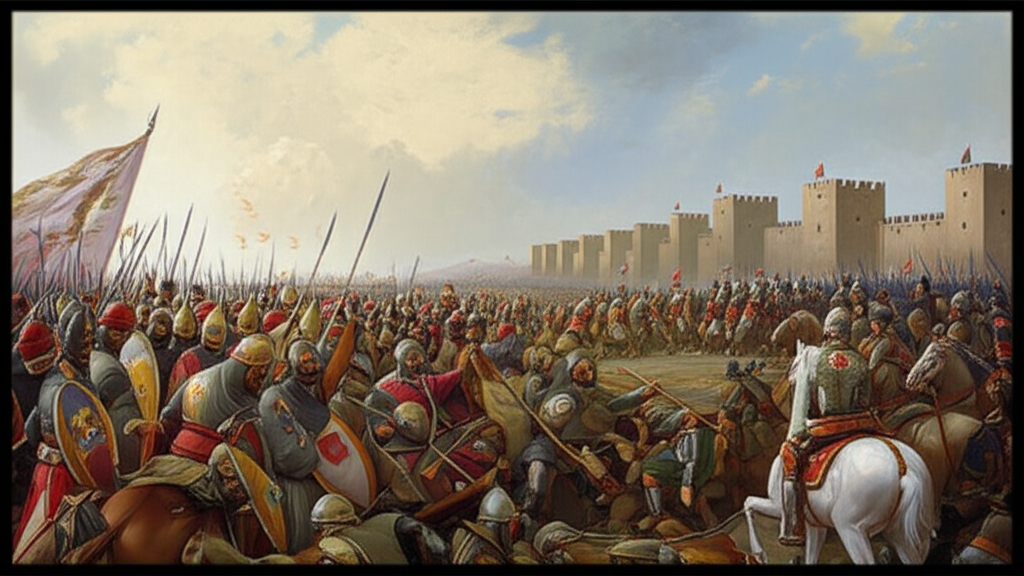
The Siege of Acre, the most decisive and bloody conflict of the Third Crusade, began with Guy de Lusignan besieging the city. It soon turned into one of history's rare dual-side sieges as Saladin surrounded the Crusaders from the outside. The arrival of King Philip II of France and King Richard the Lionheart of England with their fleets paved the way for the collapse of the walls, and the city surrendered after a two-year war of attrition.
Key Historical Facts
| Fact | Detail |
|---|---|
| Epic Battles | Siege of Acre (1189–1191) |
| Date | August 28, 1189 – July 12, 1191 |
| Location | Acre, Levant (Modern-day Israel) (32.9238, 35.0718) |
| Belligerents, Commanders & Forces | The Crusader Alliance (Kingdom of Jerusalem, England, France): Richard the Lionheart, Philip II Augustus, Guy de Lusignan (Strength: 50,000, Casualties: 25.000'den fazla (çatışmalar, dizanteri ve açlık kaynaklı)) · Ayyubids: Saladin and Karakurt (Garrison Commander) (Strength: 40,000, Casualties: 15.000'den fazla asker ve katledilen garnizon esirleri) |
| Weather | Scorching Mediterranean summers and stormy rains in winter causing epidemic diseases. |
| Outcome | A Crusader victory: the garrison of Acre surrendered, and the city passed into Crusader control. |
Belligerents, Commanders & Forces
The Crusader Alliance (Kingdom of Jerusalem, England, France)
- Commander
- Richard the Lionheart, Philip II Augustus, Guy de Lusignan
- Stance
- Attacker
- Strength
- 50,000
- Casualties
- 25.000'den fazla (çatışmalar, dizanteri ve açlık kaynaklı)
Ayyubids
- Commander
- Saladin and Karakurt (Garrison Commander)
- Stance
- Defending
- Strength
- 40,000
- Casualties
- 15.000'den fazla asker ve katledilen garnizon esirleri
Historical Significance
A strategic victory that prolonged the Crusader presence on the Levant coast and the Kingdom of Jerusalem for roughly another century; it also broke the unstoppable military momentum of Saladin.
Outcome
A Crusader victory: the garrison of Acre surrendered, and the city passed into Crusader control.
Chronological Phases of the Battle
-
1. August 1189
Guy de Lusignan's Daring Move
Guy de Lusignan, King of Jerusalem, who was released after the defeat at Hattin, decided to besiege the strategic port of Acre with the limited forces he had. He set up camp in front of the city and blockaded the walls. Although this unexpected move caught the Muslim garrison unprepared, the Crusaders' strength was insufficient to breach the massive walls.
-
2. October 1189
Saladin's Counter-Siege
Saladin immediately gathered his army, descended upon the plain of Acre, and enveloped the besieging Crusader army from the rear. The Crusaders found themselves trapped between the garrison inside and Saladin's army outside, forcing them to dig double-sided trenches. A fierce pitched battle on October 4th inflicted heavy casualties on both sides, but resulted in a stalemate.
-
3. Winter 1190 – 1191
Winter of Famine and Pestilence
With winter conditions closing the sea and roads, both armies entered a profound logistical crisis. Dysentery and famine erupting in the Crusader camp decimated thousands of soldiers, including nobles. Saladin's troops were likewise unable to launch a decisive offensive due to similar logistical hardships and climate conditions.
-
4. April 20, 1191
The Arrival of King Philip of France
King Philip II of France reached the coast of Acre with a massive fleet and advanced siege engines. The colossal trebuchets built by French engineers began pounding the walls day and night. Fresh provisions and munitions arriving by sea breathed great morale into the exhausted Crusader ranks, turning the tide.
-
5. June 8, 1191
The Emergence of Richard the Lionheart
King Richard of England, who secured his supply line by conquering Cyprus, set foot on the shores of Acre. Although stricken with severe fever, he commanded his troops from a stretcher and personally targeted the archers on the walls. His fleet completely severed maritime supply, cutting off the Muslim garrison's ties with the outside world.
-
6. Early July 1191
The Collapse of the Sarcophagus Tower
While Crusader sappers undermined the walls and put them to the torch, Richard's siege engines—chief among them the machine nicknamed 'God's Stone-Thrower'—breached the fortifications. The Sarcophagus Tower, considered the heart of the defense, was brought to the verge of collapse. Although Saladin launched repeated, desperate assaults from without against the Crusader trenches, he failed to break the Crusader ring and reach the garrison.
-
7. 12 July 1191
Surrender of the Garrison
Running out of provisions, with their walls breached and no hope of reinforcement, the garrison of Acre sat down at the table with Richard and Philip without waiting for Saladin's final approval. The city was surrendered to the Crusaders in exchange for the exchange of prisoners, a hefty ransom, and the return of the True Cross. Banners were hoisted upon the city walls.
-
8. August 20, 1191
Ayyadiya Massacre
Angered by Saladin's delays regarding ransom payments and prisoner exchange terms, Richard the Lionheart made a ruthless decision. Approximately 2,700 Muslim prisoner soldiers and civilians taken to a hill outside the city were put to the sword before the eyes of Saladin's lines, and the Crusaders began their march south toward Jaffa.
Frequently Asked Questions
When and where did Siege of Acre (1189–1191) take place, and what was the outcome?
Siege of Acre (1189–1191) took place on August 28, 1189 – July 12, 1191 at Acre, Levant (Modern-day Israel) and ended with A Crusader victory: the garrison of Acre surrendered, and the city passed into Crusader control..
Who were the commanders and troop numbers in Siege of Acre (1189–1191)?
The Crusader Alliance (Kingdom of Jerusalem, England, France): Richard the Lionheart, Philip II Augustus, Guy de Lusignan (Strength: 50,000, Casualties: 25.000'den fazla (çatışmalar, dizanteri ve açlık kaynaklı)) · Ayyubids: Saladin and Karakurt (Garrison Commander) (Strength: 40,000, Casualties: 15.000'den fazla asker ve katledilen garnizon esirleri)
Why is Siege of Acre (1189–1191) historically significant?
A strategic victory that prolonged the Crusader presence on the Levant coast and the Kingdom of Jerusalem for roughly another century; it also broke the unstoppable military momentum of Saladin.