Battle of Baekgang
The Battle of Baekgang was a massive naval battle fought between the alliance of China's Tang Dynasty and the Korean kingdom of Silla, versus Baekje restoration forces and the Japanese (Yamato) navy supporting them. Despite outnumbering their opponents, the Yamato fleet suffered a disastrous defeat due to tactical errors and the disciplined line formation of the Tang navy. This victory completely destroyed the Baekje Kingdom's hopes of revival and permanently altered the balance of power in East Asia.
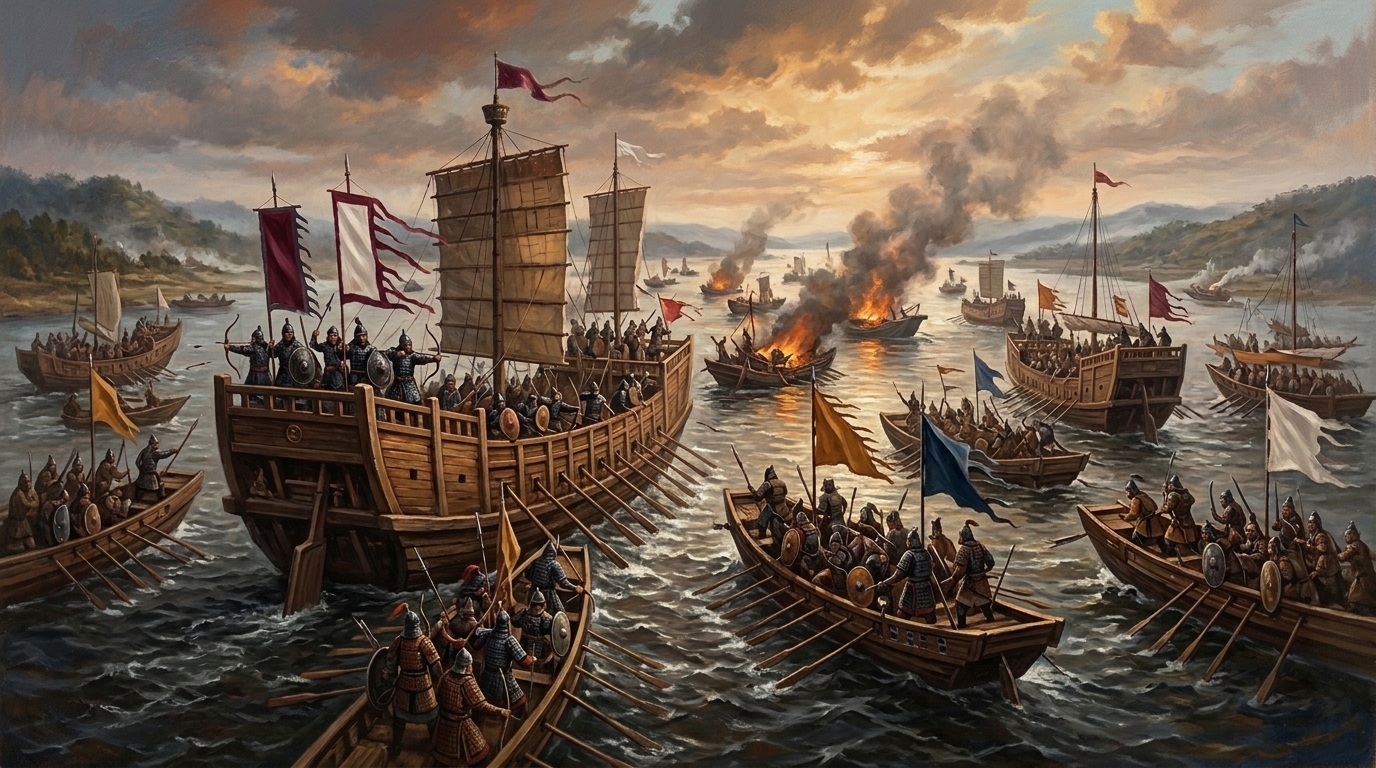
Key Historical Facts
| Fact | Detail |
|---|---|
| Epic Battles | Battle of Baekgang |
| Date | August 27–28, 663 |
| Location | Geum River Estuary (Gunsan), Korea (35.9875, 126.6853) |
| Belligerents, Commanders & Forces | Yamato Japan and Baekje Alliance: Abe no Hirafu and Pung (Strength: 42,000, Casualties: 10.000'den fazla ölü, 400'den fazla gemi batırıldı veya yakıldı) · The Tang Dynasty and the Silla Kingdom: Liu Rengui and Kim Beomin (Strength: 13,000, Casualties: Bilinmiyor, nispeten çok hafif kayıplar) |
| Weather | Windy, subject to tidal currents, and partly cloudy estuary weather |
| Outcome | Decisive Victory of the Tang and Silla Alliance |
Belligerents, Commanders & Forces
Yamato Japan and Baekje Alliance
- Commander
- Abe no Hirafu and Pung
- Stance
- Attacker
- Strength
- 42,000
- Casualties
- 10.000'den fazla ölü, 400'den fazla gemi batırıldı veya yakıldı
The Tang Dynasty and the Silla Kingdom
- Commander
- Liu Rengui and Kim Beomin
- Stance
- Defending
- Strength
- 13,000
- Casualties
- Bilinmiyor, nispeten çok hafif kayıplar
Historical Significance
The Baekje Kingdom completely collapsed, and Yamato Japan lost its influence on the Korean Peninsula, withdrawing to its home islands to focus on defensive reforms. Furthermore, it cemented the path toward Silla's unification of the Korean Peninsula.
Outcome
Decisive Victory of the Tang and Silla Alliance
Chronological Phases of the Battle
-
1. August 27, 663, Morning
Engagement at the River Mouth
The Japanese Yamato fleet reached the mouth of the Baek River to support the Baekje resistance. The much smaller Tang fleet established a tight defensive line at the river's bottleneck and began waiting for the enemy. Yamato vanguard units entered the narrow area in an uncontrolled manner.
-
2. August 27, 663, Afternoon
Initial Japanese Offensives
Relying on their numerical superiority, Yamato commanders launched direct and uncoordinated assaults against the Tang navy. Tang Admiral Liu Rengui repelled the Japanese ships without breaking formation, utilizing heavy arrow and catapult fire. The first day's attacks were halted with heavy losses.
-
3. August 28, 663, Morning
The Tang Fleet's Envelopment Maneuver
The next morning, when the wind shifted, the Yamato fleet renewed its attack. However, taking advantage of the river current and tailwind, the Tang ships managed to encircle the maneuver-restricted Japanese ships from both flanks. In the confined space, the ships began to collide.
-
4. August 28, 663, Afternoon
Ring of Fire and Chaos
Trapped Japanese ships turned into a living hell under the fire arrows and incendiaries of the Tang navy. Over four hundred Yamato vessels burned and sank. As thick smoke filled the sky, the soldiers' escape routes were cut off and panic spread throughout the entire army.
-
5. August 28, 663, Evening
Retreat and the Fall of Baekje
Following the heavy defeat, the surviving Yamato troops hastily fled to the sea and retreated toward Japan. Deprived of naval support, the Baekje fortress garrison surrendered. Prince Pung fled to Goguryeo, and the Kingdom of Baekje was completely erased from history.
Frequently Asked Questions
When and where did Battle of Baekgang take place, and what was the outcome?
Battle of Baekgang took place on August 27–28, 663 at Geum River Estuary (Gunsan), Korea and ended with Decisive Victory of the Tang and Silla Alliance.
Who were the commanders and troop numbers in Battle of Baekgang?
Yamato Japan and Baekje Alliance: Abe no Hirafu and Pung (Strength: 42,000, Casualties: 10.000'den fazla ölü, 400'den fazla gemi batırıldı veya yakıldı) · The Tang Dynasty and the Silla Kingdom: Liu Rengui and Kim Beomin (Strength: 13,000, Casualties: Bilinmiyor, nispeten çok hafif kayıplar)
Why is Battle of Baekgang historically significant?
The Baekje Kingdom completely collapsed, and Yamato Japan lost its influence on the Korean Peninsula, withdrawing to its home islands to focus on defensive reforms. Furthermore, it cemented the path toward Silla's unification of the Korean Peninsula.